


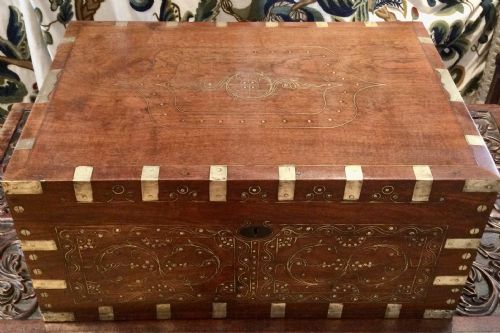


Brass Inlaid Trunk
These brass inlaid trunk examples are robust timber storage pieces and chests bearing metal work, prized for their utility and decorative presence.
Brass Inlaid Trunk
A brass inlaid trunk is a substantial storage chest or box ornamented with metal stripwork, straps, or decorative motifs. These pieces serve as both practical receptacles and striking interior furniture.
The selections found here include nineteenth century and colonial examples, such as Dutch colonial teak and ebony chests, Indian dowry cabinets, and travelling trunks. Alongside standard storage forms, the phrase also captures related brass-mounted campaign chests and studded blanket boxes.
How they were made
These chests are built from durable timbers such as mahogany, teak, rosewood, padouk, and ebony, selected for their structural strength and rich grain. Carpenters employed solid plank construction to withstand travel and daily use.
Brass inlay and mounts were meticulously fitted into channels carved into the timber surface, often secured with small pins. Iron is occasionally combined with the brass elements on merchant and travelling trunks to reinforce corners and edges.
Brass Inlaid Trunk Retail Price Guide 2026
Typical asking prices for brass inlaid trunk among the pieces listed under this phrase on Sellingantiques today, from the lower quarter to the upper quarter. They describe what is for sale here now, not the wider market.
Listings feature items from the nineteenth century, Georgian, and Regency periods, utilising teak, rosewood, padouk, and mahogany.
What varies in quality
The distinction between standard examples and finer pieces lies in the precision of the timber joinery and the complexity of the brass ornamentation. Superior items display tightly fitted metalwork flush with the polished wood surface.
The choice of primary wood also influences the calibre of the piece, with dense exotic hardwoods and intricate carving or multi-metal embellishment marking out the more ambitious workshops.
Halliday And Rich Bridgwater·Joseph Mansfield·Haley And Milner London·Mark Bartley Bristol·Sansom·Sam Robson
The Brass Inlaid Trunk Glossary
- Campaign chest
- A modular chest of drawers or storage box designed to dismantle into sections for easy transport by military officers during the nineteenth century. These pieces typically feature brass corner brackets and recessed carrying handles.
- Dowry chest
- A large storage container traditionally presented to a bride upon her marriage to hold household linens, garments, and valuables. They often feature elaborate brass inlay, studs, and specialised locking mechanisms.
- Padouk
- A heavy, durable tropical hardwood with a reddish hue utilised in the construction of nineteenth century furniture and storage boxes. It resists weathering and provides a stable base for metal inlay.
- Drop dial clock
- A wall-mounted timepiece featuring a circular dial above an extended wooden case or trunk enclosing the pendulum. These clocks frequently appear in nineteenth century interiors.
Brass Inlaid Trunk: Frequently Asked Questions
What is a brass inlaid trunk used for?
These pieces serve as functional storage furniture for blankets, linens, and personal possessions while acting as decorative focal points in living spaces or hallways.
Their robust timber construction also allows them to function effectively as coffee tables or low display surfaces within contemporary homes.
How old are most brass inlaid trunks?
The examples appearing on the market predominantly date from the nineteenth century, encompassing Victorian, Regency, and Georgian periods.
Certain regional variants reflect mid-nineteenth century production methods, while others extend into early twentieth century manifestations like studded blanket boxes.
What woods were used for these trunks?
Cabinetmakers utilised a variety of dense and durable timbers, including mahogany, teak, rosewood, padouk, and ebony.
These woods were chosen for their structural integrity and ability to hold precise brass inlay and metal reinforcement mounts.
Where were brass inlaid trunks made?
Production locations span English workshops as well as colonial and international trade hubs such as Dutch colonial territories, Rajasthan, and Zanzibar.
Each region imparted distinct decorative motifs and construction techniques to the chests, reflecting local cabinetmaking traditions.