

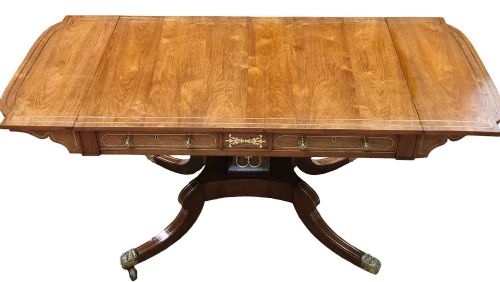


Brass Inlaid Sofa
A brass inlaid sofa table brings architectural line and warm metal contrast to a room.
Brass Inlaid Sofa
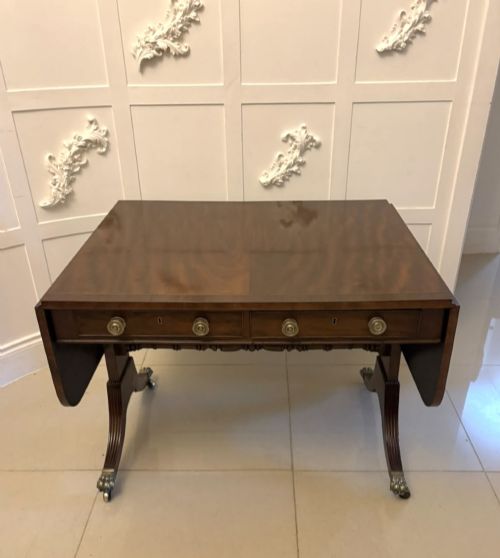
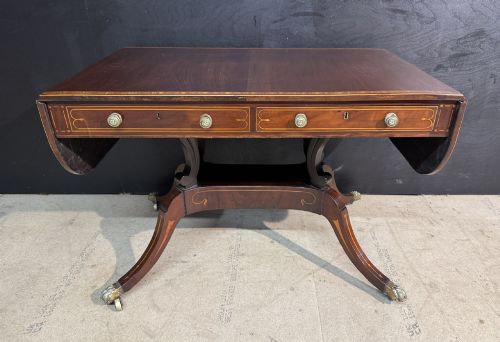
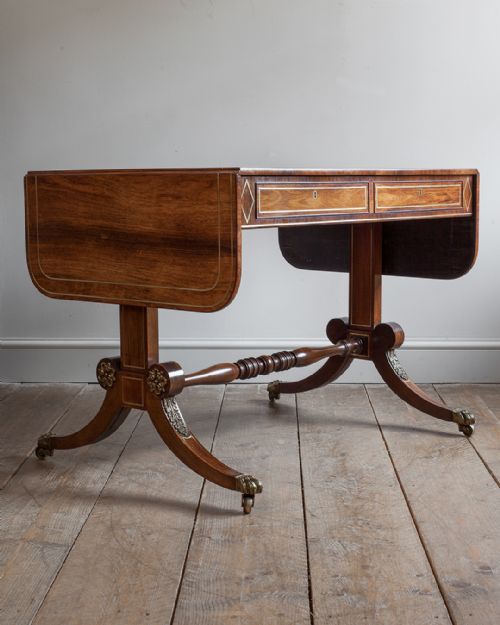
A brass inlaid sofa table is primarily a low, rectangular freestanding table designed to stand before a sofa or within a room during the Regency and Georgian periods. These pieces feature drop leaves on either side and double pedestals or trestle supports, alongside related forms such as library tables, writing tables, and occasional tables.
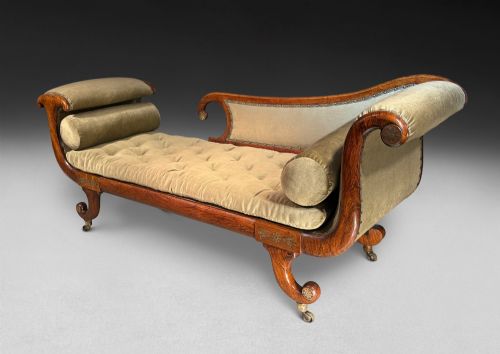
The versions most common in these listings belong to the Regency period and the nineteenth century, executed in rich dark timbers and accented with cut brass lines and mounts. Alongside true sofa tables, buyers encounter card tables, console tables, and work tables sharing the same vocabulary of brass inlay.
Originating in domestic interiors for writing, sewing, and display, these tables show a clear lineage from George III designs through to French Empire and Edwardian interpretations. The surviving examples rely on mahogany and rosewood bodies framed by contrasting boxwood, ebony, and luminous brass work.
Materials and Construction
Cabinetmakers built these tables using dense tropical hardwoods, predominantly rosewood and mahogany, often laid as veneers over sturdy sub-woods to achieve stable expansive surfaces. Satinwood and walnut also appear, providing lighter contrasting tones for top panels and drawer fronts.
Decoration relied on precise hand-cutting of sheet brass into geometric stringing, scrolls, and classical motifs, which was then channeled directly into the timber surface. Further enrichment came from ebony and boxwood stringing alongside cast brass mounts, sabots, and drop handles.
Brass Inlaid Sofa Retail Price Guide 2026
Typical asking prices for brass inlaid sofa among the pieces listed under this phrase on Sellingantiques today, from the lower quarter to the upper quarter. They describe what is for sale here now, not the wider market.
Judging Quality
The distinction between ordinary and exceptional pieces rests on the precision of the brass work and the choice of timber figure. Finer examples display meticulously fitted brass inlay sitting flush with the surrounding grain, utilising highly figured rosewood or flame mahogany veneers rather than plain stock.
Structural integrity and secondary details dictate the standing of a table. Superior pieces retain well-turned pedestals, original brass castors, and cleanly dovetailed drawer linings that demonstrate uncompromised cabinetmaking.
John McLean
The Brass Inlaid Sofa Glossary
- Sofa Table
- A freestanding table with drop leaves on opposite short sides, originally designed to stand behind a sofa in the drawing room.
- Stringing
- A narrow strip of contrasting wood or metal inlaid into the surface of a piece in a shallow groove to form linear borders.
- Rosewood
- A heavy, dark timber with distinct figuring, widely utilised during the Regency period for high-status cabinet furniture.
- Drop Leaf
- A hinged flap on the side of a table that can be raised to extend the surface area and lowered when not needed.
- Ormolu
- Gilt-bronze mounts applied to furniture for decorative effect, though brass mounts are more common in these specific English pieces.
Brass Inlaid Sofa: Frequently Asked Questions
How were these tables originally used?
These tables served multiple domestic purposes including writing, needlework, and holding lamps beside seating. Their freestanding nature allowed them to sit in the middle of a room.
The drop leaves offered flexibility for expanding the surface when entertaining.
How do I style a sofa table today?
A sofa table works well placed behind a sofa, against a wall, or as a slim desk in a study. The finished backs on these pieces allow them to sit openly in a room.
Pair them with simple lamps and curated objects to highlight the timber and brass details.
How can I tell a Regency table?
Regency tables typically feature dark rosewood or mahogany, classical proportions, and brass stringing or mounts. The design vocabulary draws on ancient Greek and Roman forms.
Look for heavy pedestals, sabre legs, and precise metal inlay that define the period style.