

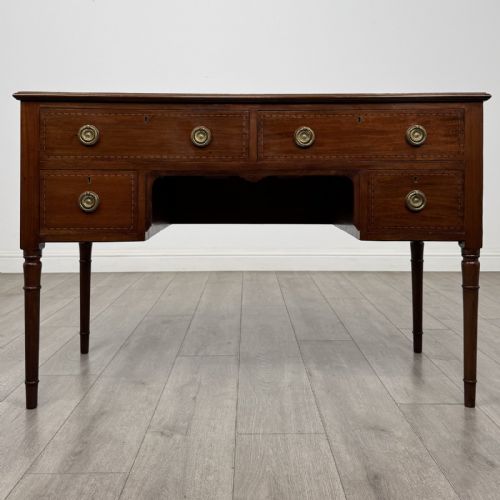
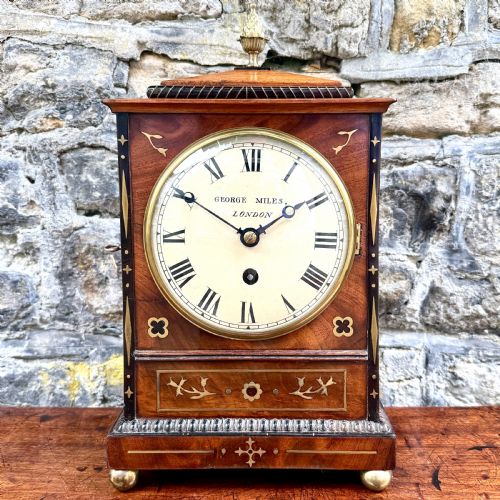
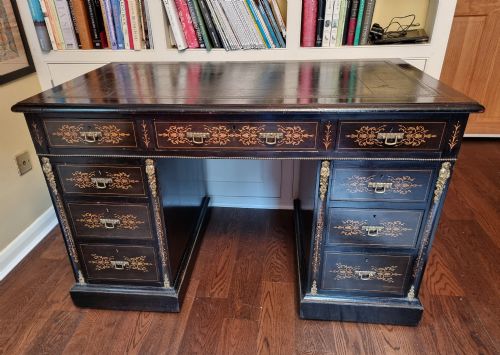
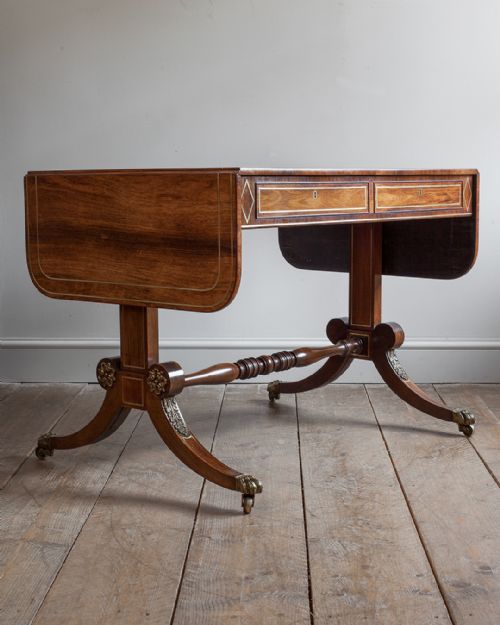


Brass Inlaid Library Table
A brass inlaid library table brings together fine cabinet woods and precise metalwork to anchor a formal study.
Brass Inlaid Library Table
A brass inlaid library table typically takes the form of a freestanding writing desk, a sofa table, or a drum table designed for domestic study use. These pieces emerge predominantly from the Regency and Victorian periods, alongside Georgian and Edwardian examples.
The version most commonly met on this page combines a rosewood or mahogany carcase with intricate cut brass lines and scroll motifs set directly into the timber top. Makers often incorporated leather writing surfaces, drop leaves, or pedestal bases to balance utility with elegance.
Beyond standard library tables, the inventory frequently includes related writing tables, centre tables, and occasional tables sharing the same vocabulary of brass inlay and figured woods.
Materials and construction
Craftsmen built these tables using dense hardwoods such as rosewood, mahogany, walnut, and kingwood, often selecting veneers with pronounced grain figures like flame mahogany. The primary structure relies on traditional joinery to support heavy timber tops and pedestal or pillar supports.
Decoration centres on brass inlay, sometimes referred to as cut brass work or Boulle technique, where thin metal sheets are shaped and embedded flush into channels carved within the wood. Artisans enhanced select pieces with cast or chased ormolu mounts and gilt bronze details.
Writing surfaces were frequently inset with tooled leather panels, while auxiliary components like drawers utilised hand-cut dovetail joints and secondary softwood linings.
Brass Inlaid Library Table Retail Price Guide 2026
Typical asking prices for brass inlaid library table among the pieces listed under this phrase on Sellingantiques today, from the lower quarter to the upper quarter. They describe what is for sale here now, not the wider market.
The listings on this site feature brass inlaid library tables spanning the Georgian, Regency, Victorian, and Edwardian periods, utilising rosewood, mahogany, walnut, and ebonised wood.
Standards of execution
Quality in a brass inlaid library table rests on the precision of the metalwork and the selection of the timber veneer. Finer examples display tightly fitted brass lines with minimal filler and seamless integration into the surrounding wood grain.
Edwards and Roberts·Donald Ross·Maison Millet·Bush of London·Plumbly and Tupman·Marsh and Tatham·Gillows
The Brass Inlaid Library Table Glossary
- Boulle work
- A style of marquetry consisting of tortoiseshell and brass inlay, named after French cabinetmaker André-Charles Boulle. It appears frequently on French nineteenth-century centre tables and writing desks.
- Sofa table
- A type of Pembroke table with two drop leaves, typically long and narrow, designed to stand in front of a sofa. Regency examples often feature brass inlay and twin pedestal supports.
- Drum table
- A circular library table fitted with a deep frieze containing alternating drawers and false drawer fronts. They usually rotate on a central pillar and tripod or pedestal base.
- Ormolu
- Gilded bronze used for decorative mounts on furniture and clock cases. The technique involves applying a mercury and gold amalgam to bronze before heating.
- Crossbanding
- A strip of veneer applied to the border of a table top or drawer front with the grain running perpendicular to the central panel. It creates a neat framing effect common in Regency and Georgian cabinetmaking.
Brass Inlaid Library Table: Frequently Asked Questions
What is a brass inlaid library table used for?
These tables served as functional writing desks, reading tables, or central display surfaces in grand libraries and studies. The inset leather top provided a smooth writing surface while the drawers held correspondence and papers.
Today, they function effectively as freestanding executive desks or console tables in residential interiors where their finished backs allow placement away from walls.
How do I distinguish Regency from Victorian examples?
Regency pieces, generally dating from the early nineteenth century, tend to feature crisper architectural proportions, restrained cut brass inlay, and elegant rosewood or mahogany grains. They frequently show classical revival motifs influenced by French and English design books.
Victorian pieces often display heavier proportions, more exuberant marquetry, or French Louis styles such as Boulle work. They span the mid to late nineteenth century and frequently incorporate varied wood species like walnut and ebonised timber.
Are these tables suitable for daily office use?
Most antique library tables provide adequate surface area and height for modern laptops and writing tasks. Their sturdy timber construction and durable leather writing inserts accommodate regular daily activity.
Care should be taken to protect the polished wood surfaces and delicate brass inlay from moisture and heavy impact during everyday use.
How should I care for brass inlay on wood?
Maintenance requires keeping the timber and metal clean using a soft, dry cloth without harsh chemical polishes. Avoid excessive moisture, which can cause the wood to expand and lift the delicate brass wire from its channels.
Maintaining stable room humidity prevents the timber from shrinking or swelling, which is the primary cause of loose veneer and inlay separation.