



Brass Inkstand Accessory
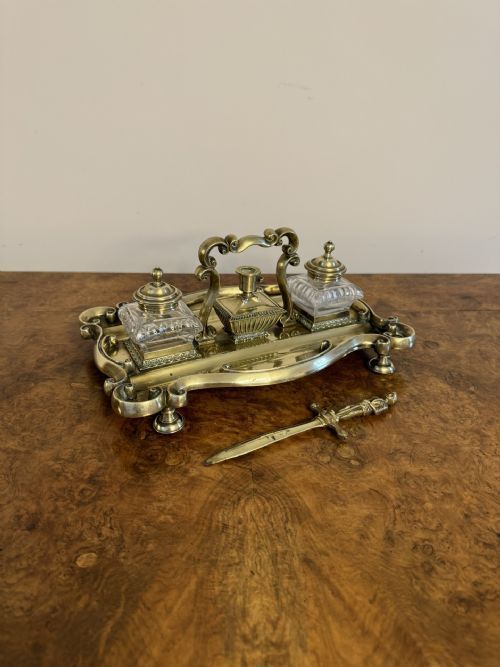
A brass inkstand accessory brings order to the writing desk through heavy metal and glass.
Brass Inkstand Accessory
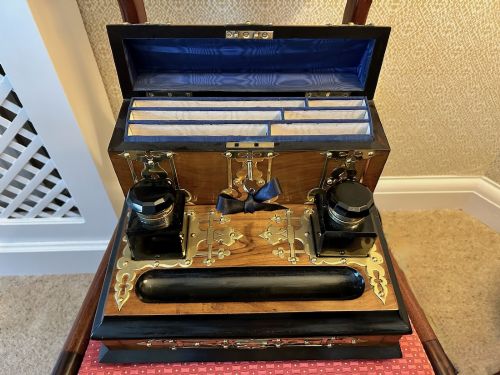
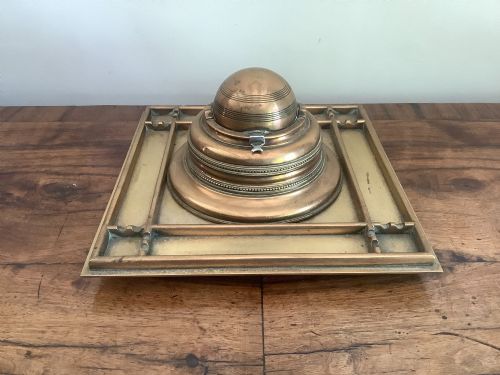
A brass inkstand accessory acts as the central apparatus for nineteenth century correspondence, holding ink vessels and pen rests upon a fitted tray. Buyers seek these pieces for their combination of utilitarian purpose and decorative weight on a desk.
The selections here span from eighteenth century Georgian stands to Edwardian and Art Deco examples, with Victorian brass and glass models appearing most frequently. These pieces range from simple single inkwells to elaborate double sided sets equipped with drawers and companion pieces.
Originating across English and Continental workshops, the forms incorporate materials like marble, walnut, and ormolu alongside the primary brass structure. Each configuration reflects the writing habits and desk organisation of its specific decade.
Materials and Method
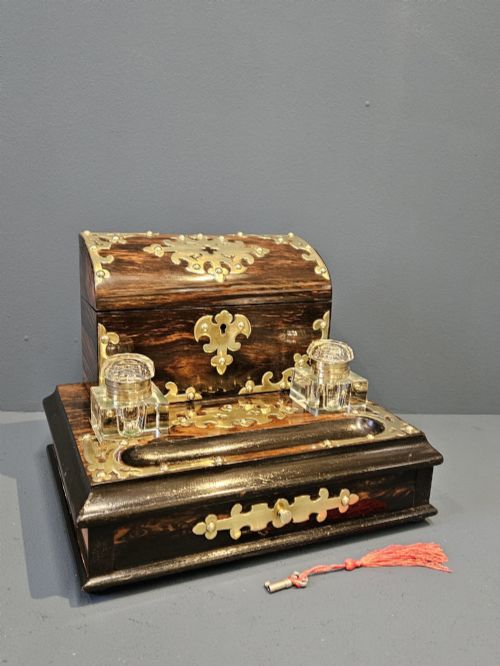
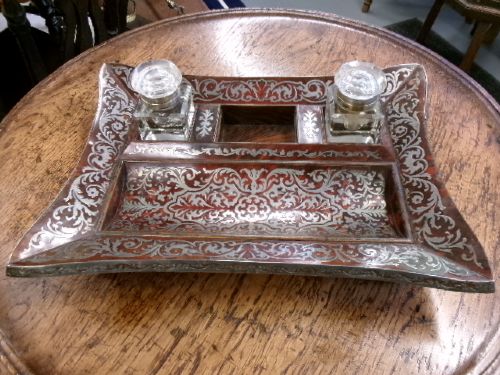
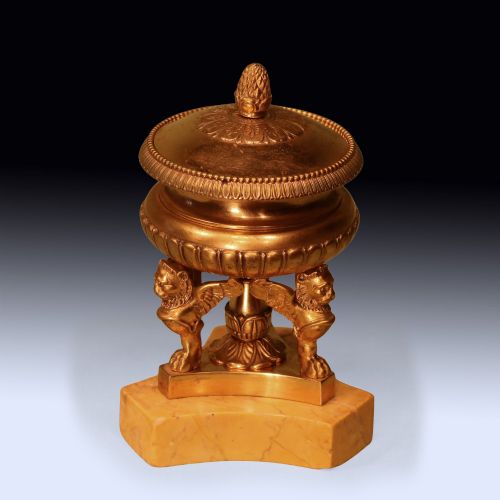
Foundries cast the main stands in brass, ormolu, and cast bronze, often combining the metal with carved marble bases or wooden foundations in oak, walnut, and coromandel. Artisans mounted these surfaces with agate cabochons, tortoiseshell, and inlaid boulle work.
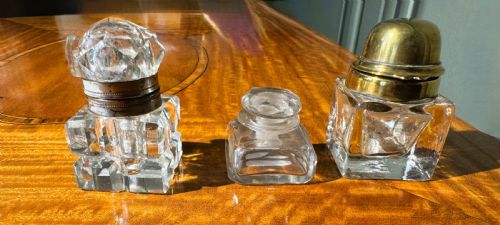
Cut glass and blown glass form the removable ink bottles that sit within the metal frames, sometimes paired with porcelain or ceramic inserts. Metal mounts and hinges secure the components together with threaded pins and screws characteristic of the period.
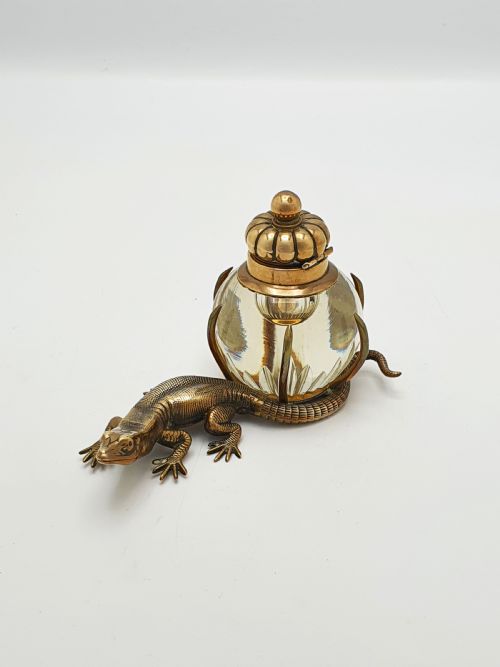
Desk sets occasionally incorporate animal anatomy, including actual boars' feet adapted to hold pens and ink.
Markers of Standard
The refinement of the casting separates the standard production from the exceptional work, visible in the crispness of chased details on cast brass and ormolu. Heavier gauge metal and substantial marble or hardwood bases indicate superior original cost and material selection.
Completeness dictates the standing of a piece, particularly the presence of matching original cut glass ink bottles and functioning lids. Finer examples integrate complex companion elements such as drawers, tapersticks, and matched pen trays into a cohesive design.
James Cartland & Sons·Kralik or Loetz
The Brass Inkstand Accessory Glossary
- Standish
- A portable desk stand incorporating inkwells, sanders, and penholders in a single metal or wooden tray. This term denotes the formal English writing equipment of the eighteenth and nineteenth centuries.
- Ormolu
- Gilt bronze applied to decorative metalwork and desk accessories to provide a rich golden surface. The technique involves a mercury amalgam fired onto the bronze base.
- Boulle work
- Marquetry of tortoiseshell and brass inlaid into a wood carcase, frequently seen on French Napoleon III desk sets. The contrasting materials create elaborate scroll and floral patterns.
- Cabochon
- A gemstone or hardstone shaped and polished rather than faceted, often mounted as a decorative accent on brass desk sets. Agate cabochons appear frequently on mid nineteenth century pieces.
- Tidy
- A compartmentalised desk accessory used for holding stationery, pens, and correspondence. These pieces complement the main inkstand on the writing table.
Brass Inkstand Accessory: Frequently Asked Questions
What is the difference between an inkstand and an inkwell?
An inkstand is the complete tray or base assembly that holds one or more ink bottles, often alongside pen rests and other desk accessories. An inkwell refers specifically to the individual glass or ceramic vessel that contains the ink.
Many listings combine both terms when the glass bottle remains permanently housed within the matching brass stand.
How do I date a brass desk set?
Dating relies on stylistic clues, such as the sinuous lines of Art Nouveau pieces from around nineteen hundred or the heavy cast ornamentation of Victorian and French Napoleon III designs from the eighteen fifties. Materials like coromandel wood, tortoiseshell, and green onyx also point to specific decades of manufacture.
Examining construction marks, hinge types, and the style of the glass inserts helps narrow the period of origin further.
Were these pieces made in England or on the Continent?
The selection includes both English production and Continental work, particularly from French foundries in Paris. French pieces frequently utilise ormolu, Sienna marble, and intricate boulle work.
English examples often favour solid brass, oak, walnut, and cut glass with a focus on sturdy domestic utility.
How do I care for antique brass and glass desk accessories?
Keep brass and ormolu surfaces free of dust using a soft dry cloth, avoiding aggressive metal polishes that can strip the historic patina. Glass ink inserts can be gently washed by hand in warm soapy water if removed from the metal frame.
Place the desk set away from direct sunlight and damp environments to protect wooden bases and delicate interior components.