


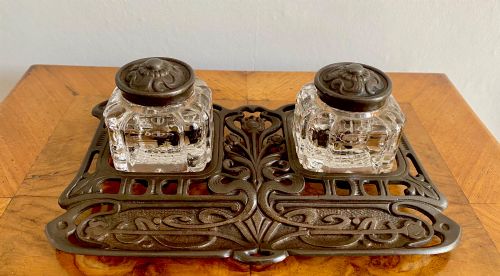
Brass Ink Stand
These brass ink stand pieces combine practical desk utility with period craftsmanship, offering a handsome focal point for any traditional writing desk.
Brass Ink Stand
A brass ink stand serves as a desk accessory designed to hold writing fluid and writing instruments securely. The examples seen here range from simple desk trays to elaborate multi-piece sets incorporating pens and storage.
The versions most commonly met on this page date from the Victorian and Edwardian eras, spanning the nineteenth and early twentieth centuries. These pieces frequently combine metalwork with other media to create functional desk furniture.
Origins vary from English workshops to Continental and French makers, showing distinct regional tastes in desk accessories. Forms include standing frames, fitted boxes, and mounted wells using materials like oak, marble, and ceramic.
How they were made
Construction relies heavily on cast and worked brass, often paired with fitted glass ink bottles and ceramic inserts. Ormolu and gilt bronze surface treatments appear alongside solid bases of oak, walnut, coromandel, and marble.
Decorative techniques involve champlevé enamel work, intricate brass inlay, and Gothic or Art Nouveau stylistic moulding. Metal components are joined to wooden or stone chassis using period fasteners and mounts.
Listings feature periods from the nineteenth-century Victorian era through the Edwardian period, utilising brass, glass, marble, and oak.
What varies in quality
Quality differences lie in the crispness of the casting, the weight of the metal, and the integration of secondary materials such as tortoiseshell or enamel. Finer pieces demonstrate superior hand-chasing and heavier gauge brass.
The presence of original fitted glass bottles and matched components distinguishes better examples from assembled or incomplete items. Superior construction involves dense hardwood bodies and secure, well-fitted mounts rather than light stamped metal.
James Cartland and Sons·Elkington
The Brass Ink Stand Glossary
- Ormolu
- Gilded bronze or brass applied to decorative objects and furniture mounts. It provides a bright gold-coloured finish that resists tarnishing.
- Champlevé
- An enamelling technique where troughs are dug into a metal surface and filled with vitreous enamel before firing. This creates colourful decorative patterns flush with the metal.
- Napoleon III style
- A nineteenth-century revival aesthetic blending various historical French motifs with opulent materials. It often incorporates tortoiseshell and brass inlay.
- Gilt bronze
- Metal cast in bronze and treated with a gold wash or leaf layer. It offers a rich metallic lustre on ornate desk accessories.
Brass Ink Stand: Frequently Asked Questions
What is a brass ink stand?
A brass ink stand is a desk accessory designed to hold one or more inkwells and writing implements in a stable base. These pieces served as permanent fixtures on nineteenth and early twentieth-century writing desks.
They combine metalwork with materials like glass, marble, or wood to protect the desktop and keep writing tools organised. Many incorporate lidded compartments for stamps and nibs.
How do I date a brass ink stand?
Dating relies on stylistic clues, manufacturing techniques, and materials characteristic of specific periods like the Victorian era or Art Nouveau movement. Stamped maker marks and registry numbers can also narrow down the year of production.
Heavier cast brass and Gothic revival motifs generally point to the mid-nineteenth century, while flowing organic lines suggest the turn of the twentieth century. Associated woods like oak or coromandel further anchor the production period.
Were these stands used at home?
These accessories were standard equipment in domestic studies, libraries, and professional offices where correspondence was written by hand. They sat prominently on large partner desks and writing tables.
Fitted compartments made them suitable for daily letter writing, bookkeeping, and household administration before the widespread use of fountain pens and typewriters.
How do I care for a brass ink stand?
Maintenance involves dusting with a soft, dry cloth and avoiding harsh chemical polishes that can strip original patination or damage adjacent wood and enamel. Glass inserts can be washed gently with warm water.
Keeping the metal dry prevents corrosion, and natural beeswax can be used sparingly on wooden or leather components to maintain their condition.