
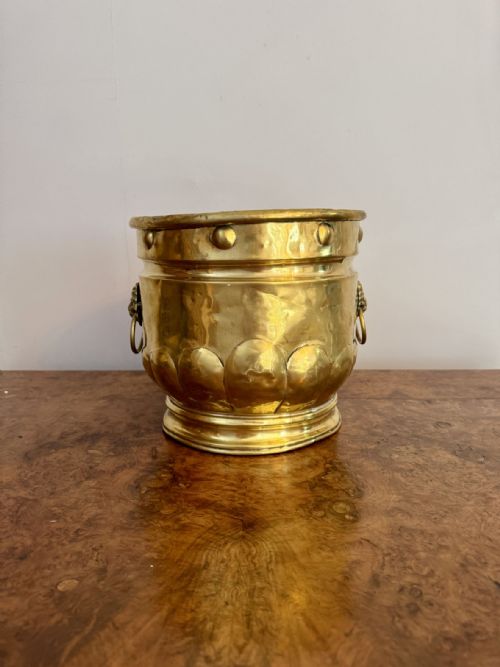
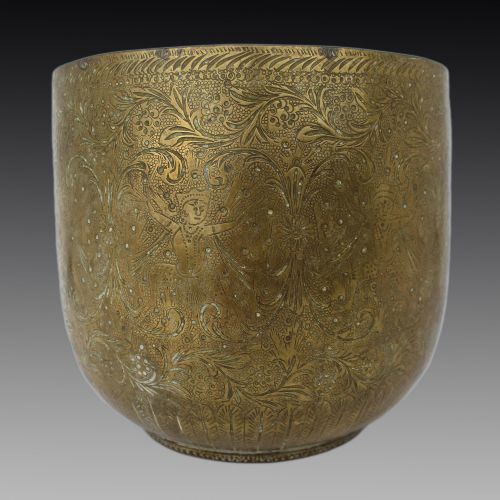
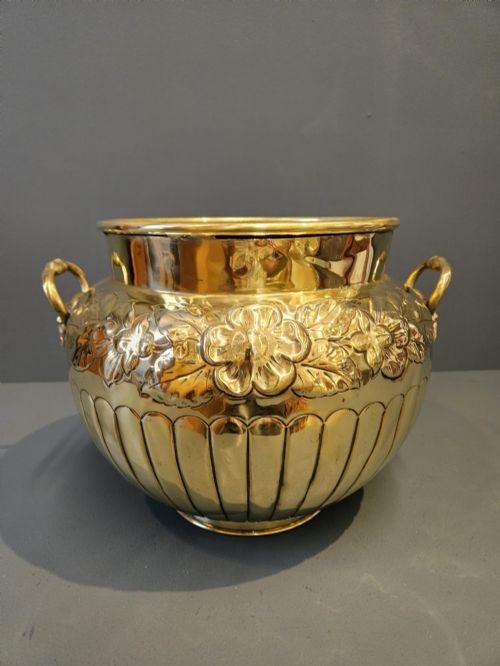
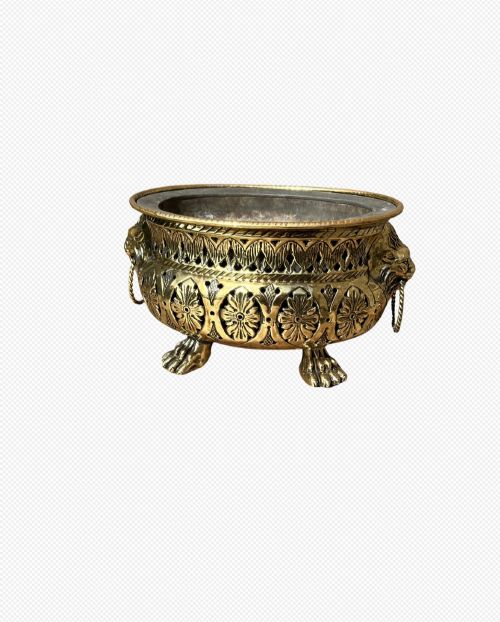


Brass Indoor Planter Pot
These brass indoor planter pot vessels bring warmth and texture into a room, holding greenery while displaying the rich metalwork of the nineteenth and early twentieth centuries.
Brass Indoor Planter Pot
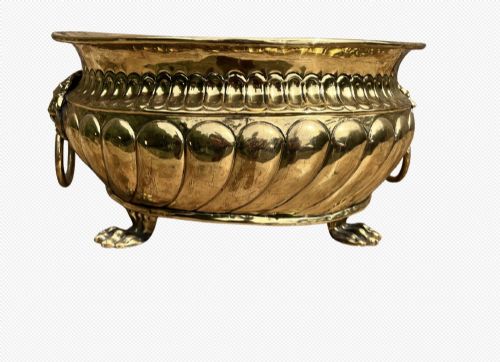
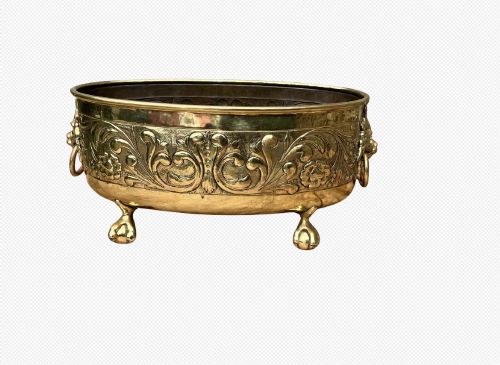
A brass indoor planter pot, often termed a jardiniere or cachepot, serves to house houseplants inside a home while concealing standard clay flower pots. The pieces encountered here span the Victorian, Edwardian, and late nineteenth-century periods, taking forms from simple cylindrical vessels to elaborate plant stands.
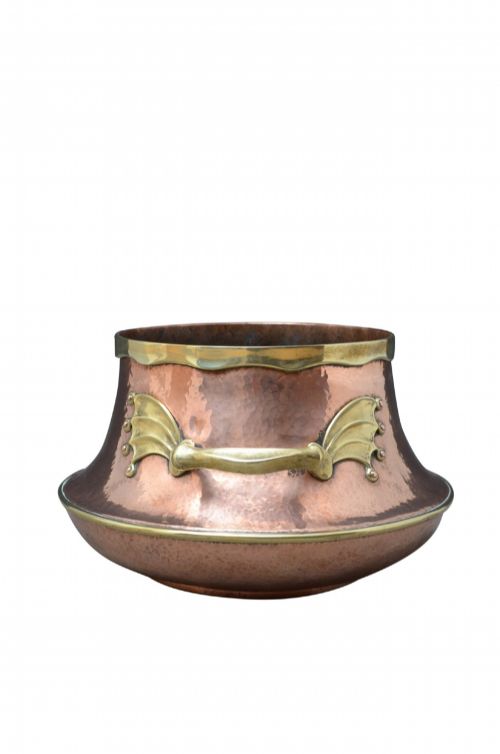
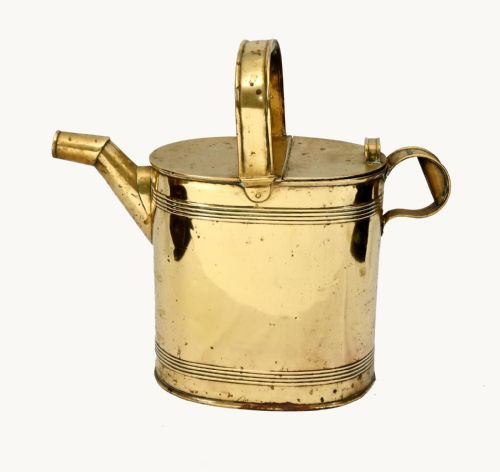
Makers of these items produced varied object types including cachepots, watering cans, and coopered barrel stands alongside traditional planters. Origins stretch from English workshops to continental Europe and India, reflecting diverse stylistic influences such as Gothic Revival, Art Nouveau, and Aesthetic Movement designs.
Domestic spaces of the period relied on these metal vessels to introduce living foliage into parlours and hallways without risking water damage to interior furnishings. The forms range from compact desk-sized pots to large floor-standing jardinieres fitted with carrying handles.
How they were made
Construction relies predominantly on sheet brass and copper, sometimes combined with oak for coopered barrel designs or iron components for internal structure. Artisans shaped these base metals through hammering, embossing, and piercing techniques to create decorative surface patterns.
Surface ornamentation on the pieces involves hand-engraving, fluting, and repousse work, executed with varying degrees of precision. Handles, where present, often take the form of cast brass elements such as lions masks attached securely to the body of the vessel.
Listings feature brass, copper, and oak across Victorian and Edwardian forms.
What varies in quality
The distinction between standard utility items and finer pieces lies in the depth and crispness of the hand-working on the metal surface. Heavy gauge brass and deeply embossed or hand-engraved detailing indicate superior craftsmanship compared to thin, mechanically pressed sheets.
Structural integrity and the quality of secondary materials, such as solid oak staves in coopered examples or cast decorative mounts, separate exceptional vessels from ordinary production. Original surface patination and the absence of clumsy repairs also mark the upper tier of these metalwares.
The Brass Indoor Planter Pot Glossary
- Jardiniere
- An ornamental pot or stand for holding plants or flowers. These vessels usually sit directly on tables or floors rather than hanging.
- Cachepot
- A decorative pot used to conceal an unadorned flower pot holding a plant. The French term translates literally to hide pot.
- Dinanderie
- Objects made of brass or copper, typically beaten or worked by hand. The term originates from the Belgian town of Dinant, known for medieval metalwork.
- Repousse
- A metalworking technique in which a malleable metal is ornamented or shaped by hammering from the reverse side. This creates a raised design on the front.
- Coopered
- Formed of staves fitted together and bound with hoops, similar to barrel construction. Oak examples utilise this method alongside brass bands.
Brass Indoor Planter Pot: Frequently Asked Questions
How do you clean brass planters?
Cleaning brass indoor planter pots requires gentle care to preserve the aged patination that collectors value. Warm soapy water and a soft cloth usually suffice for removing dust and accumulated grime.
Harsh abrasive cleaners or chemical polishes should be avoided because they strip away the historic surface character. A light application of microcrystalline wax can help protect the metal from further tarnishing.
Can these pots hold water directly?
Many antique brass planters were intended to house potted plants within inner liners rather than holding water and soil directly. Older soldered seams can develop leaks over time due to age and movement.
Using a modern plastic insert or a separate saucer inside the vessel prevents moisture from damaging the historic base. This simple precaution protects both the metalwork and the surface beneath the pot.
How do I date a brass planter?
Dating a brass indoor planter pot involves examining manufacturing techniques, material choices, and stylistic cues. Pieces from the Victorian period frequently display Gothic Revival or heavy aesthetic motifs, while Edwardian examples often show lighter fluting or Art Nouveau influences.
Construction methods also provide clues, as hand-beaten and pierced work differs from later mass-produced manufacturing. Comparing the weight, handle attachments, and overall form to dated pieces helps narrow down the era of production.