




Brass Hearth Rail Guard
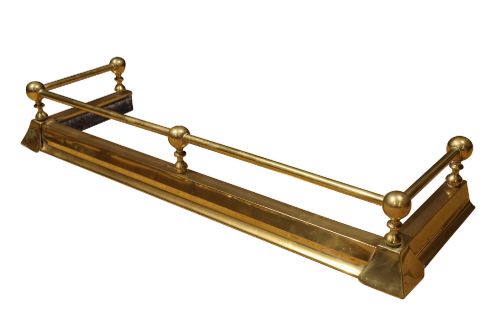
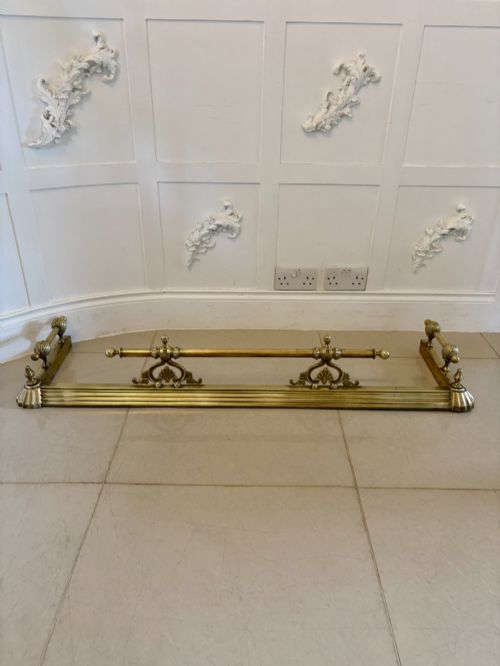
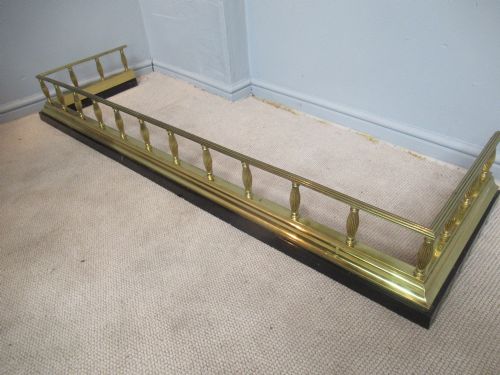
A brass hearth rail guard sits at the edge of the fireplace, containing stray embers while finishing the room with metallic gleam.
Brass Hearth Rail Guard
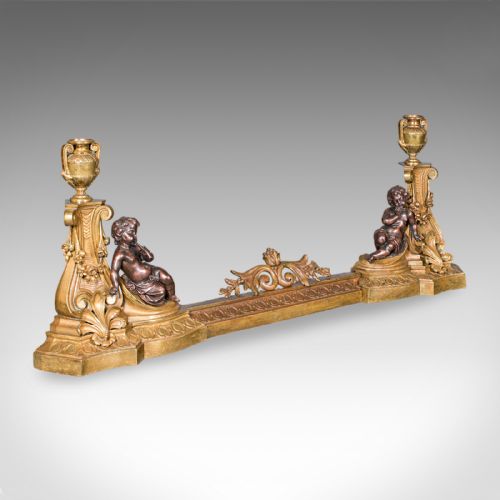
A brass hearth rail guard functions as a protective barrier around the fireplace opening, keeping carpets and clothing safe from sparks. These pieces appear primarily in Victorian and Edwardian iterations, alongside examples spanning the nineteenth century and the Georgian period.
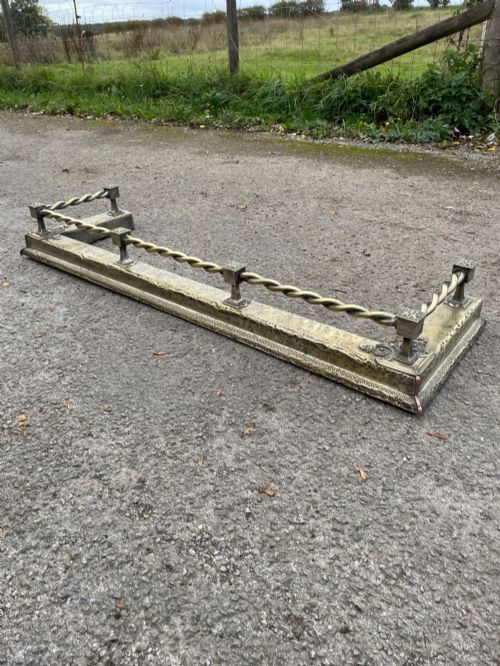
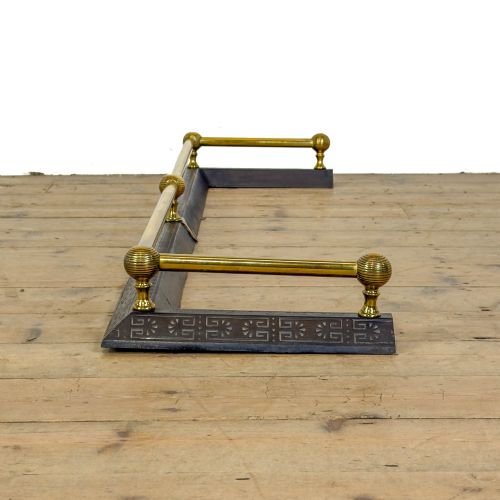
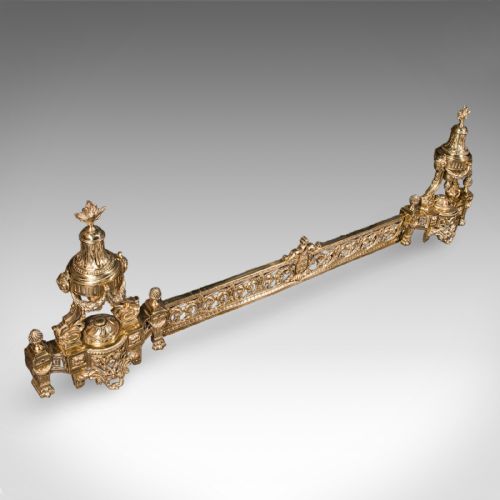
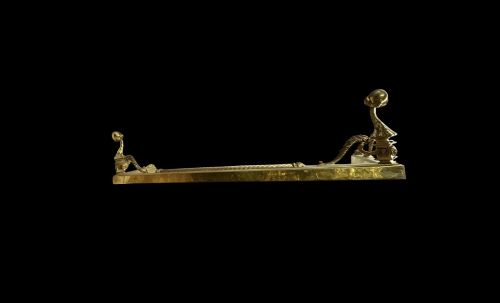
The objects take various forms, including adjustable curbs, extending rails, and nursery guards equipped with integrated clothes rails. Construction frequently combines brass with iron or steel, occasionally incorporating bronze or copper elements to create contrasting structural borders.
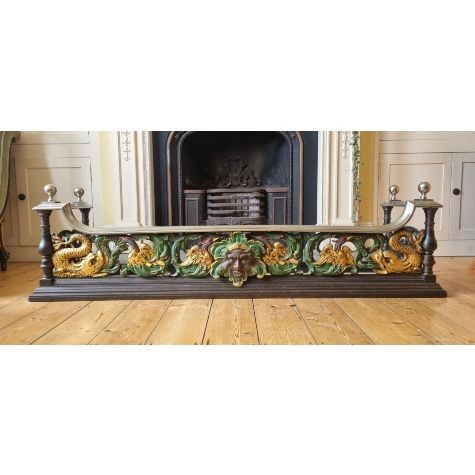
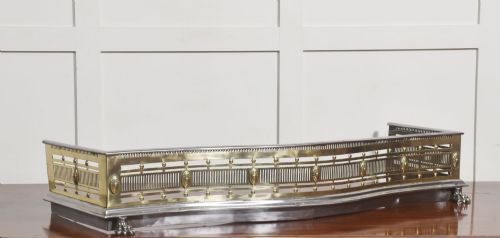
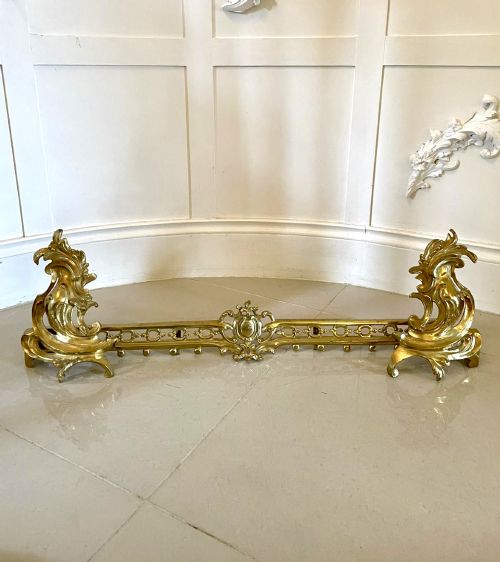
Makers shaped these accessories in diverse stylistic veins, ranging from French Rococo and Louis XV to Art Nouveau, Neoclassical, and Regency designs. Buyers encounter everything from simple pierced sheet metal to heavy gauge cast brass anchored by decorative lions.
Materials and construction methods
Workshops utilised brass, cast brass, and gilded or gilded bronze, pairing them with robust iron and steel frames for structural integrity. Heavy gauge metal sheets underwent piercing, scrolling, and polychrome finishing to achieve ornate surface textures.
Many examples incorporate adjustable mechanisms, allowing the kerb or fender to fit varying fireplace widths securely. Casting, polishing, and riveting defined the manufacturing process for these durable fireside furnishings.
Brass Hearth Rail Guard Retail Price Guide 2026
Typical asking prices for brass hearth rail guard among the pieces listed under this phrase on Sellingantiques today, from the lower quarter to the upper quarter. They describe what is for sale here now, not the wider market.
Materials span plain and gilded brass, cast iron, steel, bronze, and copper across Victorian, Edwardian, and Georgian periods.
Evaluating quality and execution
Quality rests upon the gauge of the metal and the crispness of the casting work, distinguishing heavy proprietary brass from lighter stamped alternatives. Finer specimens display detailed piercing, secure joints, and well-executed stylistic motifs such as Louis XVI neoclassical ornament.
The integration of secondary metals like steel or copper alongside primary brass reveals the ambition of the original workshop. Superior pieces retain their structural rigidity, particularly in adjustable designs where moving components must align smoothly.
The Brass Hearth Rail Guard Glossary
- Fender
- A low metal guard placed on the hearth before a fireplace to contain falling coals and ash. These items form the core category of fireplace accessories found here.
- Kerb
- An alternative term for a fender, designating the low border enclosing the hearth area. It frequently denotes the stone or metal framework surrounding the fire opening.
- Nursery fender
- A taller protective barrier designed specifically to keep young children at a safe distance from open flames. Certain variants include a built-in clothes rail for warming garments.
- Gilt bronze
- An alloy treated with a gold or gold-coloured finish to simulate solid precious metal. This material appears on decorative mounts and highlights across ornate French-influenced pieces.
- Art Nouveau
- A style characterised by flowing, organic lines and asymmetrical natural motifs. In these listings, it emerges in late Victorian and early twentieth-century brasswork.
Brass Hearth Rail Guard: Frequently Asked Questions
How do I clean a brass hearth rail guard?
Dust the surface regularly with a soft cloth to prevent soot accumulation.
Avoid harsh chemical abrasives that strip historic patination from the metal.
Are these fenders adjustable in size?
Many surviving examples feature sliding sections designed to fit varying hearth dimensions.
Check individual measurements to confirm whether a specific piece offers this flexibility.
What is the difference between a fender and a fire guard?
A fender sits flat on the hearth as a low perimeter barrier.
A fire guard often includes taller vertical panels or mesh to block spitting embers completely.
How can I tell a Victorian piece from an Edwardian one?
Victorian examples often display heavier casting, ornate scrolling, and occasional polychrome finishes.
Edwardian designs frequently lean towards simpler profiles or distinct Art Nouveau curves.