

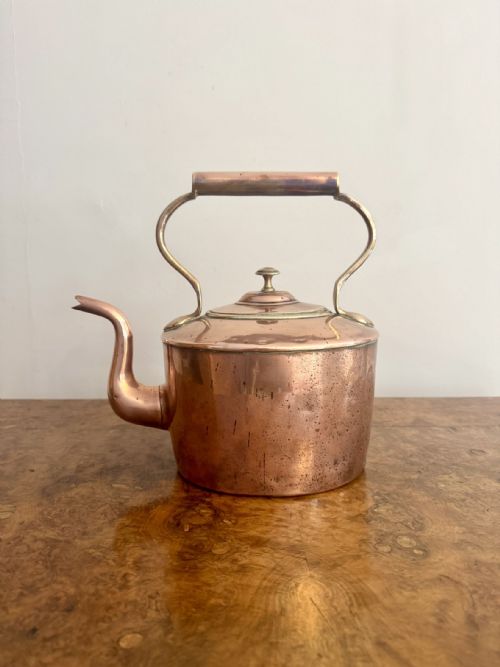
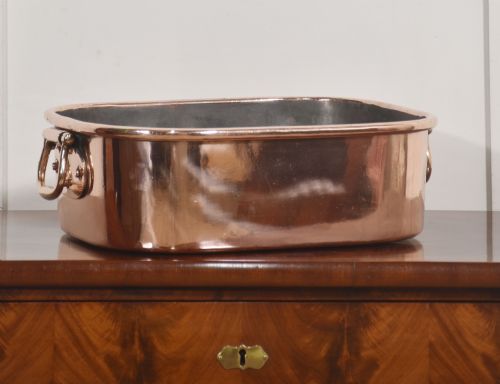
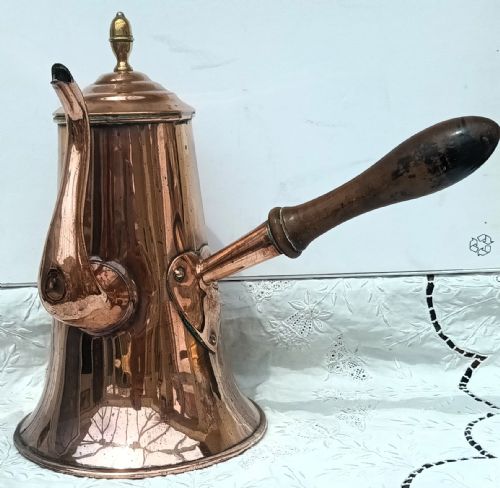


Brass Handled Kettle
A brass handled kettle brings warmth and traditional utility to a room, combining durable metalwork with practical domestic design.
Brass Handled Kettle
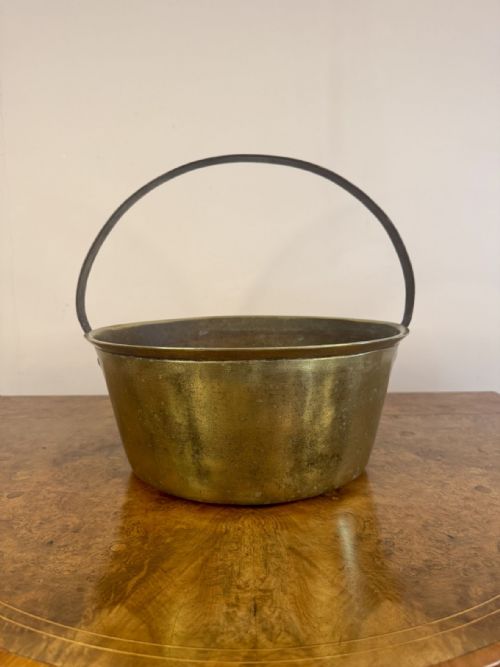
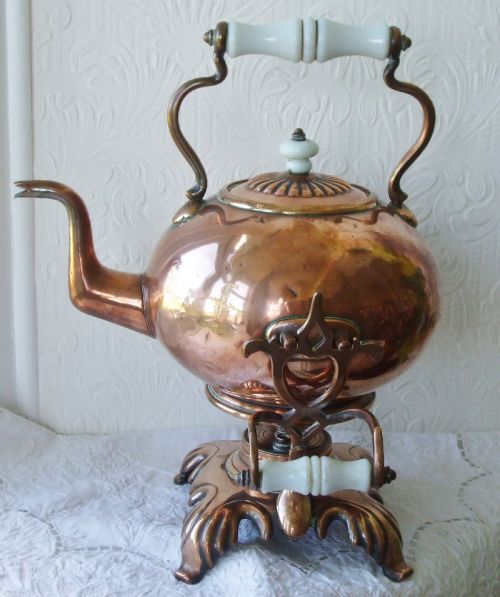
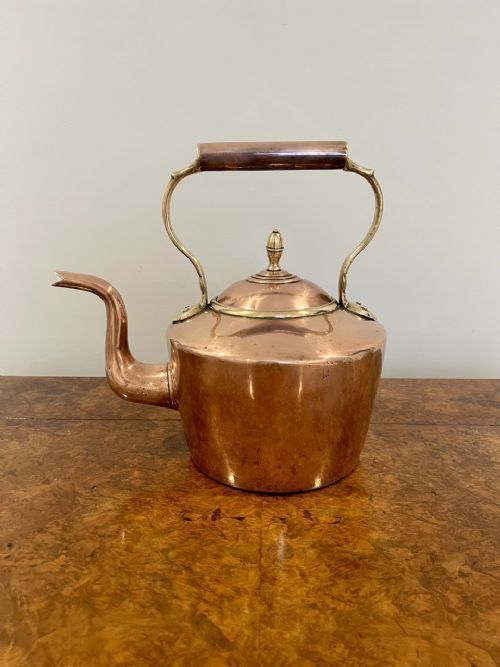
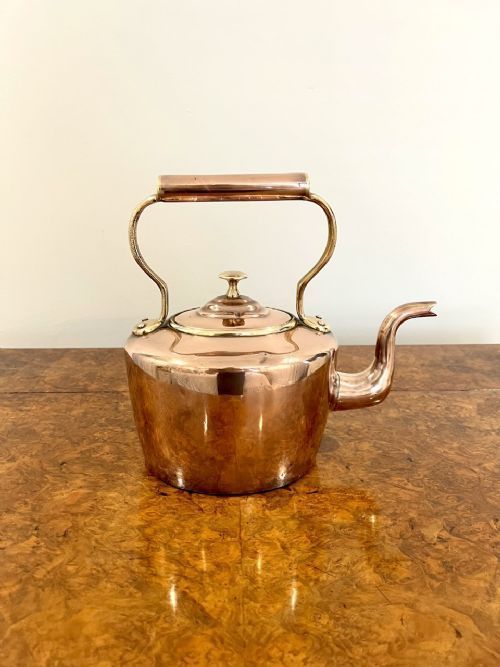
A brass handled kettle is a domestic vessel designed for heating water, typically constructed with a robust body and a distinctive metal handle. These items appear across Georgian, Victorian, and Edwardian periods, stretching from the early nineteenth century into the twentieth century. Buyers encounter various forms on this page, ranging from standard tea kettles and spirit kettles to larger water urns, coffee pots, and fish kettles.
The materials and styles reflect the shifting tastes of British domestic life over more than a century. George III and Victorian examples dominate the selection, showing both round and oval shapes intended for fireside use. Alongside standard tea vessels, collectors find preserve warmers, jam pans, and complete spirit kettles fitted with stands.
How they were made
Makers utilised durable metals such as copper, brass, bronze, and iron to construct these vessels, often combining materials within a single piece. Many kettles feature polished copper bodies paired with contrasting brass handles or mountings, whilst other examples incorporate ebonised wood, cane, or tin elements for insulation and grip.
Construction techniques relied on traditional metalworking skills suited to cookware and fireside interest items. Smithing and joining methods produced watertight vessels capable of withstanding direct heat, while decorative styling emerged through periods including the Aesthetic Movement and Arts and Crafts.
Brass Handled Kettle Retail Price Guide 2026
Typical asking prices for brass handled kettle among the pieces listed under this phrase on Sellingantiques today, from the lower quarter to the upper quarter. They describe what is for sale here now, not the wider market.
What varies in quality
The refinement of form and the integrity of construction separate standard utilitarian vessels from exceptional examples. Superior pieces display balanced proportions, clean lines on round or oval bodies, and well-executed joints between the main body and the spout or handle.
The choice of supplementary materials also influences the overall character of a piece. Finer items incorporate carefully turned ebonised wood or cane on the handle, or retain complete original stands in the case of spirit kettles and samovars.
William Soutter And Sons
The Brass Handled Kettle Glossary
- Spirit kettle
- A kettle mounted on a metal stand with an integrated spirit burner underneath for heating water at the table or in the parlour.
- Samovar
- A large heated metal urn traditionally used to boil water for tea, often featuring a spigot at the base.
- Fish kettle
- An elongated metal pan with a lid, designed specifically for poaching whole fish.
- Preserve warmer
- A deep open pan used for boiling fruit and sugar, associated with fireside and kitchen utility.
- Aesthetic Movement
- A late nineteenth-century design style emphasising visual beauty over narrative or moral function.
Brass Handled Kettle: Frequently Asked Questions
What is a brass handled kettle used for?
These vessels served practical heating and boiling functions in British households, from warming water for tea to use in larger samovars and fish kettles.
Over time, many transitioned from active kitchen use to fireside decoration and collection.
How do I identify a George III kettle?
George III examples typically date around the turn of the nineteenth century and often feature hand-hammered copper bodies with distinct proportions.
They frequently display traditional craftsmanship pre-dating later Victorian mass production methods.
What is an Edwardian spirit kettle?
Edwardian spirit kettles combine the main water vessel with a matching metal stand and an under-burner for heating.
They represent a more formal parlour tradition from around the early twentieth century.
How do I care for antique copper and brass?
Maintenance depends on whether you prefer a bright polished shine or the natural aged patina developed over centuries.
Gentle cleaning without harsh abrasives preserves the historic metal surface.