




Brass Handle Campaign Chest
A brass handle campaign chest is a portable, two-part sectional chest built for travel, offering robust storage with flush-fitting brass hardware.
Brass Handle Campaign Chest
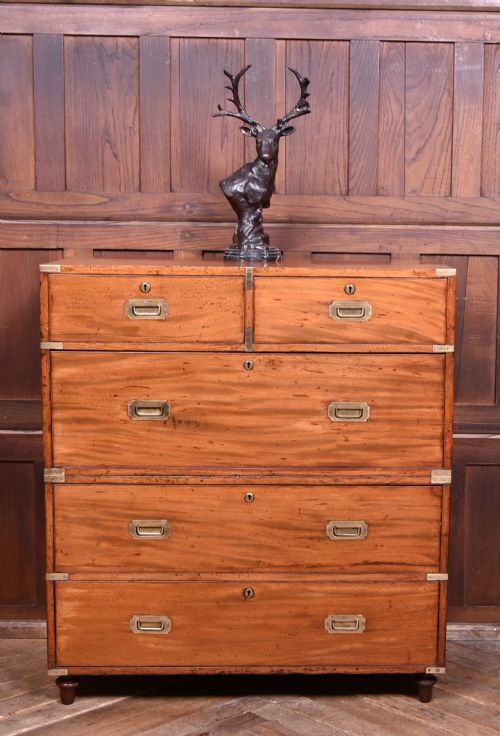
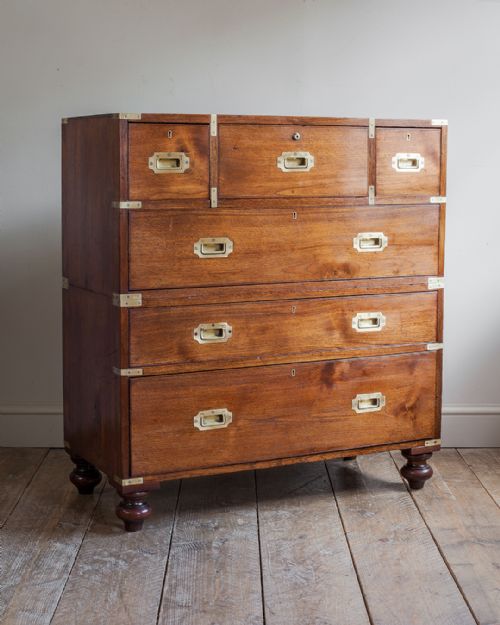
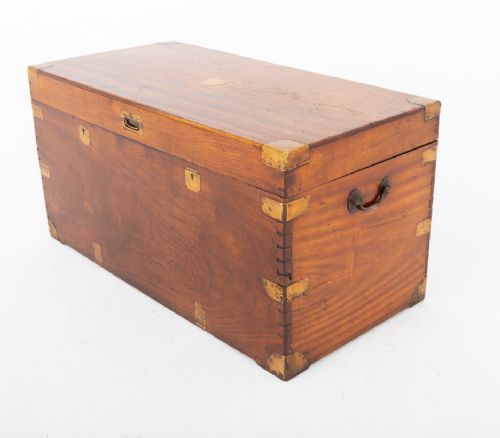
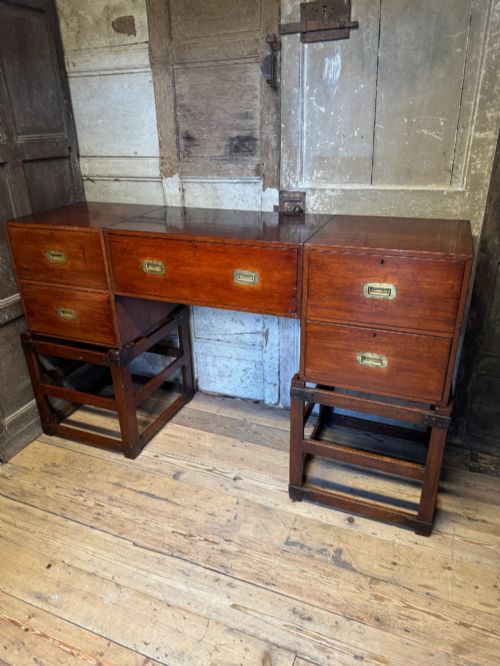
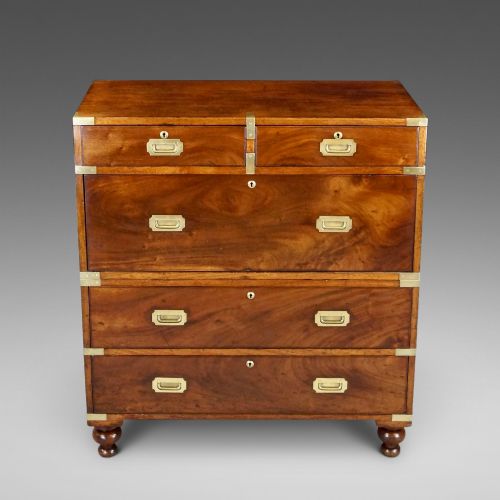
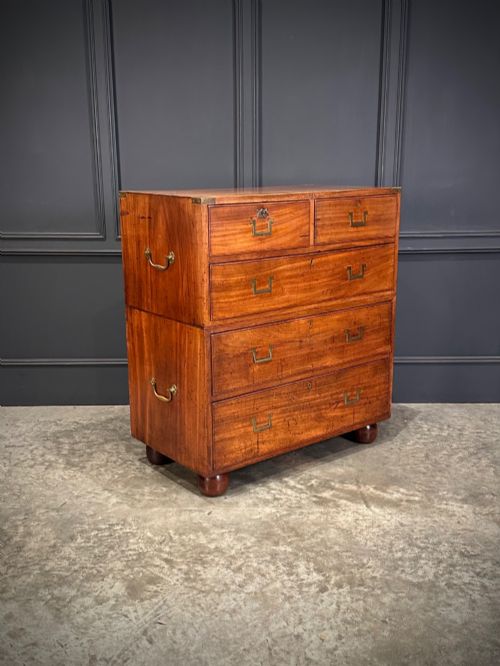
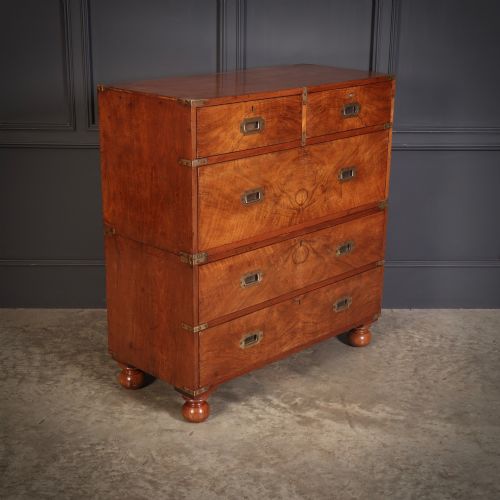
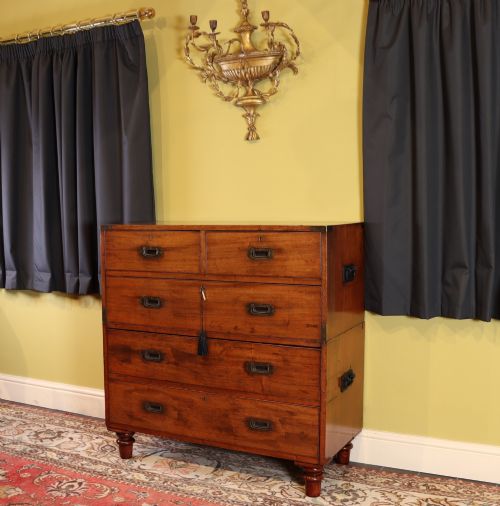
A brass handle campaign chest is a modular piece of furniture designed for military officers and travellers on the move. These chests split into two separate sections to ease transport across rough terrain, fastened together by metal brackets and side carrying handles.
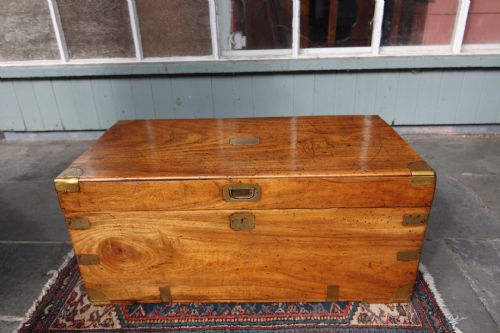
Most examples found here date from the nineteenth century, particularly the Victorian period, and take the form of chests of drawers or secretaire cabinets. Mahogany, teak, and camphor wood dominate the selection, often featuring recessed brass handles that prevent snagging during transit.
How They Were Made
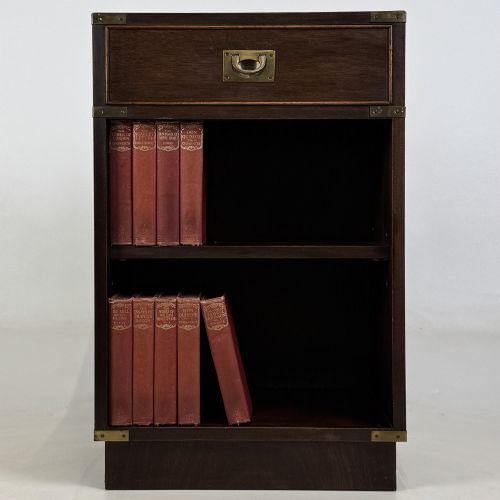
Cabinetmakers constructed these chests from dense, durable timbers such as mahogany, teak, and camphor wood to withstand tropical climates and rough handling. Brass corners, binding, and flush handles reinforce every edge and join, protecting the wood from heavy knocks.
Drawers are traditionally arranged in two separate carcases, secured with metal straps and side carrying handles for easy loading. Many include secret compartments or fitted writing drawers designed for the practical needs of officers in the field.
Camphor wood trunks retain a powerful botanical scent after two centuries, having spent their youth warding off tropical insects at sea.
What Varies in Quality
The distinction between standard campaign furniture and exceptional work lies in the timber selection and the precision of the brass fittings. Figured woods, such as burr walnut or heavily grained mahogany, elevate the finish beyond basic military utility.
Construction details like dovetailed drawer linings, original recessed brass handles, and maker-stamped locks indicate high-grade workshop production. Pieces that retain their original two-part configuration and structural integrity command closer attention from collectors.
S. W. Silver & Co·Ross & Co·Army & Navy
The Brass Handle Campaign Chest Glossary
- Secretaire chest
- A chest of drawers featuring a fitted pull-out writing desk in the top drawer. This interior contains small pigeonholes and miniature drawers for correspondence.
- Flush handle
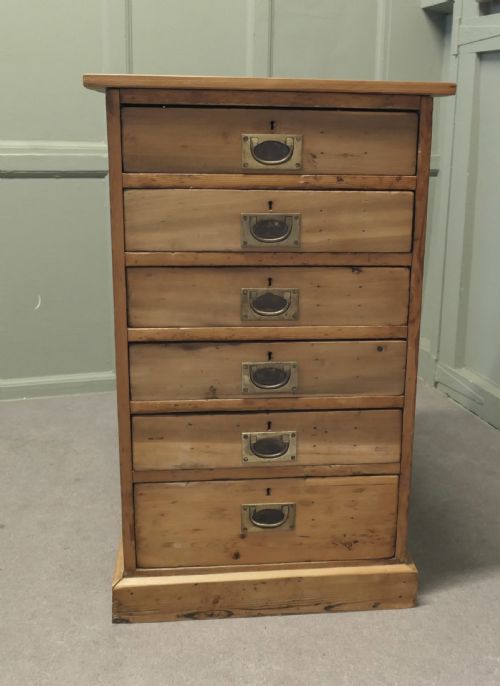
- A metal handle set into a recessed plate so it does not project beyond the face of the drawer. This design prevents snagging during movement.
- Camphor wood
- An aromatic timber frequently utilised in campaign chests made for colonial service. Its natural scent helped repel insects during long sea voyages.
- Two-part chest
- A piece of furniture divided horizontally into an upper and lower carcase. This modular construction simplified packing and transport.
Brass Handle Campaign Chest: Frequently Asked Questions
Why do campaign chests come in two sections?
These chests split into an upper and lower carcase so they could be packed easily into luggage cases and loaded onto pack animals or wagons during military campaigns.
This modular construction also made it simpler to carry heavy hardwood furniture through narrow ship hatches and up steep stairwells.
How do I identify a Victorian campaign chest?
Victorian examples usually feature dense timbers like mahogany, teak, or camphor wood paired with brass corner brackets and flush-fitting handles. They often bear maker stamps on the brass drawer locks or handles.
Many pieces from this era also include side carrying handles and a horizontal split across the middle of the carcase.
What is a secretaire campaign chest?
A secretaire chest incorporates a top drawer that folds down to reveal a writing surface, small pigeonholes, and tiny drawers. Officers used these drop-front compartments for drafting dispatches and storing paperwork.
This built-in desk function removed the need to carry a separate writing box while on active service.
How should I care for camphor wood furniture?
Camphor wood benefits from regular dusting with a soft cloth and occasional treatment with appropriate wood wax to keep the grain nourished. Avoid placing the chest in direct sunlight or near heat sources to prevent the timber from splitting.
The natural aromatic oils in the wood require little maintenance beyond gentle cleaning to preserve their distinctive scent.