


Brass Hallway Coat Hooks
Brass hallway coat hooks organise entranceways with enduring metalwork, offering sturdy hanging space mounted on period timbers.
Brass Hallway Coat Hooks
These brass hallway coat hooks encompass wall-mounted racks, single fixtures, and complete hall stands designed for domestic entranceways. Pieces range from late nineteenth-century Victorian designs to early twentieth-century Edwardian and Arts and Crafts examples.
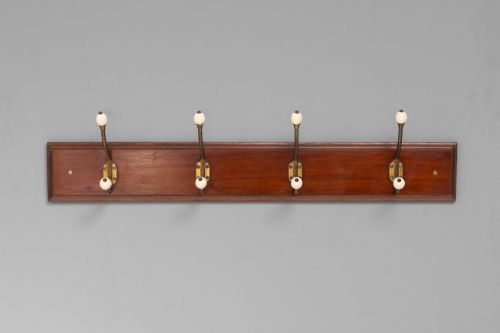
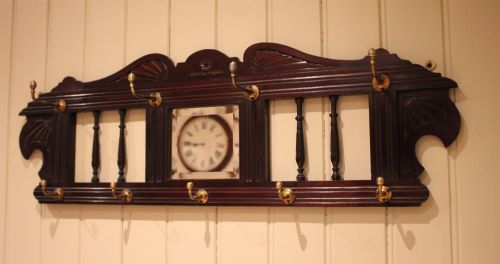
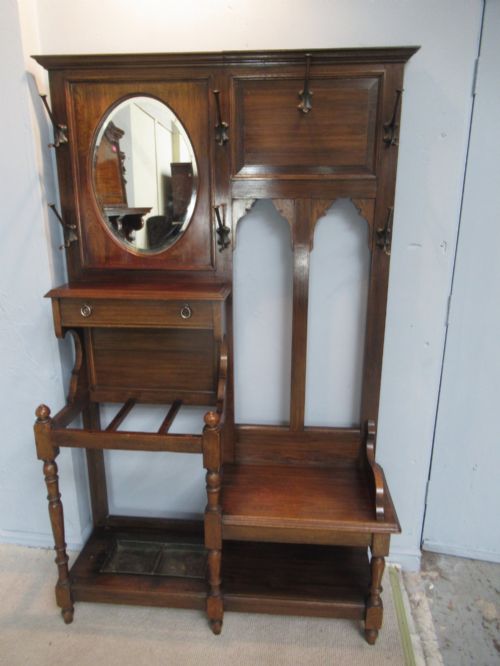
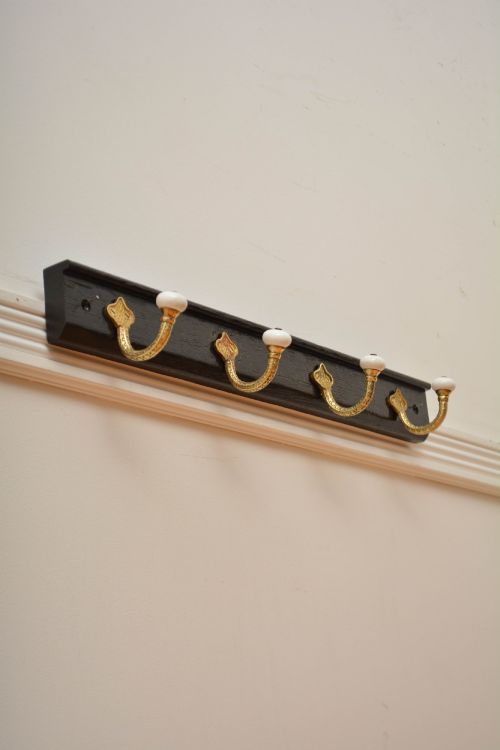
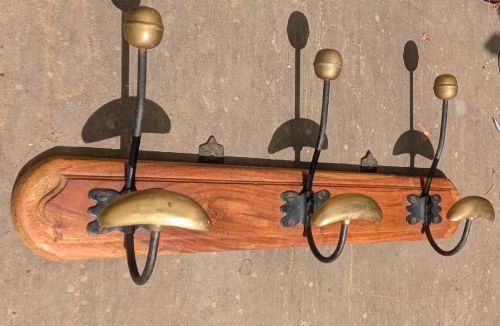
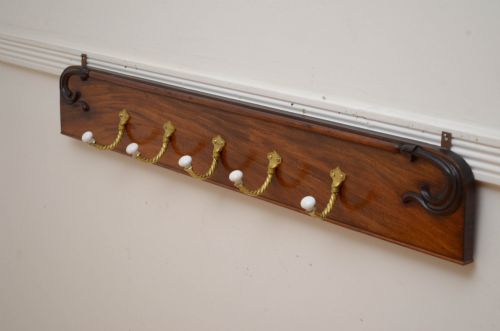
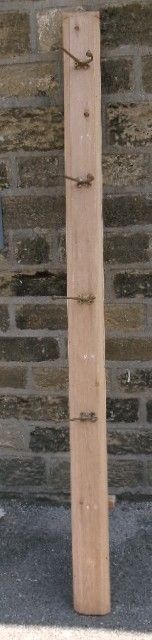
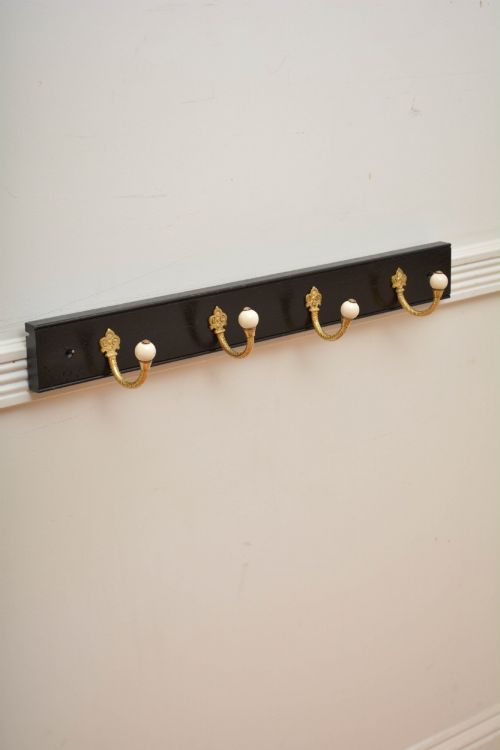
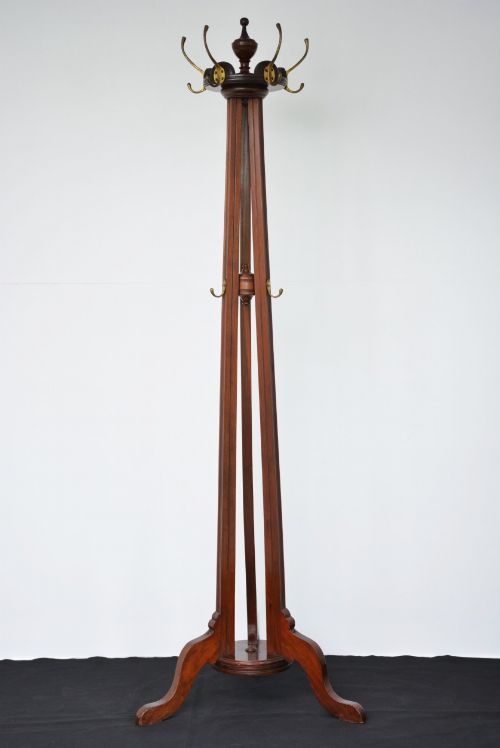
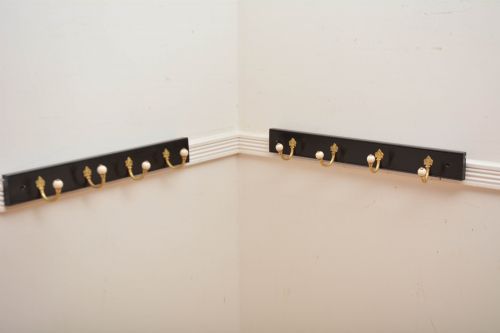
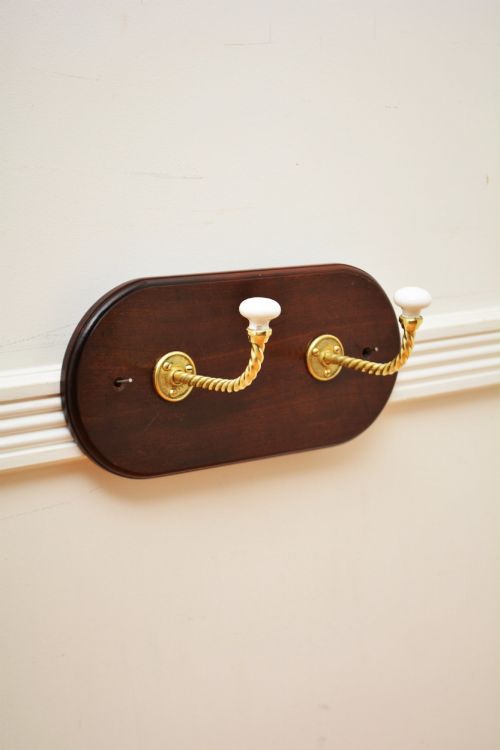
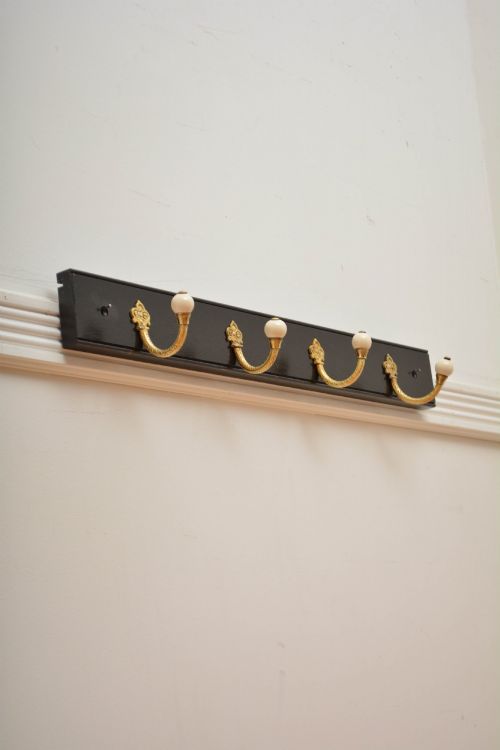
The version most commonly met on this page is the mounted rack featuring cast brass hooks fixed to wooden backboards such as mahogany, oak, and ebonised wood. Other variations include wall mirrors fitted with brass hooks and freestanding hall trees.
Originating across British and French workshops, these utilitarian items combine functional metalwork with decorative backplates. They provide practical hanging storage for hats and coats while retaining the character of their respective periods.
Materials and construction methods
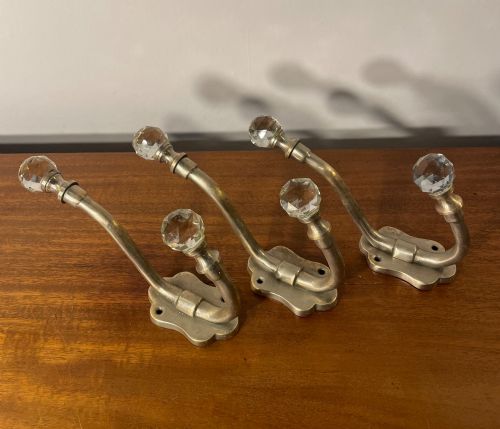
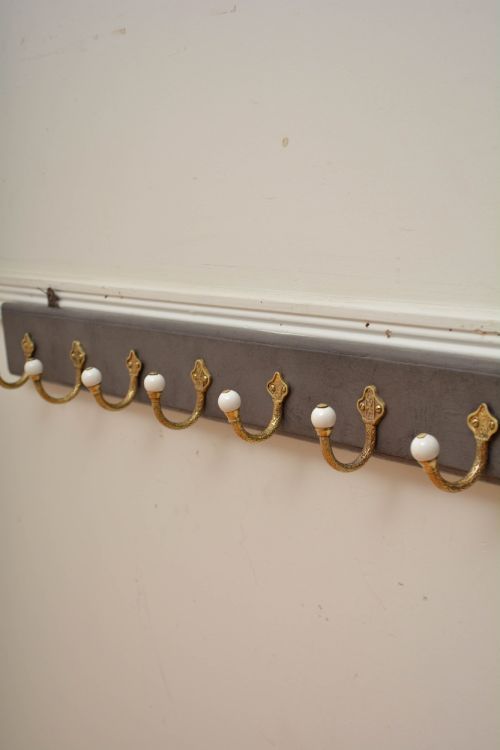
Metal components rely on cast brass and bronze, frequently shaped with chased details or scalloped profiles. Many hooks incorporate ceramic, porcelain, or glass knobs at the terminals to protect garments.
Backboards and stands utilise dense hardwoods including mahogany, walnut, and oak, alongside pine and ebonised wood. These timbers provide the structural rigidity necessary to support heavy winter garments when wall-mounted or freestanding.
Assembly techniques combine traditional joinery for the wooden frames with secure screw or bracket fixings for the metal hooks. Mirrors, where present, often feature deep bevelled glass plates secured within wooden surrounds.
Listings feature periods spanning from the Victorian era through Edwardian times, utilising brass, mahogany, oak, and ceramic.
Distinctions in quality and execution
The refinement of the casting work separates standard hardware from superior examples. Finely cast mounting plates and chased brass display sharper detailing and greater weight.
Selection of timber dictates the overall standard of the piece. Solid walnut, figured mahogany, and heavy oak backboards represent higher craftsmanship compared to simpler pine or secondary woods.
Integration between the metal hooks and the wooden backplate indicates the level of care taken during manufacture. Matching sets with original screws and complementary ceramic or porcelain elements demonstrate a more cohesive design.
Jas. Shoolbred
The Brass Hallway Coat Hooks Glossary
- Backboard
- The horizontal or vertical timber panel upon which coat hooks are mounted. It distributes the weight of garments across the wall fixings and provides a decorative wooden background.
- Hall stand
- A freestanding piece of hallway furniture combining coat hooks, a hat rack, a mirror, and frequently a stick or umbrella stand at the base.
- Portmanteau
- A large wall-mounted bracket or rack designed for holding hats, coats, and accessories in an entrance hall.
- Ebonised
- Wood treated with a dark finish to imitate the appearance of ebony. It provides a stark contrast against polished brass fittings.
- Chased
- Metal decorated by hammering or indenting patterns onto the surface rather than casting them in relief.
Brass Hallway Coat Hooks: Frequently Asked Questions
What is a hall tree?
A hall tree is a large freestanding piece of hallway furniture that combines coat hooks, a mirror, and umbrella storage into a single unit.
These pieces were designed to stand directly against an entranceway wall to greet visitors and organise outdoor wear.
How do I secure a heavy coat rack?
Heavy coat racks require secure fixing directly into wall studs or masonry using appropriate screws and rawlplugs to support the weight of winter garments.
Because these pieces carry significant loads, proper wall anchors prevent the mounting plates from pulling free over time.
What woods were used for Victorian coat racks?
Victorian coat racks commonly utilised dense hardwoods such as mahogany, walnut, and oak, alongside ebonised wood and softer pine backboards.
These timbers were often polished or stained to complement the dark interior aesthetics of nineteenth-century hallways.
Why do some hooks have ceramic knobs?
Ceramic or porcelain knobs were added to the ends of brass hooks to prevent garments and hats from catching or tearing on bare metal.
This functional detail also introduced a decorative contrast against the polished brass and dark timber backboards.