



Brass Glass Vitrine
A brass glass vitrine brings together clear panels and bright metal framing to show off small collections and treasured objects properly.
Brass Glass Vitrine
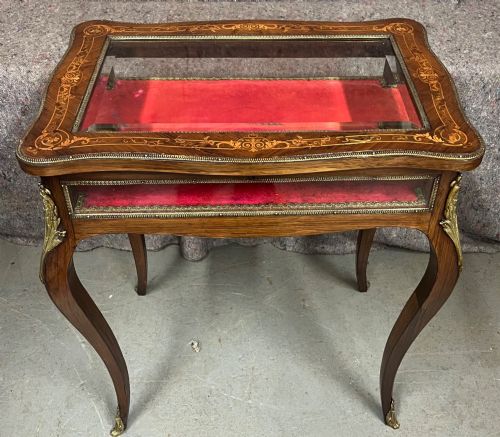
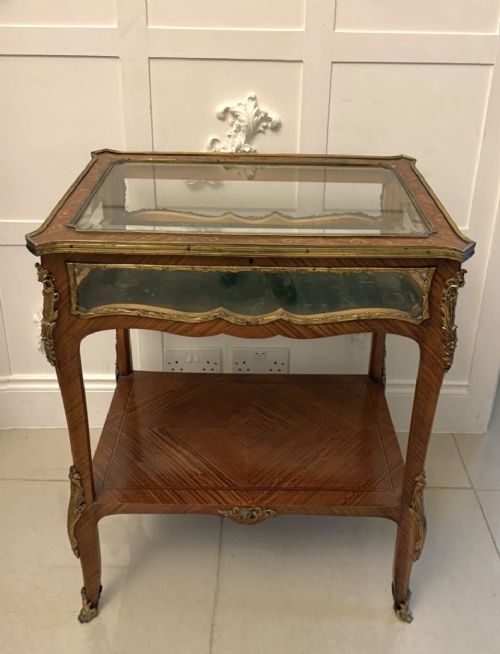
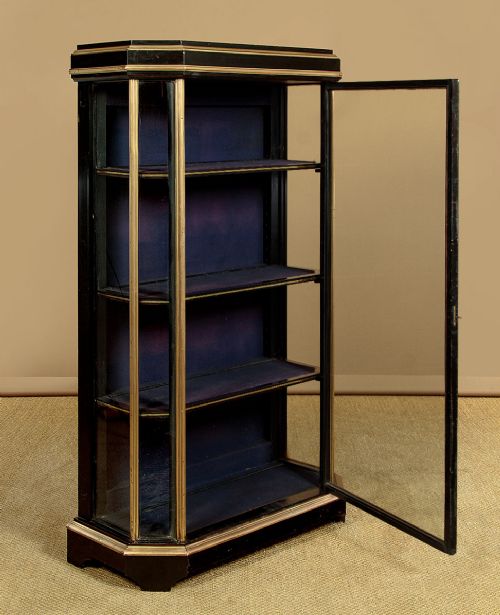
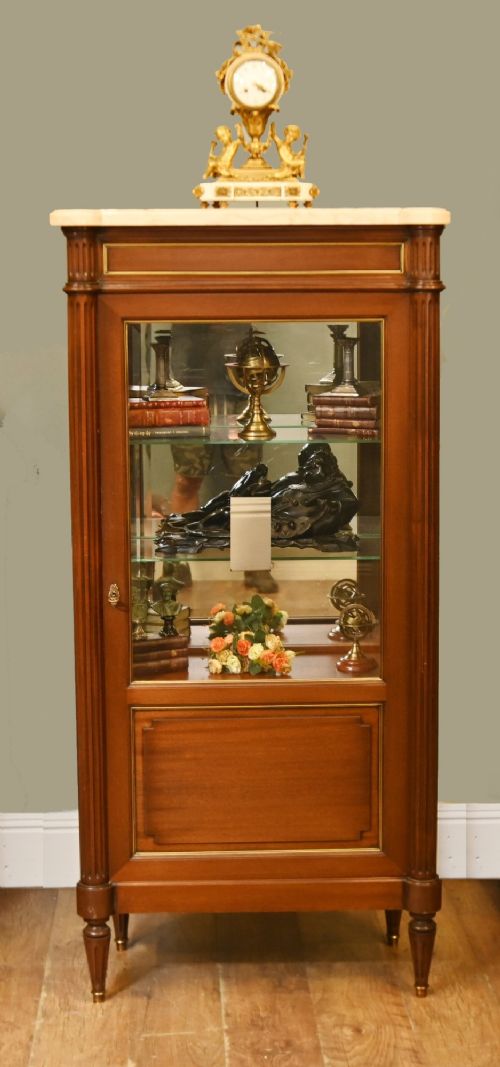
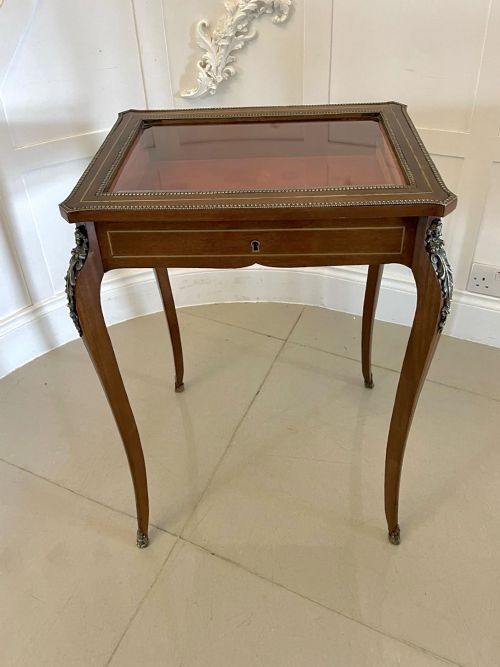
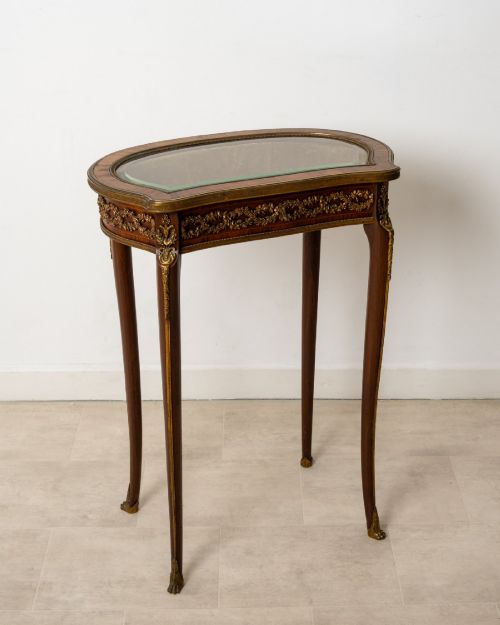
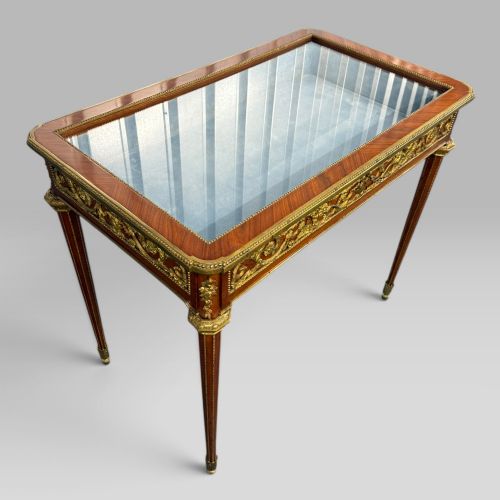
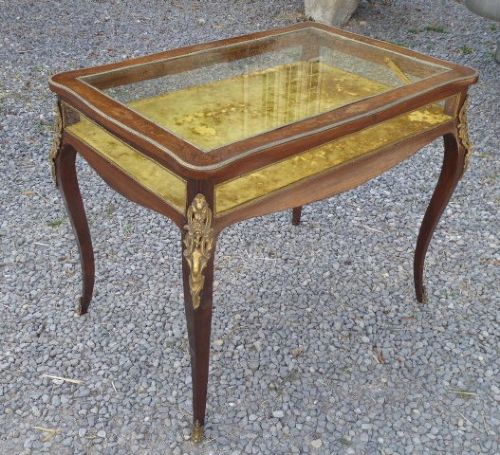
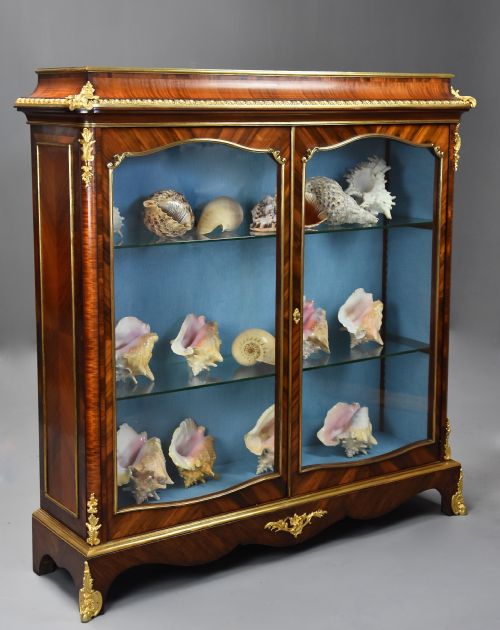
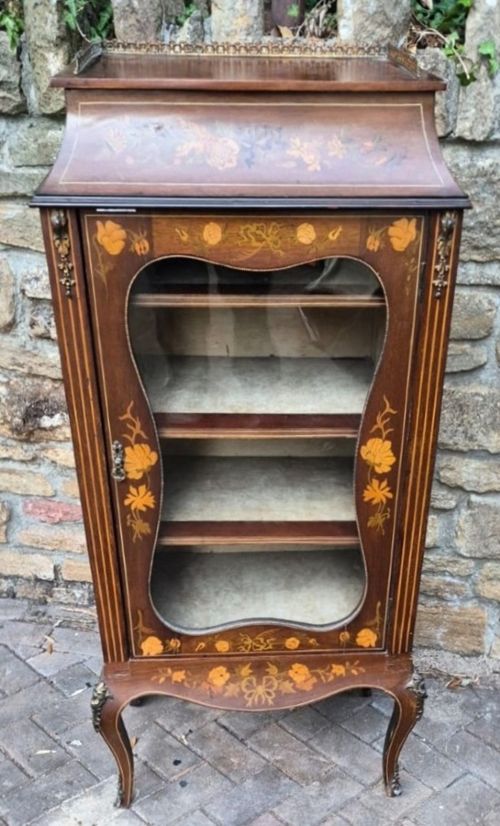
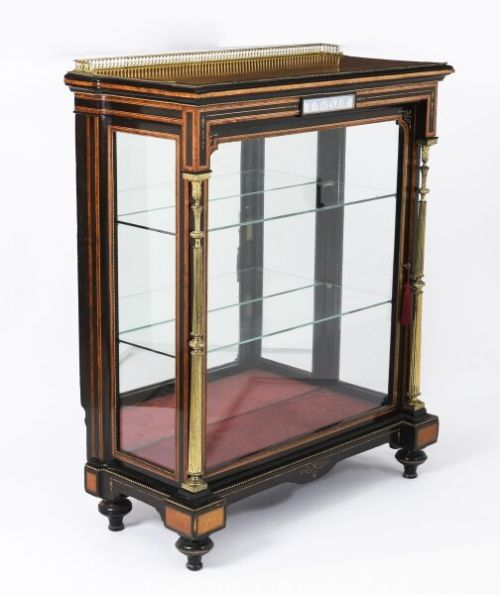
When you search for a brass glass vitrine, you encounter French and English display cabinets, bijouterie tables, and bookcases spanning the nineteenth and twentieth centuries. These pieces combine glazed panels with structural timber frames and metal mounts to create enclosed display spaces for fragile items.
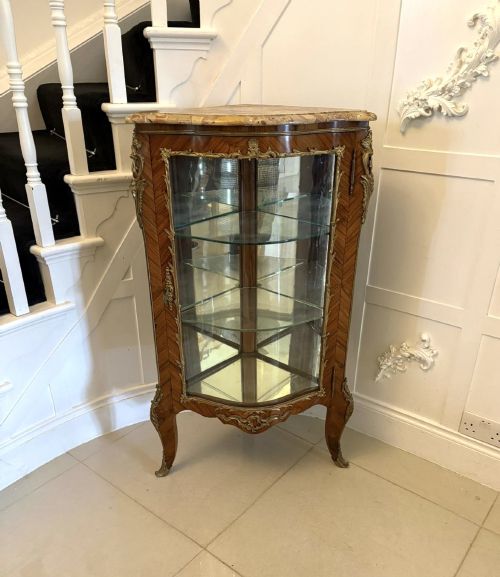
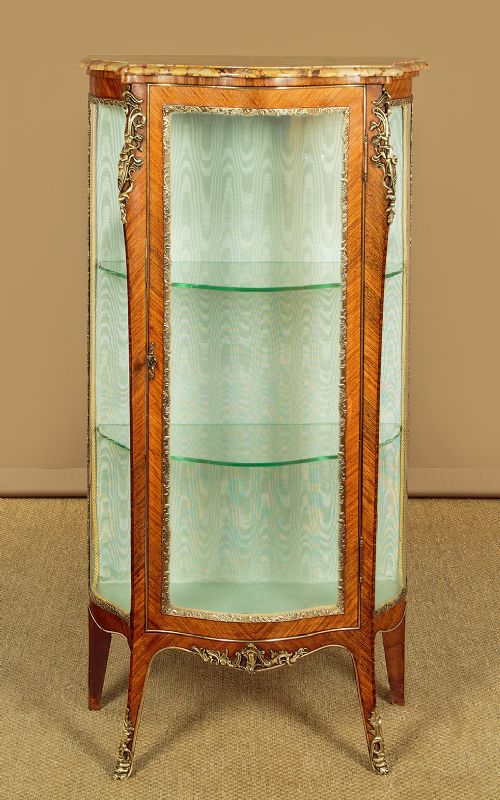
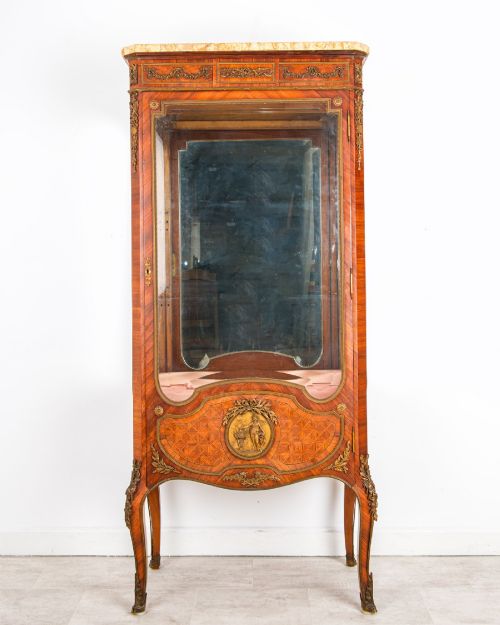
The pieces on this page lean heavily towards nineteenth-century French revival designs, particularly Louis XV and Louis XVI styles, alongside Edwardian examples and shop display counters. You will find floor-standing cabinets, corner units, and tabletop vitrines designed to sit on lower furniture.
The core function of a brass glass vitrine remains exhibition and protection, keeping dust away from delicate ornaments while allowing light to enter from multiple angles. Whether configured as a tall cabinet or a low bijouterie table with a glazed lid, the focus stays squarely on the interior contents.
How they were made
Cabinet makers built the structural carcases using timbers such as mahogany, kingwood, rosewood, and amboyna, often applying veneers and marquetry inlay to the exterior surfaces. Frames were jointed carefully to support heavy glass panes without warping over decades of use.
Brass, ormolu, and gilt bronze formed the mounts, bezels, and framing strips that secured the glass and highlighted the structural lines of the cabinet. Velvet and fabric linings were fitted to the interior bases of bijouterie tables and cabinet shelves to cushion displayed objects.
Marble tops appeared frequently on nineteenth-century French cabinets, adding weight and a cool stone surface above the glazed display section. Glazing bars and brass fillets held the individual glass panels firmly in place within the doors and sides.
Brass Glass Vitrine Retail Price Guide 2026
Typical asking prices for brass glass vitrine among the pieces listed under this phrase on Sellingantiques today, from the lower quarter to the upper quarter. They describe what is for sale here now, not the wider market.
Shop display counters once used for selling Parisian millinery now find new life holding domestic curiosities.
What varies in quality
The standard of the metalwork separates average pieces from exceptional ones, with chased ormolu mounts showing crisp detail and heavy gilding compared to plain brass pressings. Finely cast mounts fit flush against the timber curves and follow the contours of the cabinet precisely.
Timber selection and veneer matching dictate the visual depth of the cabinet body, particularly in kingwood and marquetry pieces where grain patterns must align symmetrically. Robust joinery in the door frames ensures that glass doors hang true and latch securely without sagging.
Interior detailing, such as hand-cut dovetails in small drawers and original velvet or fabric linings, points to higher workshop standards. The clarity and thickness of the glass panes, along with the neatness of the glazing putty or brass beads, complete the overall construction standard.
François Linke·Paul Sormani·F. Sage and Co.·Edwards and Roberts·Siegel
The Brass Glass Vitrine Glossary
- Vitrine
- A glass-sided display cabinet designed for showing porcelain, silver, and small curiosities. These pieces often feature glazed doors and sides to maximise interior light.
- Bijouterie table
- A glass-topped display table, sometimes called a jewellery table, with a hinged lid that lifts to reveal a lined compartment for small valuables. They sit on slender legs at comfortable viewing height.
- Ormolu
- Gilded bronze mounts applied to furniture edges, corners, and locks for decoration. The technique involves coating bronze with a gold amalgam and heating it.
- Marquetry
- Decorative veneer work forming intricate pictures or geometric patterns using various coloured woods. Craftsmen cut thin slices of timber and fit them together before gluing them to the carcase.
- Vernis Martin
- A type of simulated Japanese lacquer developed in eighteenth-century France and replicated in later revival pieces. It uses multiple layers of translucent varnish over painted scenes.
- Boulle inlay
- The practice of decorating furniture surfaces with inlaid brass and tortoiseshell, named after the French cabinet maker André-Charles Boulle.
Brass Glass Vitrine: Frequently Asked Questions
What is a brass glass vitrine used for?
These cabinets serve to display porcelain, silver, medals, and small decorative objects while protecting them from dust and handling. The glass sides and doors allow light to reach the collection from multiple directions.
Tabletop versions and bijouterie tables specifically hold flat items, jewellery, and pocket watches beneath a transparent lid for close inspection.
How do I clean a vitrine?
Use a soft, dry cloth for dusting the timber frame and brass mounts, avoiding harsh polishes that can build up in carved crevices or damage delicate veneers. Glass panels respond best to standard glass cleaner applied to a cloth rather than sprayed directly onto the surface near the wood.
Check that moisture does not seep into the joints or fabric linings during cleaning, particularly on older silk or velvet bases.
Are the shelves adjustable?
Many nineteenth-century and Edwardian vitrines feature fixed wooden or glass shelves supported by internal wooden battens or metal brackets. Adjustable shelf supports appear more frequently in later twentieth-century cabinets.
Examining the interior sides reveals whether shelf heights can be altered without modifying the original cabinet structure.
How do I date a brass glass vitrine?
Dating relies on identifying the prevailing style, such as Louis XV revival, Directoire, or Edwardian marquetry, alongside construction methods like screw types and timber preparation. Nineteenth-century pieces often display heavier ormolu mounts and dense mahogany or kingwood carcases.
Twentieth-century shop display counters and cabinets show industrial framing techniques and standardised brass extrusions.
Can these cabinets support heavy items?
Most vitrines are designed for light decorative objects, ceramics, and glassware rather than heavy bronze sculptures or dense stone items. Glass shelves in particular have weight limits determined by their thickness and span.
Distributing weight evenly across the base and lower shelves protects both the glass and the underlying timber frame.