

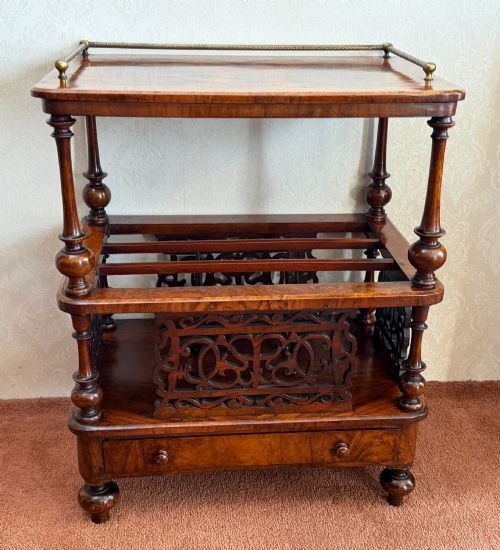
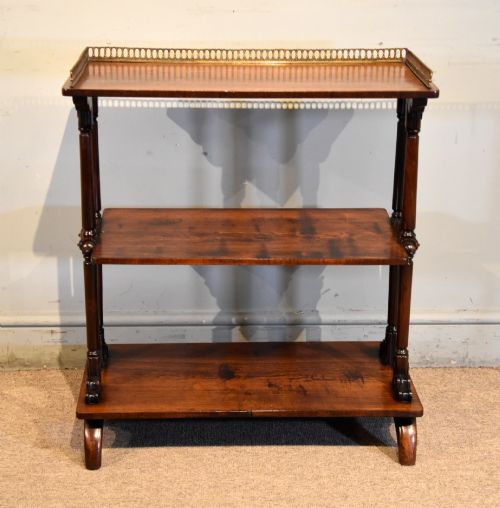
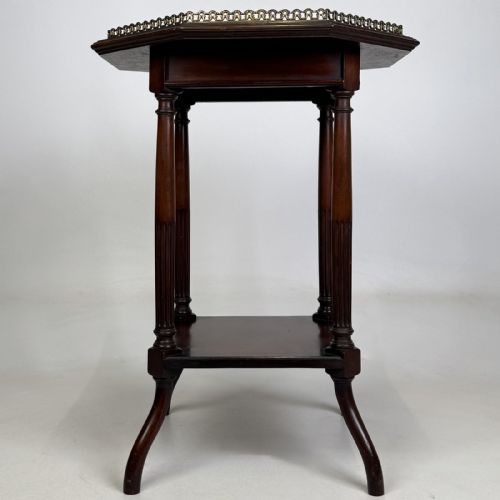
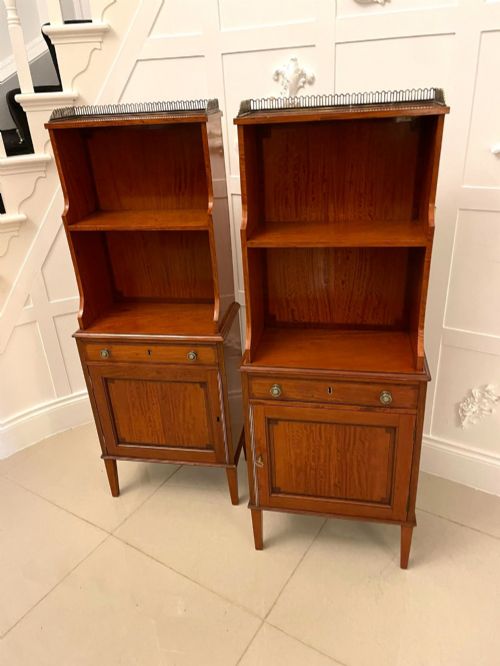
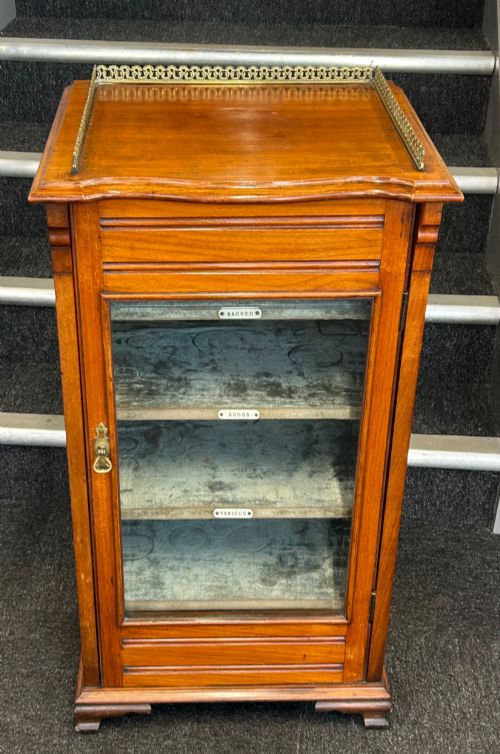
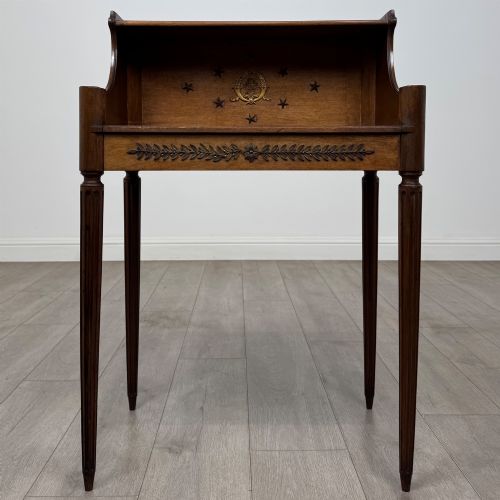
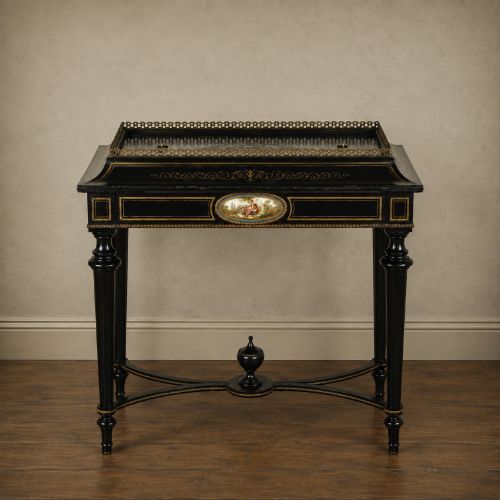
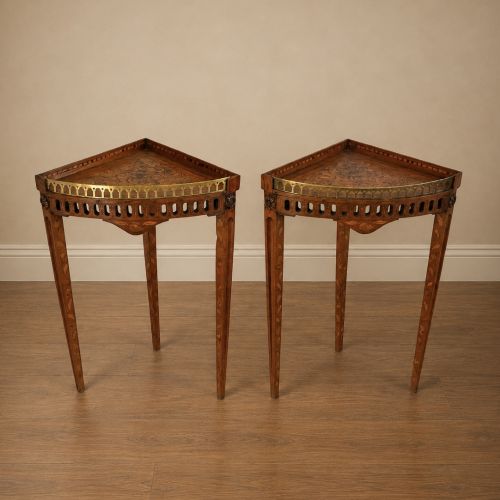
Brass Gallery Stand
A brass gallery stand brings a refined metal rail to tables, cabinets and etagere tiers, holding books and porcelain secure.
Brass Gallery Stand
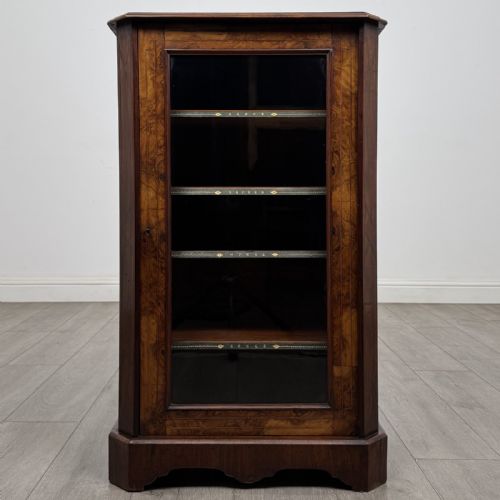
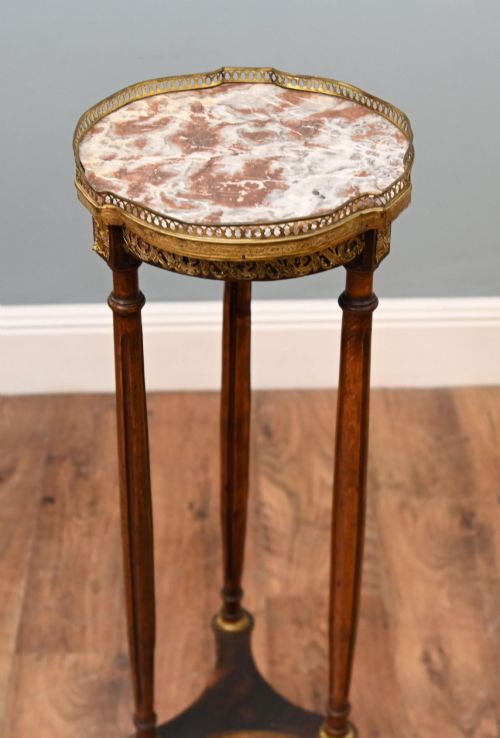
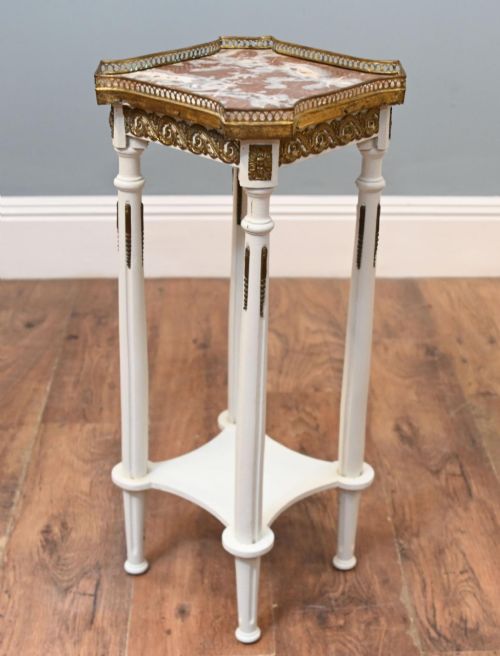
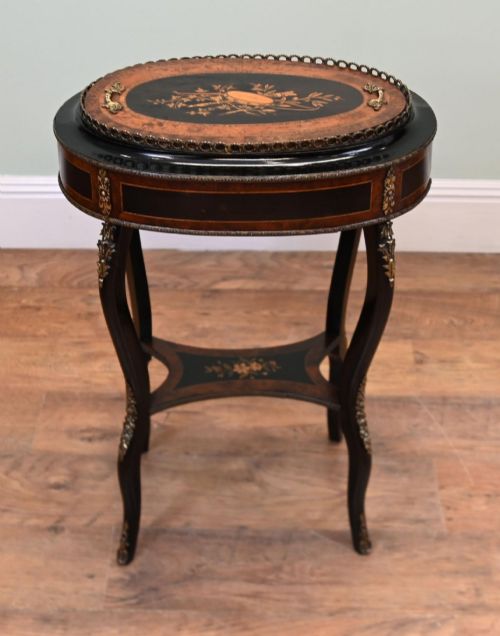
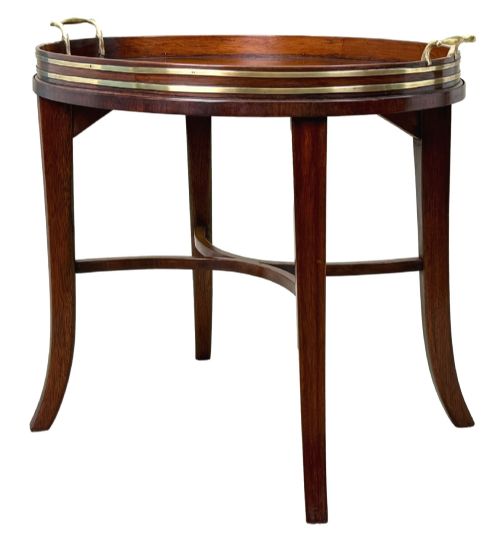
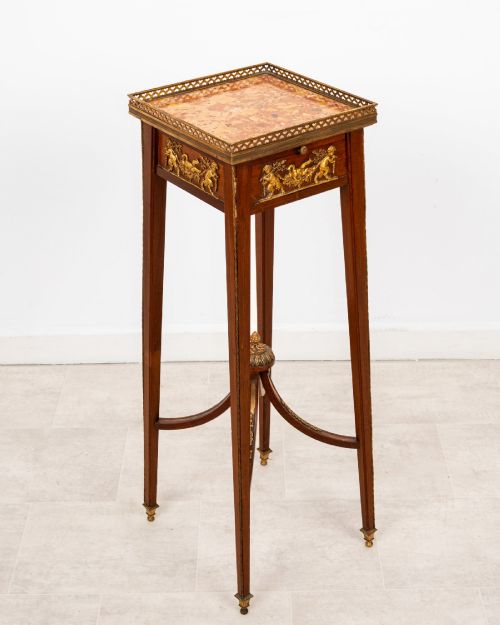
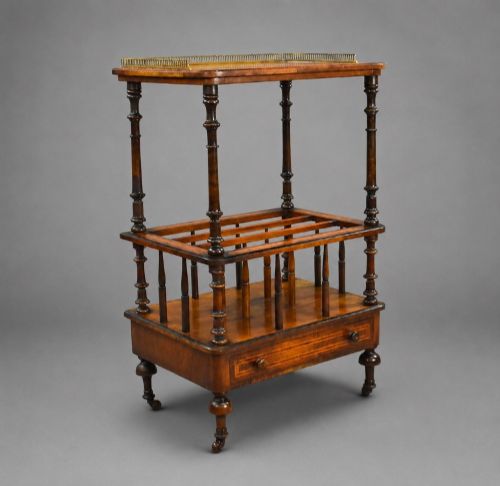
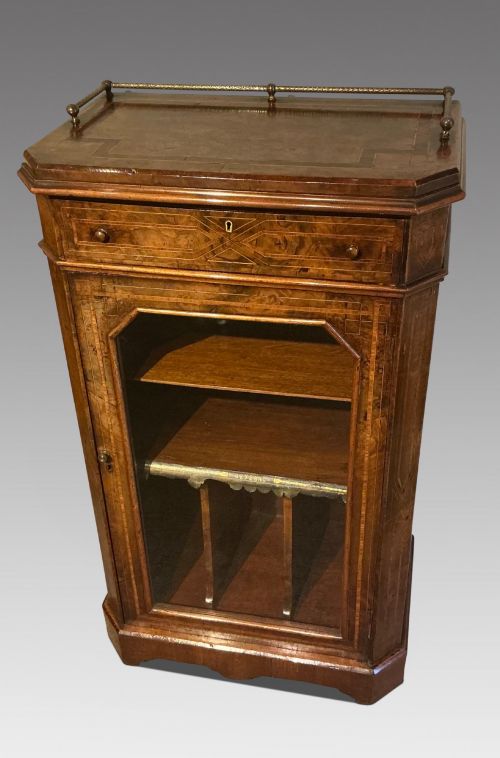
A brass gallery stand is defined by its characteristic open metal rail enclosing the top surface of a small piece of furniture. The selection comprises occasional tables, side tables, music cabinets, etageres, bookcases, whatnots and jardiniere tables spanning the eighteenth century through to the early twentieth century.
Most items you encounter belong to the Victorian and Edwardian periods, alongside numerous French examples styled in the Regency, Louis XV, Louis XVI, Napoleon III and Empire manner. These stands take various functional forms, from multi-tiered etageres and corner lamp tables to marble-topped plant holders and drinks tables.
How they were made
The construction relies on solid timber frames paired with decorative veneers, uniting mahogany, walnut, rosewood, burr walnut and satinwood with cast brass galleries and ormolu mounts. Secondary materials such as marble, onyx, glass, ebonised wood and painted porcelain plaques appear frequently across French and English pieces.
Makers shaped these stands using traditional cabinet-making techniques, securing the delicate brass rails around table tops, trays and shelf edges with small screws or pins. Marquetry inlay, brass-bound decoration and intricate tier supports demonstrate the high level of joinery required to balance fine woodwork with metal fitments.
Brass Gallery Stand Retail Price Guide 2026
Typical asking prices for brass gallery stand among the pieces listed under this phrase on Sellingantiques today, from the lower quarter to the upper quarter. They describe what is for sale here now, not the wider market.
Current listings feature pieces spanning the eighteenth century through to the 1920s, constructed in mahogany, walnut, rosewood and satinwood.
What varies in quality
Quality rests in the crispness of the brass casting for the gallery and the precision with which the metal rail fits the contour of the wooden top. Superior examples show harmonious grain matching in the veneers, whether rosewood, mahogany or burr walnut, and robust structural joinery on multi-tiered etageres.
The refinement of secondary materials also dictates the standing of a piece, separating standard production from exceptional works. Fine marble or onyx inserts, delicate marquetry inlay and well-executed ormolu mounts distinguish the most accomplished examples from simpler domestic furniture.
Gillows·François Linke·George Bullock·Halls Patent
The Brass Gallery Stand Glossary
- Gallery
- A raised miniature railing, typically pierced or turned brass, running along the outer edge of a shelf or tabletop to prevent items from sliding off.
- Etagere
- A set of open shelves or tiers designed for displaying small ornaments, books or porcelain.
- Jardiniere
- A decorative container or stand specifically made to hold plants and flowers, often lined with metal and fitted with a marble or wood top.
- Canterbury
- A low piece of furniture featuring partitioned sections for sheet music, folios or books, frequently topped with a carrying handle or gallery.
- Ormolu
- Gilded bronze used for decorative mounts and accents on fine furniture, particularly popular in French nineteenth-century design.
Brass Gallery Stand: Frequently Asked Questions
What is a brass gallery stand?
A brass gallery stand is any small furnishing - most commonly an occasional table, etagere or jardiniere - fitted with a distinct metal rail around the top. This raised border secures objects while adding a decorative metallic accent to the timber.
These pieces served various practical purposes in period interiors, functioning as lamp tables, display surfaces or bedside stands. The brass railing is the unifying feature across diverse forms and eras.
How do I identify the period?
Period identification relies on timber selection, structural form and decorative vocabulary. Eighteenth-century pieces often feature restrained mahogany or marquetry, while Victorian and Edwardian examples lean towards burr walnut and rosewood.
French pieces adopt regional design markers such as Empire or Louis XV styling, utilising ormolu mounts and marble inserts. Comparing the construction methods and wood ageing helps confirm the era of manufacture.
Where should I place one?
These versatile stands suit placement beside seating as lamp or drinks tables, or as display surfaces in hallways and libraries. Their compact footprint allows them to fit easily into smaller spaces.
Pieces with marble tops or metal-lined jardiniere inserts accommodate plants safely, while multi-tiered etageres work well for holding books and small decorative collections.
How do I care for the wood and brass?
Maintain the timber surfaces by applying appropriate wax polish sparingly and buffing gently with a soft cloth. Avoid placing wooden stands in direct sunlight or near heat sources to prevent veneer cracking.
Keep the brass gallery clean using a dry or barely damp cloth to avoid tarnishing the surrounding wood. Avoid harsh metal cleaners that might damage the polished timber adjacent to the rail.