



Brass Footed Wooden Box
These brass footed wooden box items combine timber and metal mountings to serve as tea caddies, cellarettes, and storage chests.
Brass Footed Wooden Box
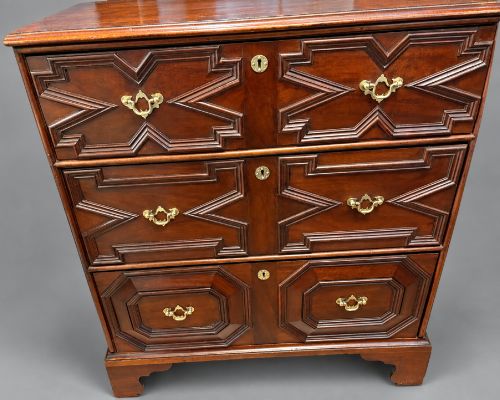
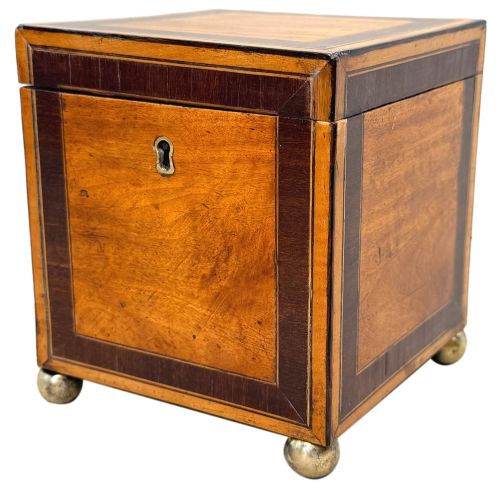
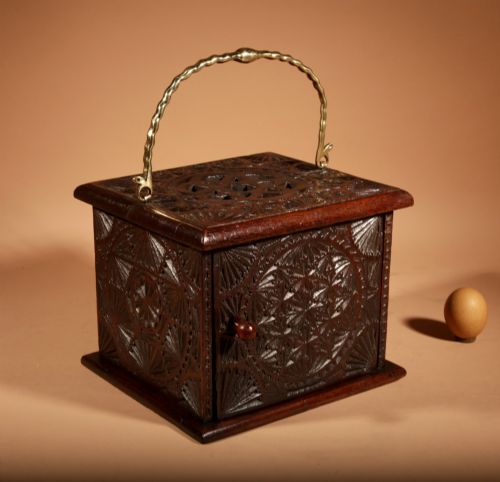
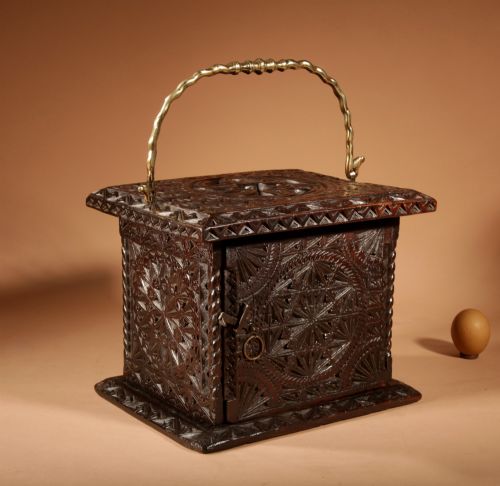
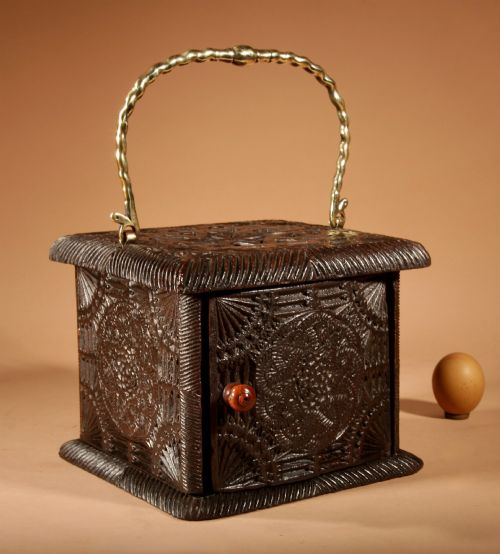
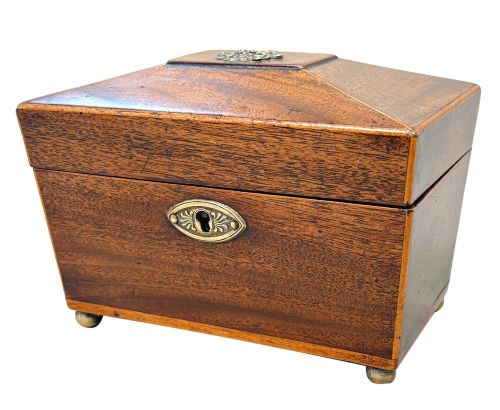
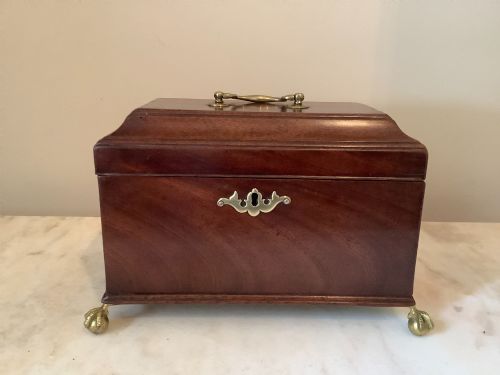
When you search for a brass footed wooden box, you encounter containers spanning the eighteenth, nineteenth, and twentieth centuries, including Regency sarcophagus forms and Georgian tea caddies. The selection incorporates oak chip carved foot stoves, mahogany cellarettes, and rosewood sewing boxes raised on metal supports.
Most items on this page fall into utilitarian or personal storage categories, ranging from Indian sandalwood jewellery boxes to Welsh coffor bach and camphor trunks. These objects served specific domestic functions in period interiors, from holding tea leaves to storing letters and textiles.
Materials and construction
Cabinet makers utilised dense hardwoods such as mahogany, rosewood, oak, satinwood, and Karelian birch, often applying ebony inlays, penwork, or tortoiseshell veneers. Metal mounts and feet in brass provide structural lift and decorative contrast to the timber bodies.
Joinery methods reflect the period of manufacture, from eighteenth-century chip carving on oak foot stoves to nineteenth-century box construction with fitted interiors and secret drawers.
Brass Footed Wooden Box Retail Price Guide 2026
Typical asking prices for brass footed wooden box among the pieces listed under this phrase on Sellingantiques today, from the lower quarter to the upper quarter. They describe what is for sale here now, not the wider market.
Listings feature woods including mahogany, rosewood, oak, and Karelian birch across Georgian and Regency periods.
Quality factors
The degree of refinement in timber selection and veneer matching sets individual examples apart, alongside the crispness of chip carving or inlay work. Subtle variations in the execution of brass feet and interior fittings indicate the original maker's skill.
Survival of complete internal compartments, secret drawers, and original hardware significantly elevates an example's integrity. The depth of the timber's patina and the precision of the joinery further distinguish finer pieces.
The Brass Footed Wooden Box Glossary
- Sarcophagus form
- A box shape featuring a domed or sloping lid and a flared body, popular during the Regency period for tea caddies and wine coolers.
- Cellarette
- A lockable container used for storing wine bottles near the dining table, often heavily proportioned and fitted with brass handles or feet.
- Coffor bach
- A small Welsh storage chest, traditionally featuring panelled construction and raised on short feet.
- Penwork
- A decorative technique involving intricate ink drawings applied directly to a wooden surface before sealing.
- Karelian birch
- A decorative timber characterised by distinctive swirling grain patterns and dark knots, frequently utilised in twentieth-century pieces.
Brass Footed Wooden Box: Frequently Asked Questions
What were these boxes used for?
These containers served varied domestic purposes, holding luxury commodities like tea, securing jewellery, or warming feet beside the hearth.
Larger variants acted as storage chests or wine coolers for dining and living spaces.
How do I date a wooden box?
Dating relies on identifying the timber species, joinery techniques, and decorative styles characteristic of periods like Georgian or Regency.
Secondary woods inside the box and the style of the brass feet also provide chronological clues.
Are the interiors usually original?
Many tea caddies and sewing boxes retain their compartmented inserts, mixing bowls, or velvet linings, though some have lost these elements over time.
Examining the fit and timber inside helps determine if the internal layout remains as first constructed.
How should I care for rosewood?
Rosewood and mahogany pieces benefit from stable environmental conditions away from direct sunlight and strong heat sources.
Occasional dusting with a soft, dry cloth preserves the finish without requiring heavy polishes.