

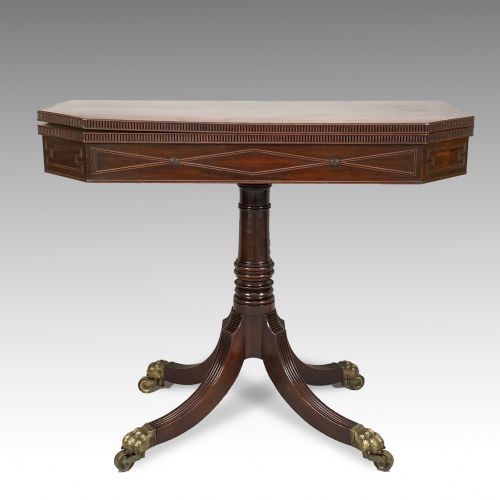


Brass Footed Games Table
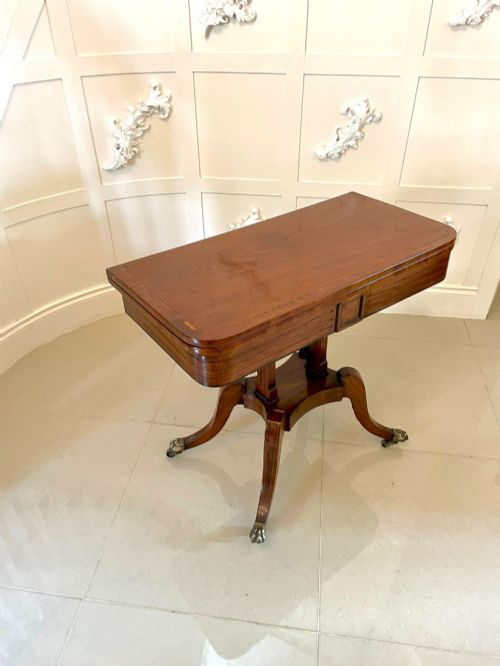
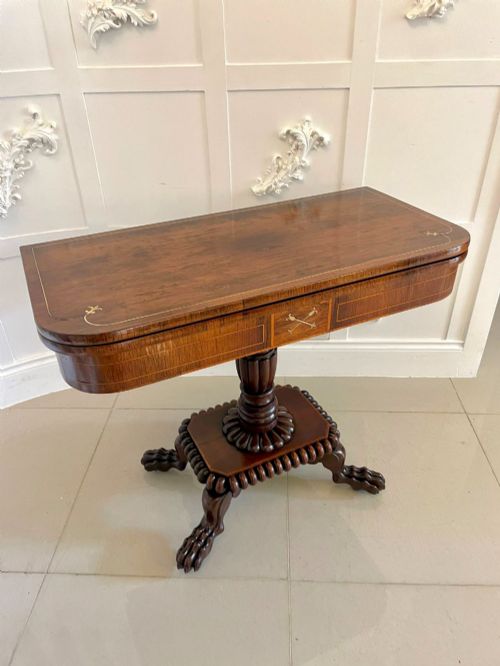
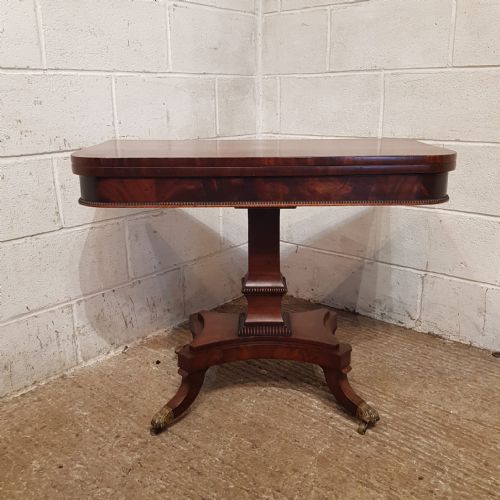
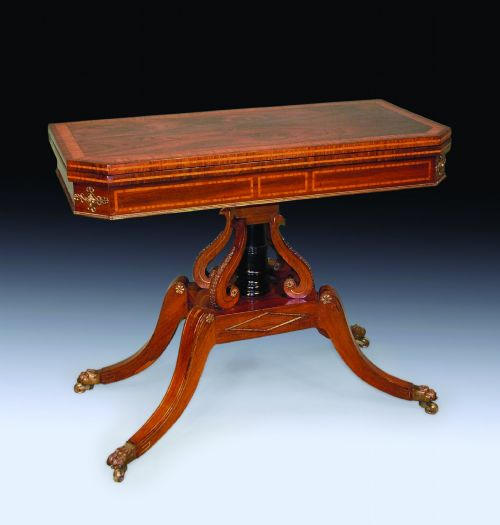
A brass footed games table brings versatile folding tops and polished timber into a traditional interior.
Brass Footed Games Table
A brass footed games table combines a folding top designed for cards or board play with substantial timbers like mahogany and rosewood. These pieces primarily date from the Regency, Georgian, and early Victorian periods, spanning the nineteenth century.
The most common formats on this page are card and console tables that double as tea or side tables. Makers utilised figured veneers, satinwood banding, and brass inlays to ornament the fold-over surfaces.
Support structures range from scroll pedestal bases to elegant columns and classic legs fitted with metal mounts. Each piece reflects the formal entertaining habits of the nineteenth century through adaptable surfaces.
Materials and construction methods
Cabinetmakers constructed these tables using dense hardwoods including mahogany, rosewood, and occasional satinwood. They applied finely figured veneers over stable secondary timbers to create patterned surfaces on the folding leaves.
Brass formed an integral part of the decoration through inlaid stringing, mounts, and protective foot terminals. Gilded metal and ormolu details accent the dark grains of rosewood and mahogany effectively.
Secret compartments inside these tables once stored ivory counters and fragile playing cards safely away from evening tea.
Distinctions in craftsmanship
The choice of timber grain and the precision of the brass inlay set individual pieces apart. Finer examples feature intricate satinwood chequering and well-matched rosewood veneers across the entire fold-over top.
Structural execution in the pedestal bases and pivot mechanisms dictates longevity and smooth daily operation. Superior workshops invested greater care in carving scroll supports and securing heavy metal mounts.
George Bullock·John McLean
The Brass Footed Games Table Glossary
- Crossbanding
- A border of veneer laid with the grain running perpendicular to the main surface. This technique frames the top of a table with contrasting timber.
- Fold-over
- A hinged tabletop that opens to double its surface area for gaming or dining. It pivots on a frieze or rests upon a concertina action.
- Ormolu
- Cast brass that has been mercury gilded to achieve a bright gold finish. It decorates the mounts and feet of Regency furniture.
- Pedestal base
- A central column or cluster of pillars supporting the tabletop above a platform or feet. Scroll versions are typical of the Regency period.
- Specimen wood
- Various decorative timbers selected for their contrasting colours and grain patterns. Makers used them to create geometric mosaics on tabletops.
Brass Footed Games Table: Frequently Asked Questions
How do I open the top?
Most tables feature a hinged leaf that swings open on a pivot or rotates to reveal a hidden compartment beneath. The pivoting action requires a steady hand to protect the timber joints.
Once unfolded, the secondary leaf rests upon a swing rail or a turned pillar base. Ensure the support is properly aligned before placing any weight on the surface.
Were these used only for cards?
While designed primarily for card games and social evening entertainment, many examples served multiple purposes in a drawing room. The closed top functioned as a side or console table against a wall.
Some variants double as tea tables when folded down. Their adaptability made them central pieces of furniture in nineteenth-century parlours.
How do I distinguish Regency from Victorian pieces?
Regency and late Georgian tables typically display crisper brass inlay, bolder rosewood grain, and refined pedestal bases with classical proportions. Ormolu mounts and satinwood stringing appear frequently in this era.
Early Victorian examples shift towards heavier proportions and darker mahogany tones. The carving on the scroll supports becomes broader and less restrained.
Where should I place a games table?
These tables sit comfortably against a wall in a hallway or drawing room when closed. Placing them out of direct sunlight preserves the rich colour of the rosewood and mahogany veneers.
Allow enough surrounding floor space to unfold the top fully if you intend to use it. A stable surface prevents any strain on the original hinges.