



Brass Fitted Sea Chest
A brass fitted sea chest is a robust travel trunk designed for officers on the move, combining secure hardwood construction with protective metal mounts.
Brass Fitted Sea Chest
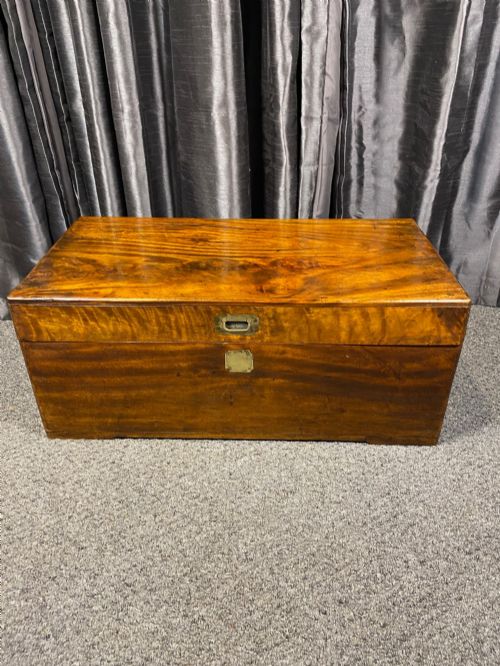
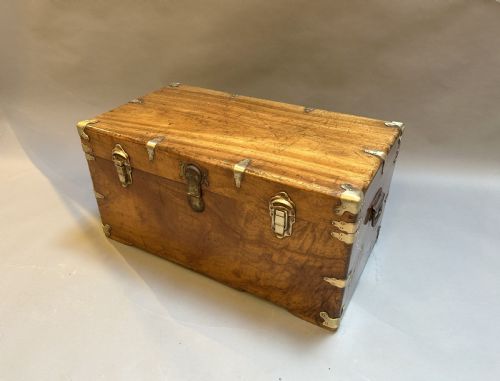
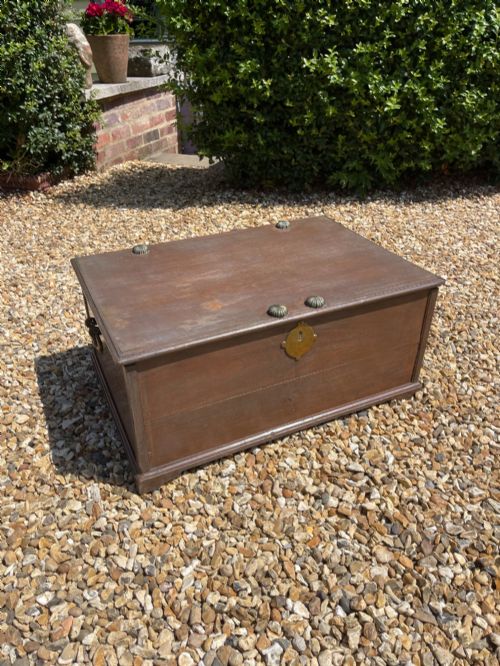
A brass fitted sea chest is a practical storage trunk built for travel and campaign use during the eighteenth and nineteenth centuries. These pieces appear in forms such as camphor wood blanket boxes, steamer trunks, and fitted military campaign chests.
The varieties met on this page range from late eighteenth century teak trunks to Victorian camphorwood storage trunks and nineteenth century Anglo Indian examples. Buyers encounter sturdy chests constructed for colonial service and naval transport.
Most items reflect the campaign style or Georgian colonial tradition, featuring durable timbers chosen to withstand long sea voyages. Each trunk provides substantial interior storage paired with structural metal reinforcements.
Materials and construction methods
These chests are built primarily from dense tropical hardwoods such as camphor wood and teak, which resisted humidity and insect damage during travel. The timbers are selected for strength and stability under harsh maritime conditions.
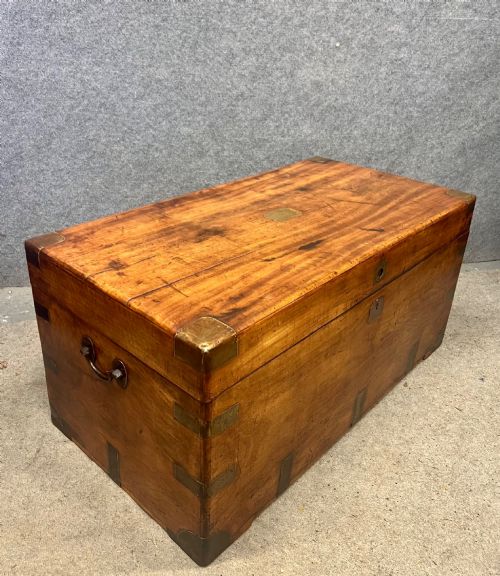
Brass fittings and corner brackets are secured to the exterior to protect vulnerable edges from impact during loading and transit. Iron elements also appear alongside the brass work to reinforce the structural joints of the trunk.
Brass Fitted Sea Chest Retail Price Guide 2026
Typical asking prices for brass fitted sea chest among the pieces listed under this phrase on Sellingantiques today, from the lower quarter to the upper quarter. They describe what is for sale here now, not the wider market.
Listings show items spanning the 18th and 19th centuries, utilising camphor wood, teak, brass, and iron in various campaign styles.
Judging quality and execution
Quality in a brass fitted sea chest rests on the integrity of the hardwood timber and the precision of the metalwork. Superior examples feature well-fitted brass corners and flush handles designed to endure heavy handling.
The presence of an original fitted interior elevates a piece, showing more sophisticated internal compartments for travel organisation. The grade of the camphor wood or teak also dictates the finish and overall weight of the chest.
The Brass Fitted Sea Chest Glossary
- Campaign style
- Furniture designed to be easily dismantled or transported for military officers on deployment. This style prioritises portability and robust construction.
- Camphor wood
- A fragrant tropical timber commonly used for trunks because its natural oils repel insects. It provides a distinct aroma and a warm reddish-brown tone.
- Teak
- A durable, heavy hardwood valued for its resistance to moisture and decay. It forms the structure of many sea chests intended for long voyages.
- Fitted interior
- An internal arrangement featuring compartments, trays, or smaller boxes built into the main trunk. This layout secured personal items during transit.
Brass Fitted Sea Chest: Frequently Asked Questions
What is a brass fitted sea chest?
A brass fitted sea chest is a hardwood trunk constructed for travel and military or naval campaigns. These pieces feature protective metal corners and handles for transit.
They offer deep interior storage and reflect nineteenth century craftsmanship used by officers on the move.
How were these chests used?
Officers and travellers used these chests to transport uniforms, equipment, and personal belongings across oceans and land. The sturdy timber and metal mounts protected contents from moisture and rough handling.
At home or in quarters, they served as secure storage trunks and blanket boxes.
What woods are common?
Camphor wood and teak are the primary timbers found in these listings. These dense hardwoods were chosen for their durability and resistance to tropical climates.
Camphor wood also provides a characteristic scent that kept pests away from stored textiles.
How do I date a chest?
Dating relies on the construction style, timber type, and era markers such as Victorian or Georgian colonial influences. Listings note periods ranging from the late eighteenth century through the nineteenth century.
Examine the style of the brass hardware and joinery to understand the manufacturing period.