
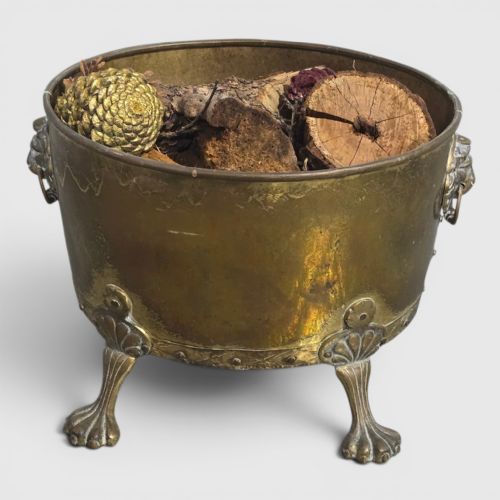


Brass Firewood Bucket
A brass firewood bucket brings warmth and function to the hearth, combining polished metal with practical storage for logs.
Brass Firewood Bucket
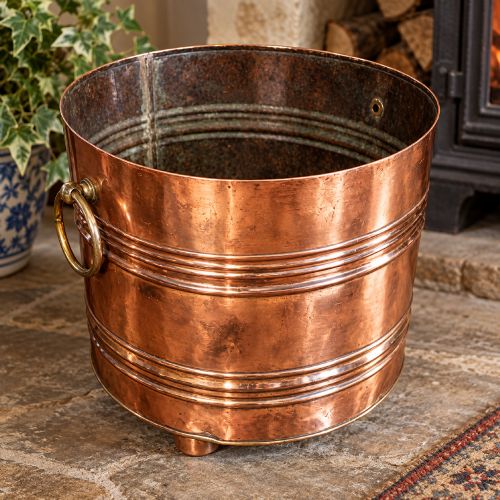
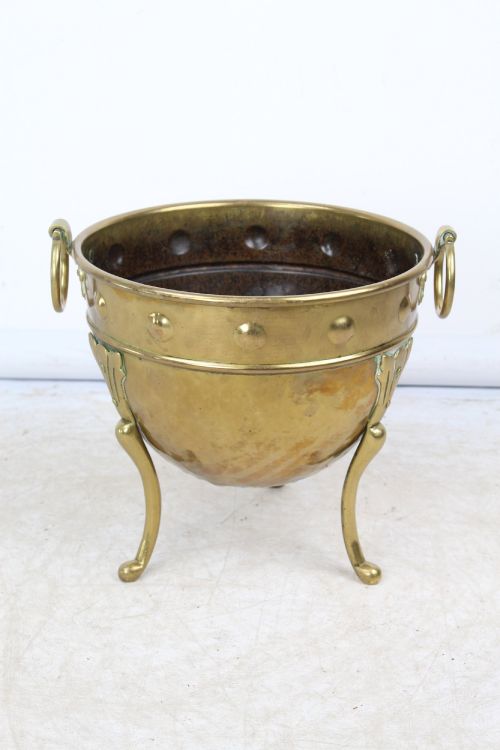
A brass firewood bucket serves as a sturdy receptacle for logs and coal beside the hearth, taking forms such as cylindrical bins, cauldrons, and jardiniere vessels. The examples found here span the Victorian era, the Arts and Crafts movement, and the Art Deco period.
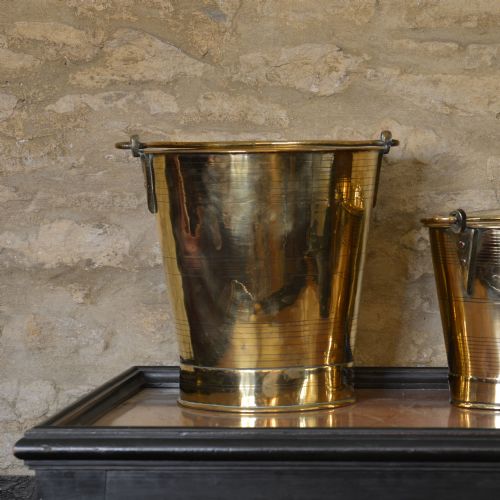
Buyers will most frequently encounter 19th-century pieces, including Victorian designs alongside Anglo-Indian campaign buckets. These vessels often double as planters or coal receivers, reflecting the versatile domestic uses of metalwork from the period.
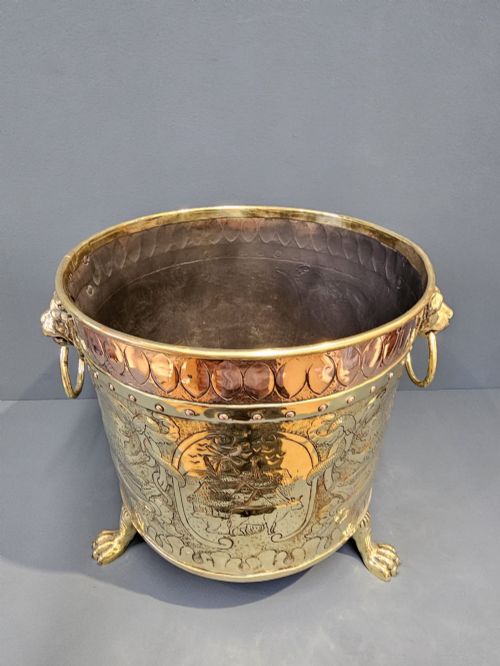
The materials extend beyond pure brass to incorporate copper bodies, iron fittings, tin linings, and galvanised steel. Surfaces range from plain polished finishes to heavily embossed patterns and contrasting copper bands.
Materials and construction
The construction of these vessels relies on heavy sheet metals, predominantly brass and copper, joined with visible rivets or smooth seams. Makers shaped the metal through hammering and spinning to form deep cylindrical or cauldron bodies.
Many pieces feature applied decorative elements such as embossed motifs, rolled rims, and riveted copper bands to add structural rigidity. Handles are typically cast in brass or forged in iron, secured firmly to the sides for lifting heavy loads of fuel.
Listings feature brass, copper, and iron materials across Victorian, Arts and Crafts, and Art Deco periods.
Distinctions in quality
Quality reveals itself in the thickness of the metal gauge and the integrity of the construction, where heavier brass and copper walls resist denting under the weight of logs. Substantial handles and securely fastened rivets indicate superior craftsmanship rather than hurried mass production.
The refinement of the decorative work sets finer pieces apart, from crisp hand-embossed patterns to balanced proportions in the vessel's shape. Makers who paid attention to interior linings and stable bases produced containers that endured decades of daily fireside use.
Henry Loveridge
The Brass Firewood Bucket Glossary
- Dinanderie
- A term for varied decorative brass and copperware, often associated with the Art Deco period. It describes objects formed from beaten metal with patinated or etched surfaces.
- Jardiniere
- An ornamental pot or stand designed to hold plants, frequently utilised as a container for logs or coal in nineteenth-century interiors.
- Scuttle
- A metal bucket or coal hod designed for carrying solid fuel to a fireplace, usually featuring a tilted opening and a pivoting handle.
- Embossed
- A technique where a pattern is raised in relief from the surface of the metal by hammering from the reverse side.
- Campaign bucket
- Portable metalware originally intended for travel, characterised by robust construction and secure carrying handles.
Brass Firewood Bucket: Frequently Asked Questions
What were brass firewood buckets used for?
These metal vessels served primarily to store and transport logs, coal, or peat close to the hearth for domestic heating.
Over time, many of these containers also found secondary uses as decorative planters or jardiniere stands in reception rooms.
How do I clean a brass bucket?
Normal maintenance requires only a soft cloth to remove dust and preserve the natural patination built up over decades of use.
Harsh metal polishes should be avoided unless the piece specifically requires the bright finish favoured during the Victorian period.
Are these buckets waterproof?
Many metal vessels possess riveted seams and solid bases designed to contain dry fuel rather than hold standing water.
When utilised indoors as plant holders, a separate internal liner is recommended to protect the historic metal from moisture.
How do I date a brass bucket?
Dating relies on observing construction methods, such as hand-beating marks, rivet types, and overall stylistic influences like Arts and Crafts or Art Deco.
Material combinations, such as brass paired with copper bands or iron handles, also offer clues to the manufacturing decade.