
Brass Fireplace Hearth Kerb
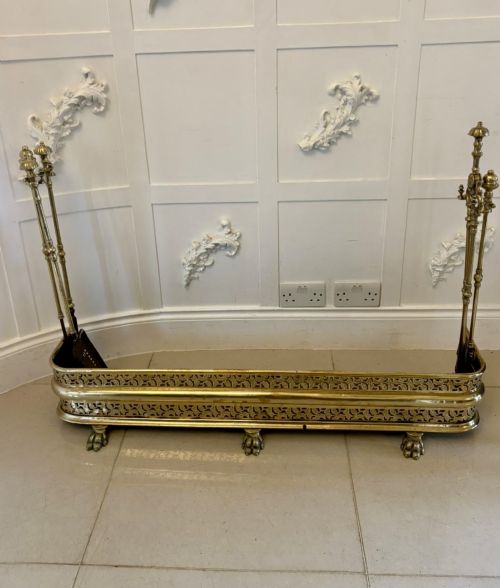
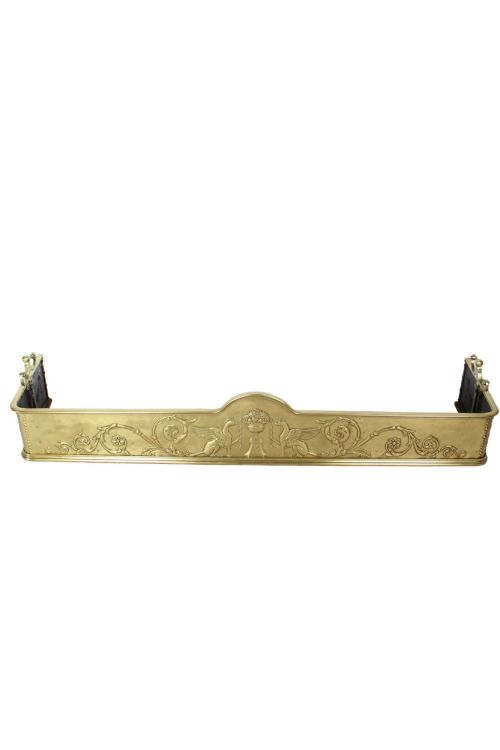
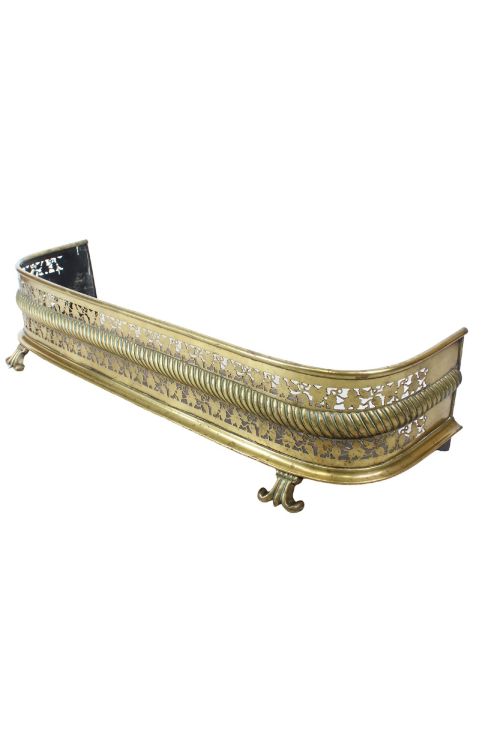
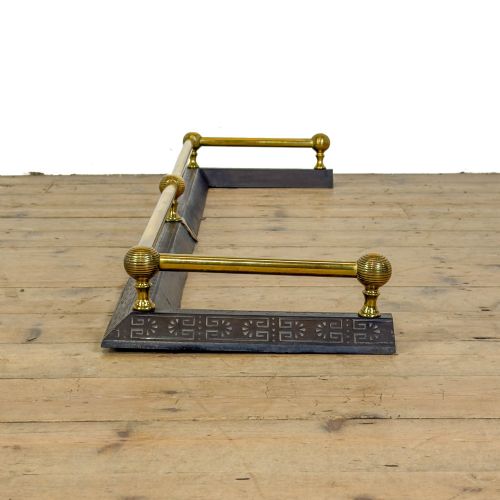
A brass fireplace hearth kerb frames the hearth to contain stray embers while defining the fireplace centrepiece.
Brass Fireplace Hearth Kerb
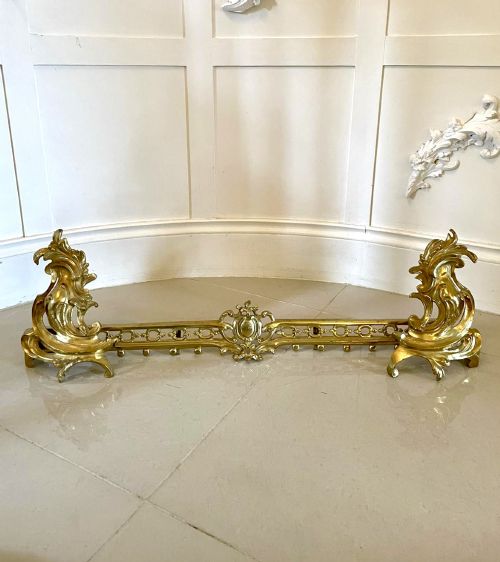
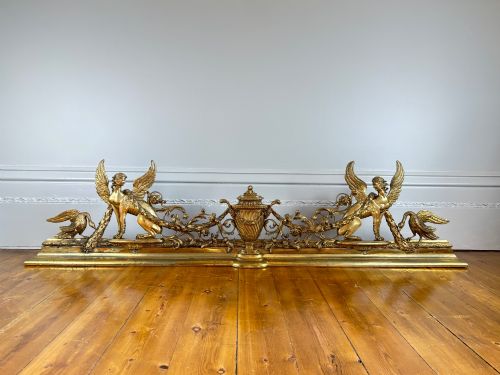
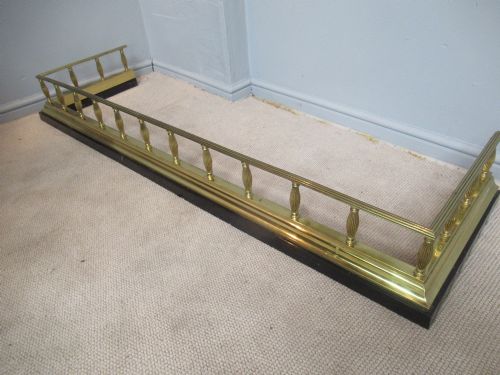
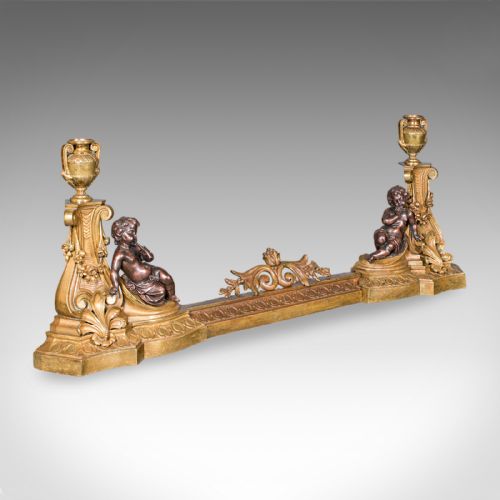
A brass fireplace hearth kerb protects flooring and grounds the hearth area in front of an open fire. These items appear across the nineteenth century and the Edwardian period, styled in Victorian, Regency, Edwardian, and French Rococo designs.
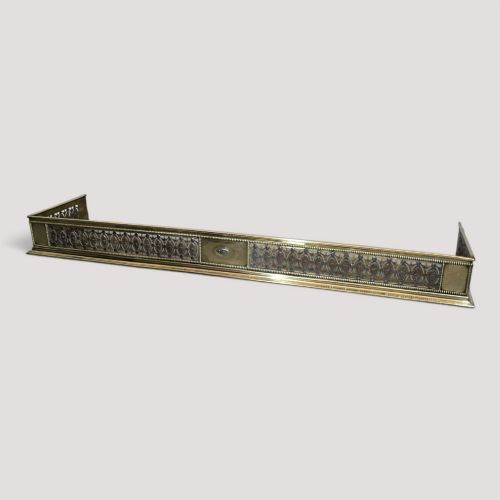
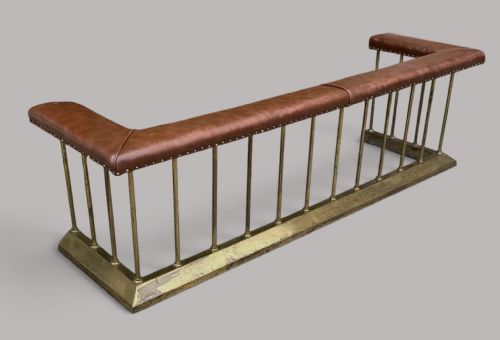
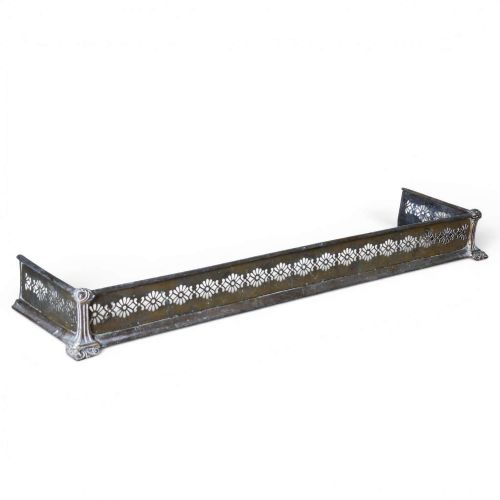
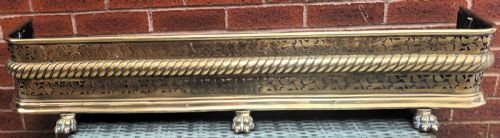
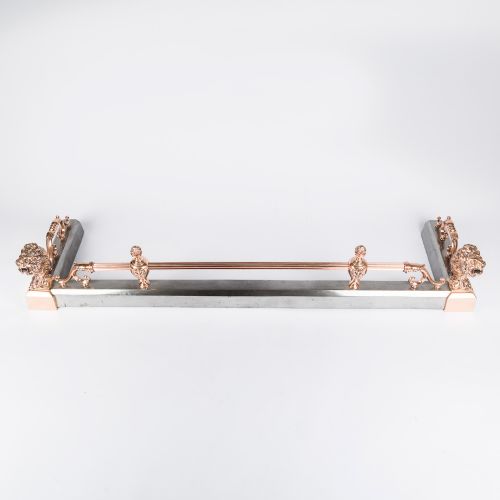
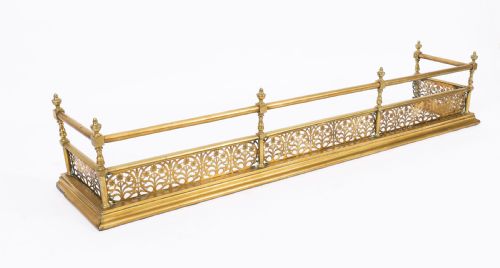
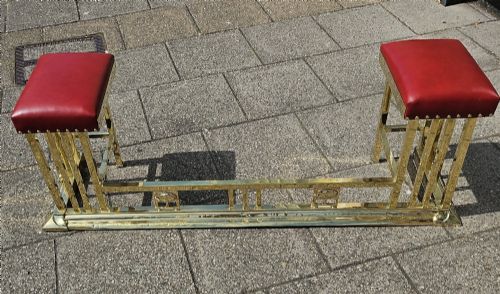
Most examples found here are standard pierced brass or extending fenders, alongside club fenders upholstered in leather and heavy cast models incorporating iron or steel. They range from small hearth surrounds to large pieces measuring over four feet in length.
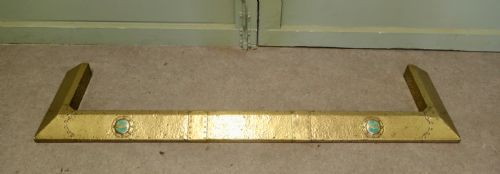
Makers and workshops utilised diverse materials, pairing bright brass with cut steel, bronze, and copper, sometimes accented by green enamel cabochons or polychrome details.
Construction and materials
Metalworking techniques combine cast brass components with pierced sheet brass, often supported by iron or steel inner frames for structural rigidity. Workshops employed joining methods suited to extending mechanisms and heavy corner mounts.
Surface treatments include fire gilding, dore bronze finishes, and polished brass paired with blackened iron or burnished steel. Detail work incorporates chased motifs, applied bronze ornaments, and leather upholstery for seat-topped club variants.
Some nineteenth century fenders arrived complete with their original fire irons tucked discreetly into the side mounts.
Quality and execution
The distinction between standard production and top tier work rests on the crispness of the casting, the depth of pierced patterns, and the weight of the metal used. Heavier gauge brass and solid bronze components maintain their shape and structural integrity under daily hearth use.
Finishing separates exceptional examples from ordinary ones, particularly in the hand-chasing of decorative mounts, the quality of cut steel additions, and the retention of original fire irons or matching chenets.
E F Caldwell New York
The Brass Fireplace Hearth Kerb Glossary
- Fender
- A low metal guard placed around a hearth to keep coals and ashes from rolling onto the floor. They are also known as kerbs or fire kerbs.
- Club fender
- A low, padded seat fender featuring leather upholstered cushions, allowing people to sit close to the fire. They originate in country house smoking rooms.
- Pierced brass
- Metal sheet perforated with decorative fretwork patterns, frequently seen on Victorian hearth surrounds to let heat circulate. The piercing creates intricate geometric or floral designs.
- Cut steel
- Small faceted steel studs riveted individually to a steel backing plate to catch the firelight. This technique was popular on Regency and Victorian hearth furniture.
- Chenet
- An ornamental andiron or fire dog placed inside the hearth, sometimes associated with French bronze fender sets. They provide support for burning logs.
Brass Fireplace Hearth Kerb: Frequently Asked Questions
What is a club fender?
A club fender is a hearth guard fitted with cushioned leather seats running along the top frame. This design allowed Victorians and Edwardians to sit directly around the fireplace.
They are wider and heavier than standard fenders, standing slightly higher to accommodate the padded leather top while keeping the open metal base against the floor.
How do I measure for a fender?
Measure the width and depth of your hearth stone to ensure the kerb sits securely within the perimeter. Allow clearance for the fireplace opening and any protruding andirons.
Extending models offer some flexibility in width, while fixed cast brass fenders require precise measurements to match the exact hearth proportions.
Are these fenders adjustable?
Many nineteenth century examples feature extending mechanisms that allow the width to be altered within a set range. This made them adaptable to different fireplace openings.
Fixed models are cast or riveted to a single dimension and cannot be adjusted, requiring careful matching to your hearth size.
What metals are used besides brass?
Fenders frequently combine brass with iron, steel, bronze, copper, and ormolu. Iron and steel provide internal strength and heavy frames, while copper and bronze appear in Arts and Crafts or French styles.
Cut steel studs and gilt highlights are also added to brass bodies to create contrast in nineteenth century designs.