





Brass Figure Lamp
A brass figure lamp combines sculptural metalwork with functional lighting, bringing three-dimensional human and mythological forms directly into domestic interiors.
Brass Figure Lamp
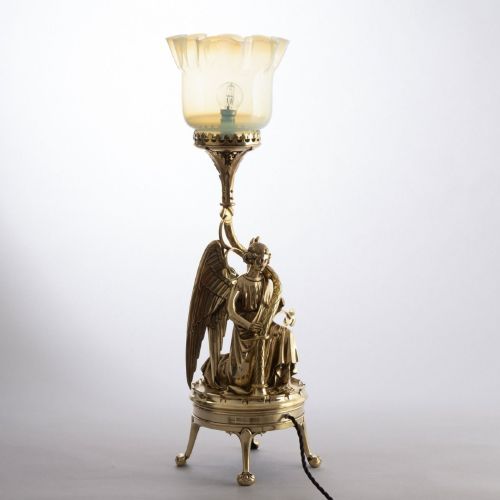
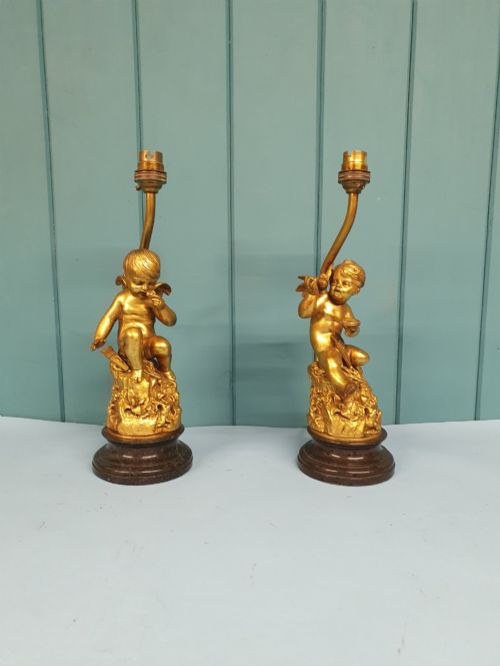
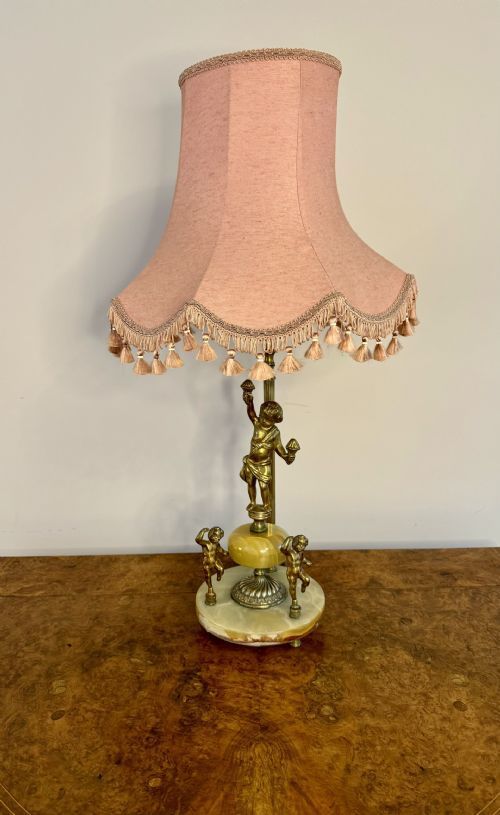
A brass figure lamp integrates cast metal figures such as cherubs, angels, atlases, and classical deities into functional table lamps and wall lights. These pieces frequently emerge from the nineteenth century and the early twentieth century, spanning stylistic revivals from Gothic to Art Nouveau.
Buyers encounter numerous variations on this page, including traditional oil lamps converted to electricity, sculptural bronze and spelter statuettes adapted as lamp bases, and porcelain figures paired with metal mounts. Forms range from single figures holding lights to matched pairs designed for mantelpieces or side tables.
Materials and construction methods
These lamps rely on heavy cast brass, bronze, and spelter for their figurative bodies, often finished with gilding or patination. Makers combined these metals with carved marble or onyx bases to provide stability for the vertical weight.
Illumination elements incorporate moulded vaseline glass, opaline glass, or frosted glass shades, frequently accompanied by fabric components in silk. Ceramic elements such as German porcelain and Chinese vases also form the structural body alongside the metal framework.
Brass Figure Lamp Retail Price Guide 2026
Typical asking prices for brass figure lamp among the pieces listed under this phrase on Sellingantiques today, from the lower quarter to the upper quarter. They describe what is for sale here now, not the wider market.
The selection includes pieces spanning the nineteenth century, the Victorian era, the Edwardian period, and the 1920s.
Assessing quality and execution
Superior examples demonstrate crisp chasing and fine detail in the figurative work, where facial expressions and drapery remain sharply defined. Lesser pieces show softer casting marks and simpler surface finishing without hand-chiseled refinement.
The integration of the lighting components into the original sculpture dictates overall harmony. Top-tier lamps retain well-balanced proportions between the figural base, the mountings, and the shade, avoiding awkward conversions that obscure the sculptural form.
L & F Moreau·Karl Ens·Anton Buschelberger·Samuel Alcock
The Brass Figure Lamp Glossary
- Spelter
- A zinc alloy commonly used as a less costly alternative to bronze for figurative castings in nineteenth-century and early twentieth-century lighting. It frequently received a bronze-like or gilt finish to mimic higher-value metals.
- Vaseline glass
- A type of glass containing uranium dioxide that glows a distinctive yellow-green under ultraviolet light. It appears frequently in nineteenth-century lamp shades and reservoirs.
- Atlas
- A mythological figure depicted supporting weight on his shoulders, frequently utilised in classical architecture and antique lamp design as a structural support column.
- Opaline glass
- A semi-opaque glass, often white or pastel in tone, valued for its ability to diffuse light softly. It appears in various nineteenth-century lighting arrangements.
Brass Figure Lamp: Frequently Asked Questions
How do I date a brass figure lamp?
Dating relies on examining the casting techniques, the material composition of the base, and the style of any associated glass shades or electrical fittings. Nineteenth-century examples typically display heavier hand-chased metalwork and oil-burning components later adapted for electricity.
Stylistic markers also help narrow the period, as Gothic Revival, Art Nouveau, and Art Deco designs each utilise distinct figurative proportions and decorative motifs. Comparing the manufacturing marks on ceramic components or the patination of the metal provides further chronological context.
Were these lamps originally electric?
Most antique figure lamps originated as oil lamps or gas lights before undergoing later conversion to electricity. The transition often involved running wiring through the central reservoir or adding modern lamp holders to the original burner assemblies.
Original oil reservoirs, wick mechanisms, and burner galleries frequently remain intact beneath modern wiring adaptations. These remnants help verify the authentic period usage of the metal and glass components.
How should I clean a patinated brass base?
Maintenance requires gentle dusting with a soft, dry cloth to prevent the accumulation of dirt within the crevices of the cast figure. Chemical polishes and abrasive cleaners must be avoided, as they strip away the historic patination and finishing that define the age of the metal.
If the metal requires deeper cleaning, a mild solution of non-ionic soap and water applied sparingly is recommended. Ensuring the piece is completely dry prevents moisture damage to any integrated marble bases or delicate fabric shades.
Can I replace the fabric shade safely?
Replacing the shade is common, provided the new fitting matches the scale and weight requirements of the original lamp structure. Selecting a shade that reflects the period style, such as silk or pleated fabric, helps maintain the visual balance of the figural base. N
What is the difference between bronze and spelter?
Bronze is an alloy of copper and tin known for its strength, weight, and capacity to hold fine sculptural detail during the casting process. Spelter is a softer zinc-based alloy that was widely utilised for mass-produced decorative figures due to its lower melting point and cost.
Under close inspection, bronze feels significantly heavier and cooler to the touch than spelter. Spelter pieces also tend to show wear through the surface patination more readily, revealing a greyish metal underneath.