

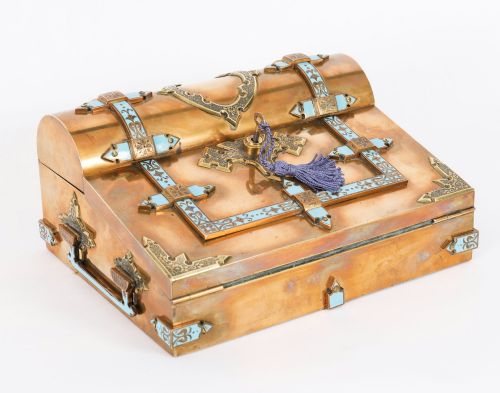
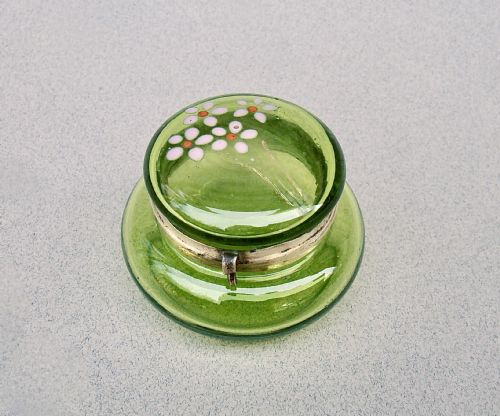


Brass Enamel Box
These brass enamel box examples offer wonderful small-scale craftsmanship, bringing vibrant colour and tactile metalwork to a desk or dressing table.
Brass Enamel Box
A brass enamel box combines cast or sheet metal frameworks with colourful fused glass coatings, creating vibrant containers for small treasures. When exploring this selection, buyers frequently encounter 19th-century French pieces alongside English examples from the same era.
The objects span practical and decorative forms, including trinket boxes, pill boxes, and writing slopes, as well as distinct international pieces like Japanese cloisonné vessels. Georgian and Victorian periods dominate the offerings, showcasing how these items transitioned from functional daily accessories to decorative desk ornaments.
Smaller formats such as patch boxes and snuff box lids from the 18th century sit alongside larger Victorian trinket containers and carriage clocks housed in gilt brass cases. Each piece reflects the specific domestic habits of its period, from holding medicinal pills to storing small personal keepsakes.
Materials and Construction
Makers utilised brass, gilt brass, and copper as the foundational structural elements, providing durable metallic frames for delicate decorative work. These metals were often cast, chased, or worked into intricate shapes before receiving surface treatments.
Enamel application involved fusing powdered glass to the metal substrate at high temperatures, resulting in smooth, colourful surfaces that resist wear. Techniques such as champlevé saw enamel laid into recessed troughs carved directly into the metal.
Combinations with glass, agate, and leather frequently appear across the listings, adding textural contrast to the primary metal and enamel bodies. Ormolu and gilt bronze accents provide rich metallic highlights on French carriage clocks and decorative containers.
Brass Enamel Box Retail Price Guide 2026
Typical asking prices for brass enamel box among the pieces listed under this phrase on Sellingantiques today, from the lower quarter to the upper quarter. They describe what is for sale here now, not the wider market.
The selection includes Japanese Meiji and Edo period cloisonné alongside English Georgian and Victorian examples.
Assessing Quality and Execution
The precision of the enamel work dictates much of the visual distinction between examples, with finely controlled colour transitions separating superior pieces. Smoothness across the fused glass surface and secure integration with the metal housing indicate skilled execution.
Hinges, clasps, and closing mechanisms demonstrate the care taken during initial production, particularly in functional items like pill boxes and writing slopes. Superior construction ensures tight alignment when lids close against their brass collars.
The refinement of surface chasing on the brass or ormolu mounts contributes heavily to the overall character of an object. Crisp detailing in the metalwork complements the vibrancy of the enamel panels.
The Brass Enamel Box Glossary
- Champlevé
- An enamelling technique where troughs or cells are hollowed out of the metal surface and filled with powdered glass before firing. This method creates bold metallic outlines between areas of vibrant colour.
- Ormolu
- Gilded bronze or brass applied to decorative objects, popular in French 19th-century manufacturing. The technique provides a rich, gold-coloured finish that resists tarnishing.
- Cloisonné
- An ancient metalworking technique where fine wire is soldered to a metal base to create compartments for enamel paste. Japanese Meiji and Edo period pieces utilise this method extensively.
- Bonbonniere
- A small ornamental box designed to hold sweets or confectionery. They appear in fine materials like enamel and metal during the 18th and 19th centuries.
Brass Enamel Box: Frequently Asked Questions
What were brass enamel boxes used for?
These containers served various daily purposes depending on their scale, from holding small medicinal pills and snuff to storing delicate trinkets on a dressing table. Wealthy owners kept them close at hand for personal convenience and to display refined taste.
Over time, many of these utilitarian containers transitioned into purely decorative objects. Their portable nature allowed them to be moved easily between rooms or carried during travel.
How do I identify a French 19th-century piece?
French pieces from the 19th century often feature ornate gilt brass or ormolu mounts combined with colourful champlevé enamel or painted glass panels. They frequently take the form of heavy trinket boxes, gorge case carriage clocks, or desk accessories.
The craftsmanship tends to emphasise elaborate surface decoration and substantial metal weight. Stylistic markers align closely with Victorian decorative arts but retain distinct continental flair.
What is the difference between champlevé and cloisonné?
Champlevé involves carving or sinking troughs directly into a solid metal base to hold the coloured enamel paste. The resulting metal partitions form part of the original plate.
Cloisonné builds the design upward by soldering thin wires onto the surface of the metal base to create raised compartments. This technique is particularly prevalent in Japanese decorative objects from the Meiji and Edo periods.
How should I care for an antique enamel box?
Keep these items away from direct sunlight and damp environments to protect the fragile glass enamels and underlying metal substrates from deterioration. Dust them gently with a soft, dry cloth without applying modern liquid cleaning products.
Handle lids and hinges with care, avoiding excessive force on older metal joints. Allowing the piece to rest on a stable surface prevents accidental drops that could chip the glass surface.