




Brass Door Fittings
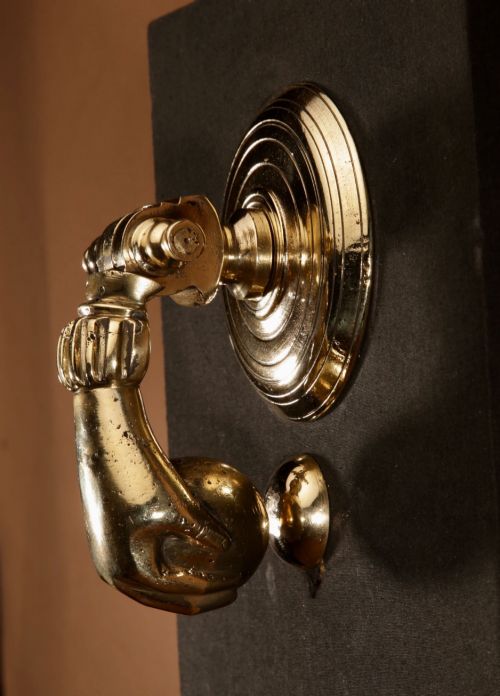
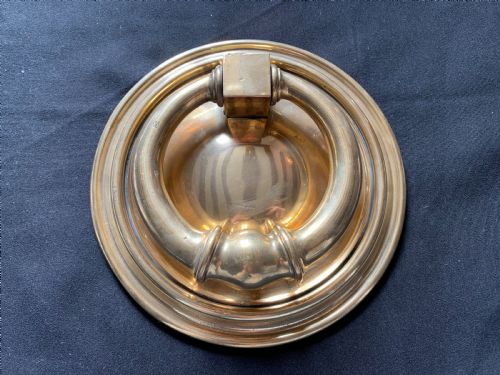
These brass door fittings bring tactile character and period weight to an entrance, offering solid brass hardware shaped by Victorian, Georgian, and Art Nouveau hands.
Brass Door Fittings
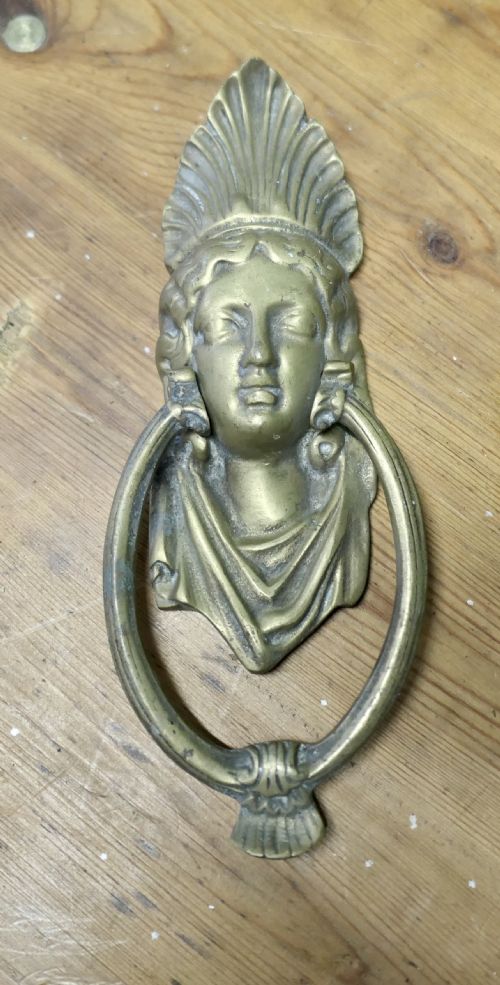
The Victorian pieces dominate the selection, bringing heavy cast forms and elaborate motifs like the Maltese dolphin and caryatid figures to the door. Alongside these, the Georgian items offer formal bell pulls and knockers, while Art Nouveau examples introduce flowing bronze handles and porcelain press bells.
Buyers will find that many items serve specific architectural functions, including pairs of finial hinges, centre door knobs, and specialised finger plates. Each object reflects the domestic hardware requirements of its respective era, combining practical utility with decorative metalwork.
Assessing quality in architectural hardware
Quality in these metal fittings rests upon the crispness of the casting and the depth of the chased or modelled detail. Items featuring intricate forms, such as caryatid knockers or ornate bell ringers, demonstrate superior artistry compared to plain utilitarian hardware.
The presence of matching components, such as pairs of hinges with acorn or urn finials, elevates a set's utility and cohesiveness. Furthermore, the retention of original striking plates and operational mechanisms indicates a higher degree of preservation.
Listings span Victorian, Georgian, and Art Nouveau styles, utilising brass, bronze, porcelain, and horn.
The Brass Door Fittings Glossary
- Caryatid
- A sculpted female figure serving as an architectural support. In these fittings, she forms the striking body of a door knocker.
- Finial
- A decorative ornament fixed to the apex of an object. The listings include examples with acorn and urn finials on pairs of door hinges.
- Bell Pull
- A mechanical handle mounted on a door jamb and attached to a wire system indoors. These allow visitors to ring a house bell before the widespread adoption of electricity.
- Finger Plate
- A protective panel mounted on a door near the handle to prevent fingerprints on the wood or paint. The evidence includes military examples from the early twentieth century.
- Maltese Dolphin
- A decorative marine motif frequently cast into Victorian door knockers. It provides both a gripping handle and a distinct regional style.
Brass Door Fittings: Frequently Asked Questions
What periods do these fittings cover?
The pieces span from the Georgian era through the Victorian period and into the early twentieth century, including Art Nouveau and Edwardian styles.
Buyers will encounter dates ranging from around eighteen hundred up to the nineteen-twenties, showing how domestic hardware design evolved over the decades.
Are these fittings made of solid brass?
The listings consist primarily of solid brass, cast brass, and bronze architectural elements. Some items also incorporate horn, porcelain, wood, or paint details.
Makers utilised these robust metals to ensure the knockers, handles, and hinges could withstand daily use on exterior and interior doors.
How do I identify a Georgian bell pull?
Georgian bell pulls typically exhibit the formal restraint and classical proportions characteristic of the eighteenth and early nineteenth centuries. They often feature clean lines and disciplined ornamentation compared to later Victorian designs.
Many retain their original mechanical levers designed to operate domestic bell systems before electrical buttons became common.
Can I find matching hinge sets?
The collection includes several matched pairs and sets of door hinges featuring decorative finials such as acorns and urns. These sets allow for consistent hardware styling across both sides of a double door or throughout a room.
Checking the descriptions will reveal whether the hinges retain their original matching configuration.