

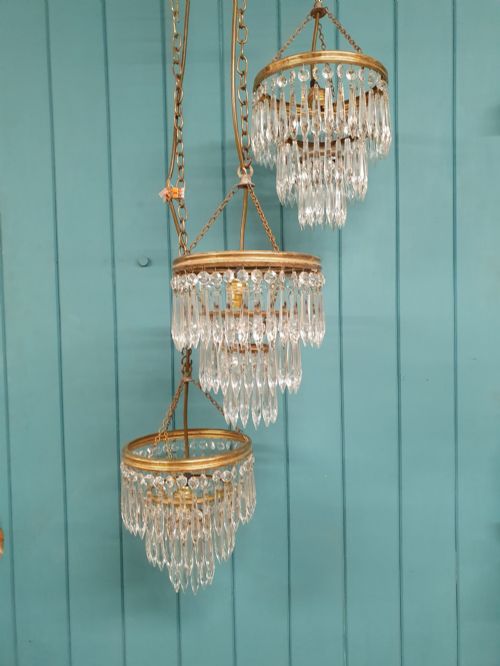
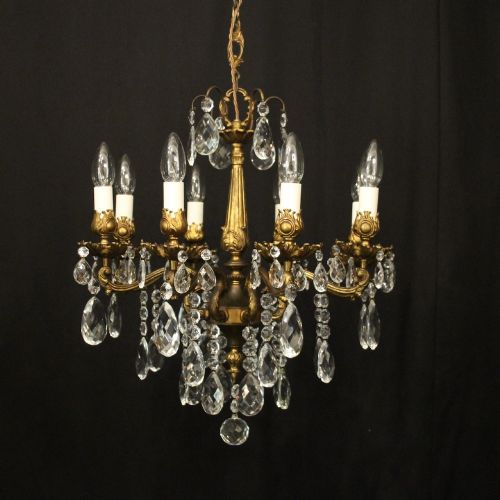
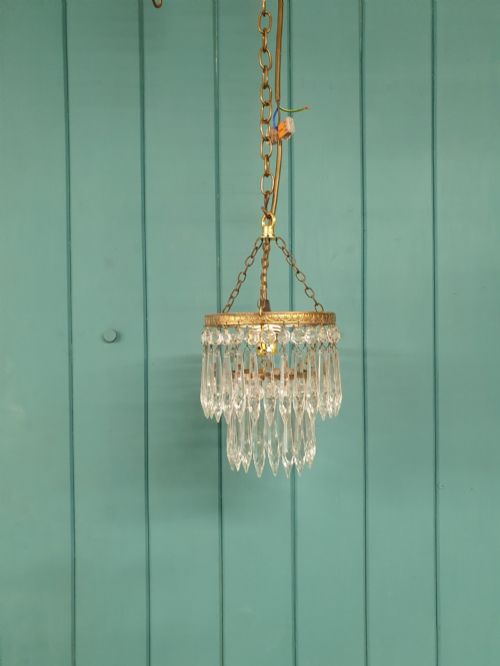
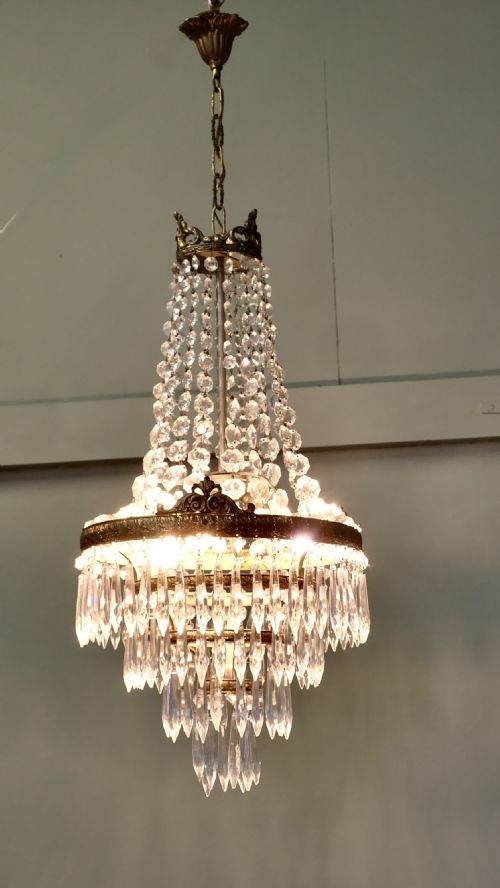
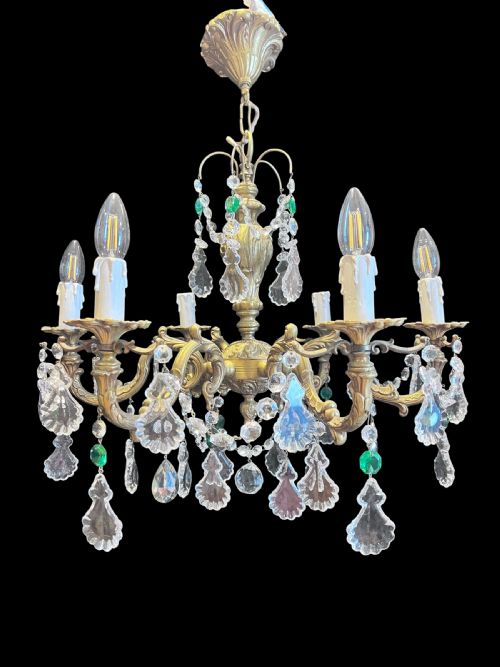
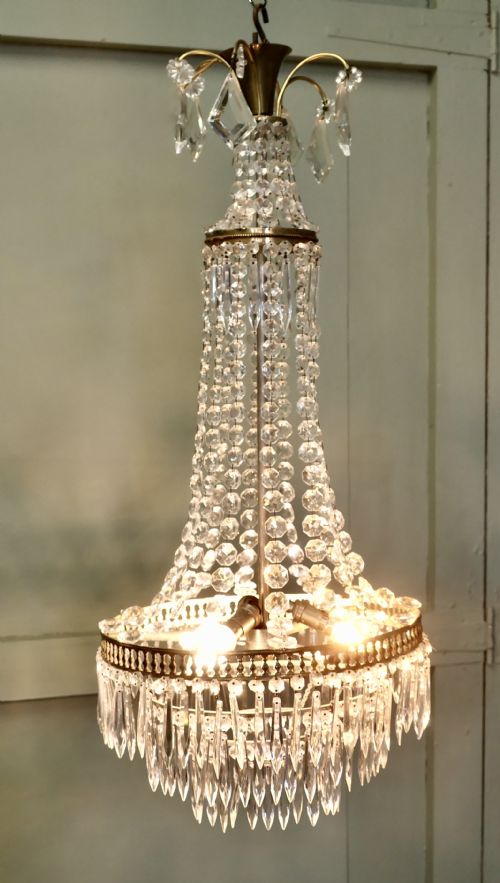
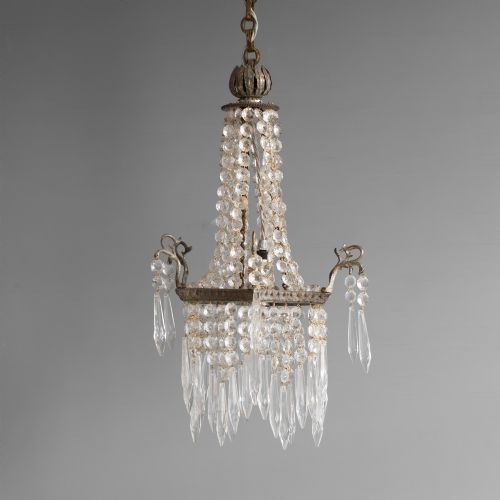
Brass Crystal Pendant Lamp
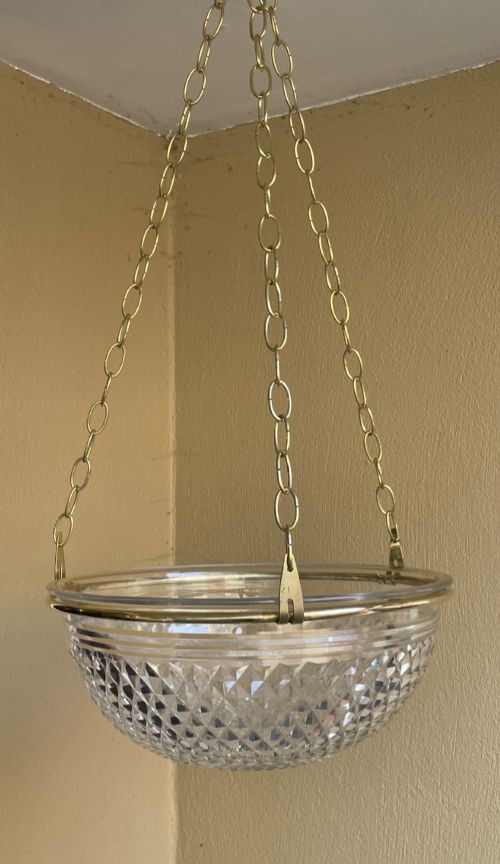
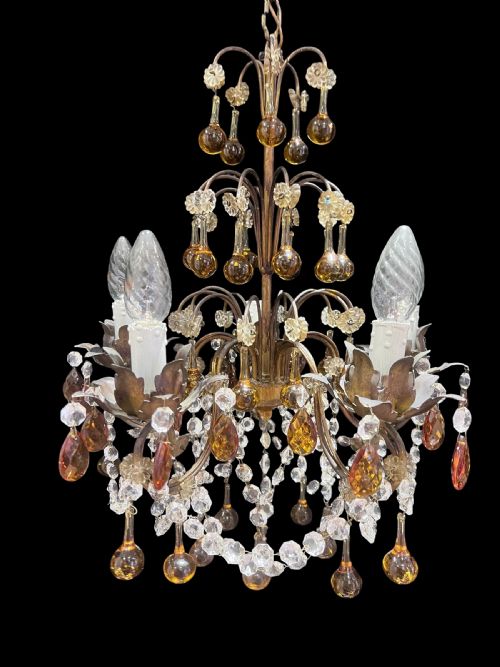
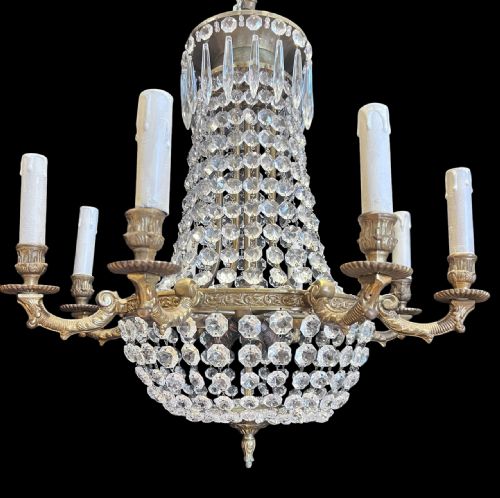
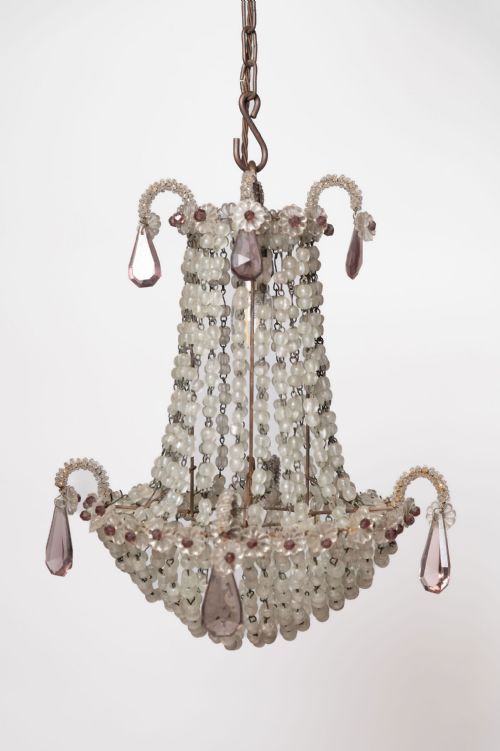
These brass crystal pendant lamp examples combine heavy metal mounts with refractive glass to cast complex patterns across a room.
Brass Crystal Pendant Lamp
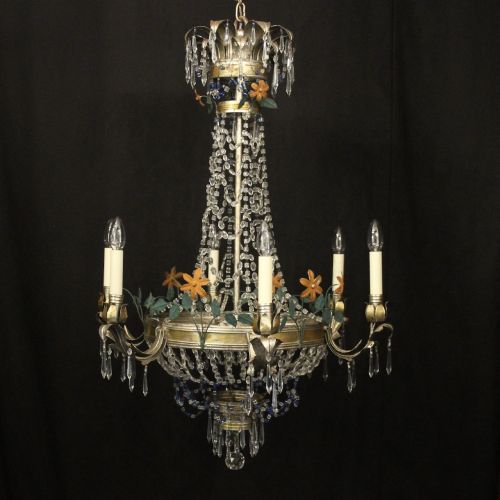
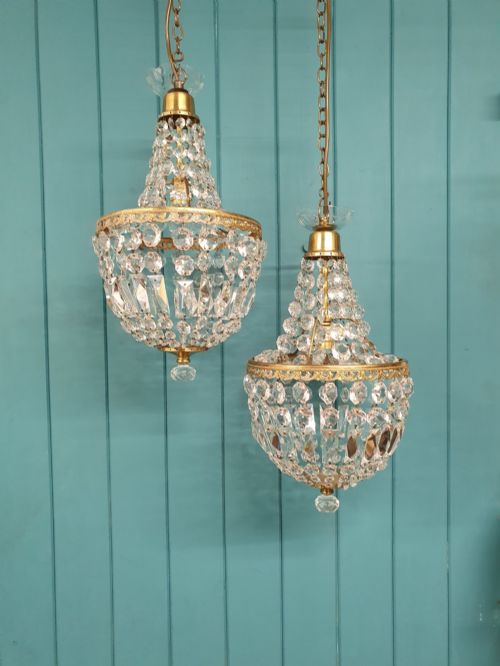
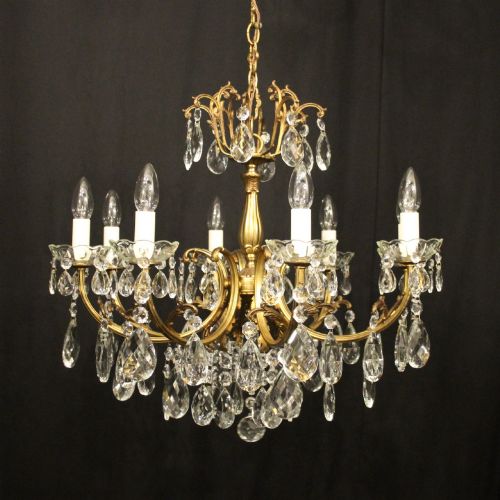
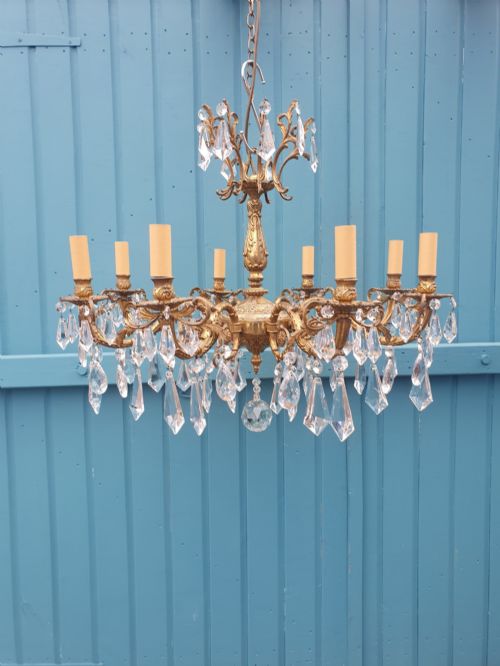
A brass crystal pendant lamp brings together metal frames and glass elements designed to suspend from the ceiling and distribute artificial illumination. Buyers searching for a brass crystal pendant lamp encounter forms ranging from compact single-light basket fixtures to multi-tiered installations holding numerous bulbs. The examples appearing on this page span several decades, reaching back through the Edwardian era into the nineteenth century.
The dominant aesthetic draws heavily from continental European traditions, particularly French Empire and Rococo styles alongside early twentieth-century creations. These pieces utilise brass, gilt bronze and gilt brass to secure glass drops, beads and prisms. The resulting objects hang centrally in rooms to catch and bend light from every angle.
Materials and Construction
Metal components in these fixtures start as cast or spun brass, sometimes receiving a layer of gilt bronze or gilt brass to enrich the surface tone. Makers assembled these structural frames using threaded rods, pins and screws to support the weight of numerous glass elements.
The glass portions combine moulded components with hand-cut crystals, drops and beads suspended on fine wire loops. Cut glass pendants and beads require manual grinding and polishing to achieve sharp facets that maximise light refraction.
Dusting hundreds of tiny glass beads one by one remains the undisputed rite of passage for every new owner of a tent and waterfall fixture.
Distinctions in Standard
The sophistication of the metalwork largely dictates the calibre of a fixture, separating mass-produced items from finely chased bronze mounts. Heavier casting and crisper botanical or classical detailing on the brass portions indicate superior workshop production.
The clarity and cutting style of the glass components also determine standard. Deeply cut crystal prisms with sharp edges and high lead content scatter light more cleanly than softer, pressed glass alternatives.
The Brass Crystal Pendant Lamp Glossary
- Plafonnier
- A ceiling light designed to sit flush or very close to the ceiling surface rather than hanging on a long suspension chain.
- Tent and waterfall
- A configuration where strings of glass beads form an upper triangular tent shape that drops into a looser cascade of crystals below.
- Gilt bronze
- An alloy of copper and tin treated with a gold wash or mercury gilding to impart a rich metallic finish.
- Lustre
- A glass pendant or drop suspended from a chandelier or wall light to catch and reflect illumination.
- Spike chandelier
- A compact fixture featuring a central vertical spike or spindle surrounded by radiating arms and crystal drops.
Brass Crystal Pendant Lamp: Frequently Asked Questions
How do I hang a heavy crystal chandelier safely?
Suspension requires fixing directly into the ceiling joists using a steel hook or bracket capable of supporting the combined weight of metal and glass.
Electrical wiring must connect through a proper ceiling rose, and heavier fixtures need independent load-bearing chains rather than relying solely on the flex.
What rooms suit an Empire style pendant lamp?
These formal fixtures suit high-ceilinged reception rooms, dining areas or hallways where their vertical drop and reflective qualities become a focal point.
Smaller basket or flush versions adapt well to bedrooms or compact spaces needing concentrated downward light.
How do I clean brass and crystal light fittings?
Dust glass drops regularly with a soft cloth while the fixture remains unpowered, using a mild specialist glass cleaner sparingly on stubborn grime.
Brass frames require gentle wiping without abrasive polishes that might strip remaining gilding or patina from the metal surface.
How can I tell Edwardian lamps from earlier pieces?
Edwardian examples frequently display lighter constructions and simpler brass mounts compared to the heavier cast bronze frames typical of nineteenth-century production.
Detailing on Edwardian pieces often leans towards refined Neo-Classical revivals rather than the ornate excesses of earlier Rococo styles.