

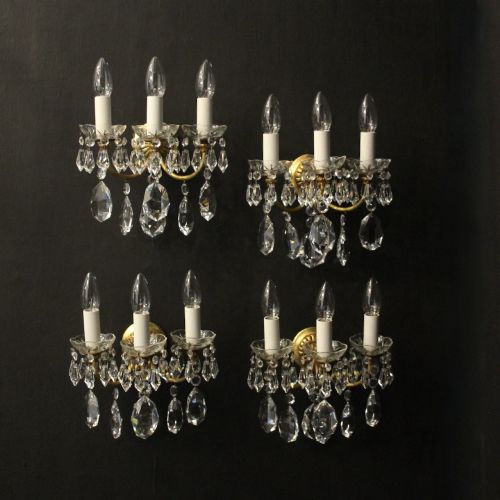
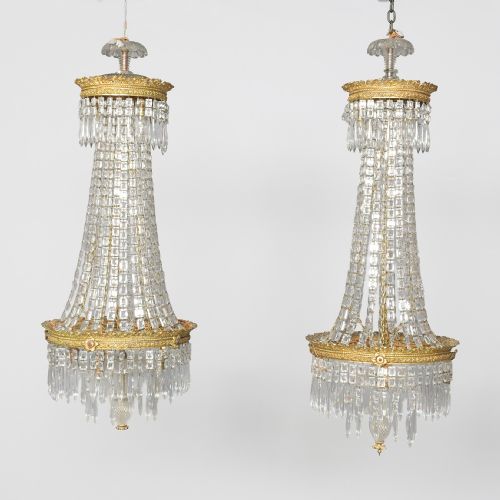
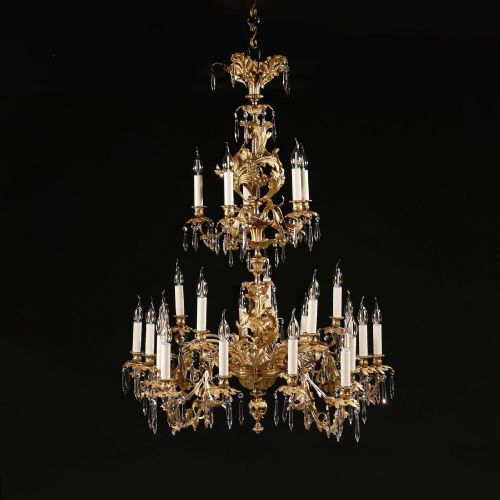
Brass Crystal Fitting
These brass crystal fitting examples range from French Empire chandeliers to Edwardian dome lights, bringing genuine period illumination to residential interiors.
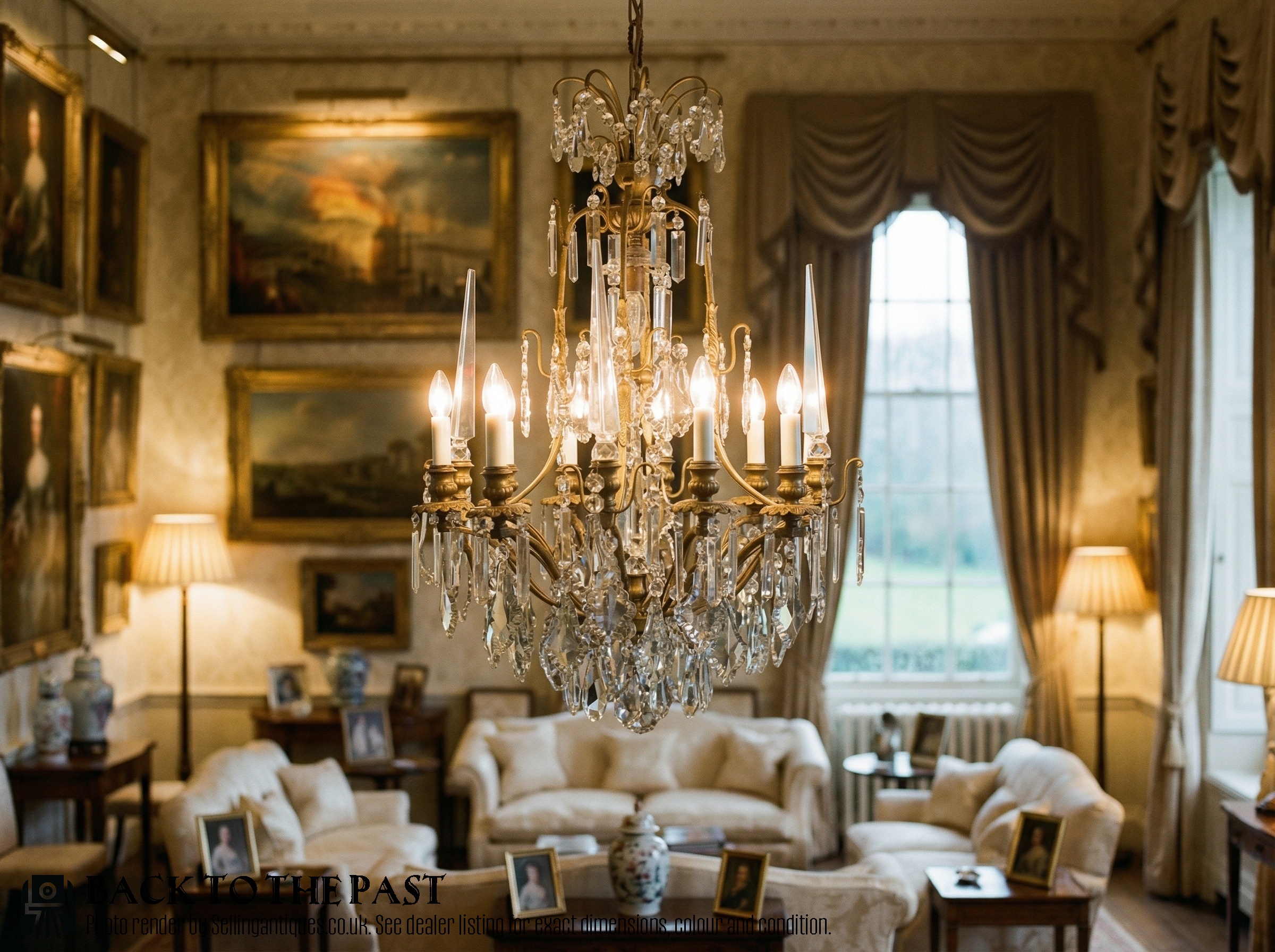
Brass Crystal Fitting
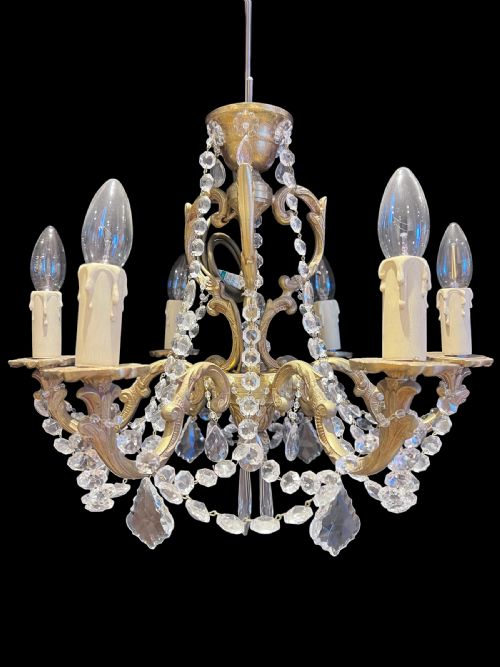
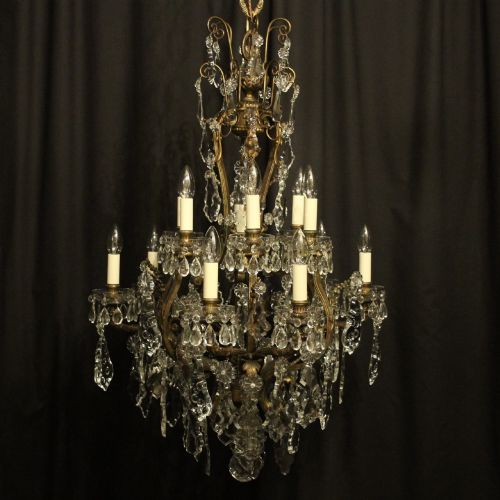
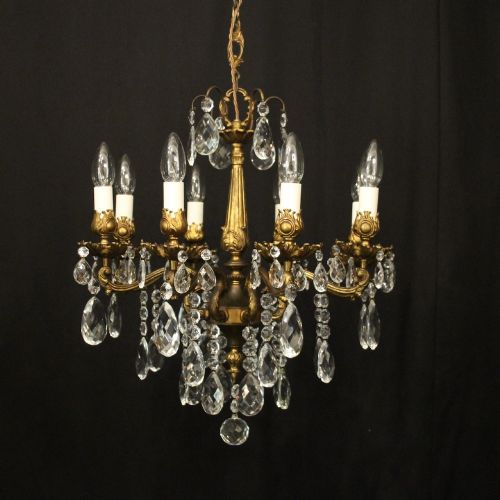
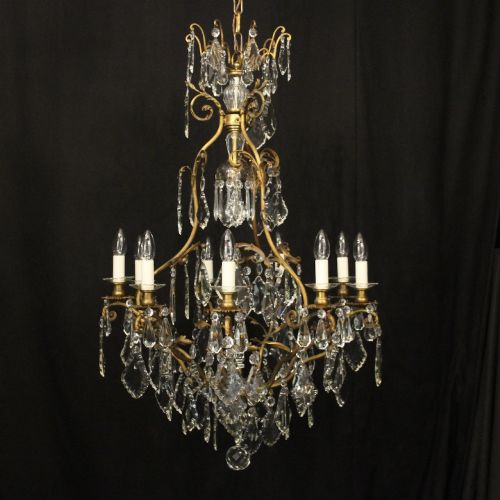
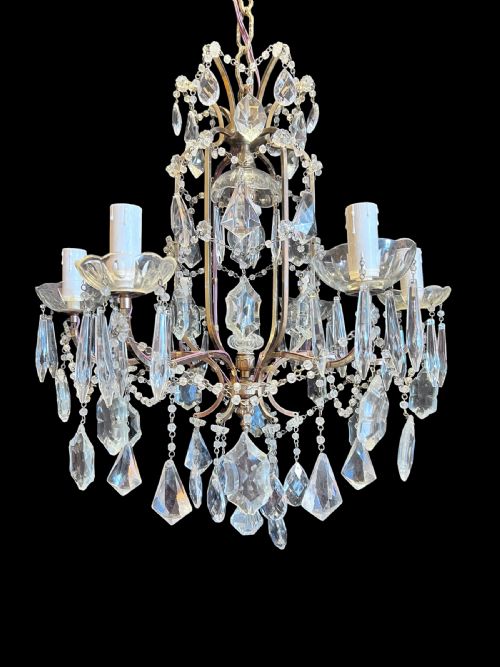
A brass crystal fitting comprises lighting fixtures anchored in brass, gilded bronze, or tolewear and hung with glass, cut crystal, or porcelain elements. The inventory centres heavily on chandeliers, ceiling lights, and pendant lights alongside wall lights and table lamps.
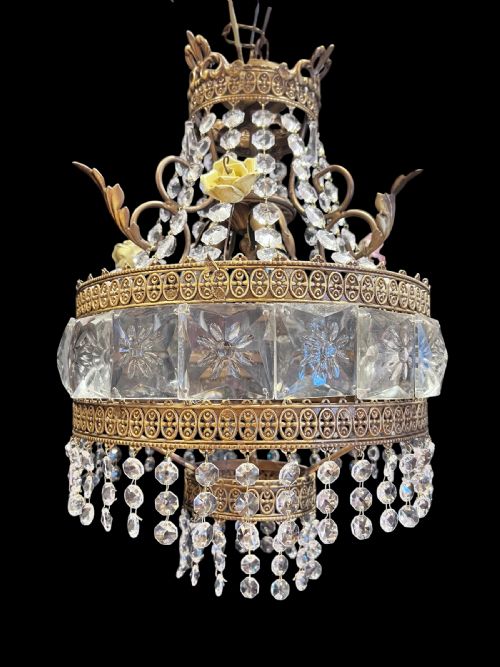
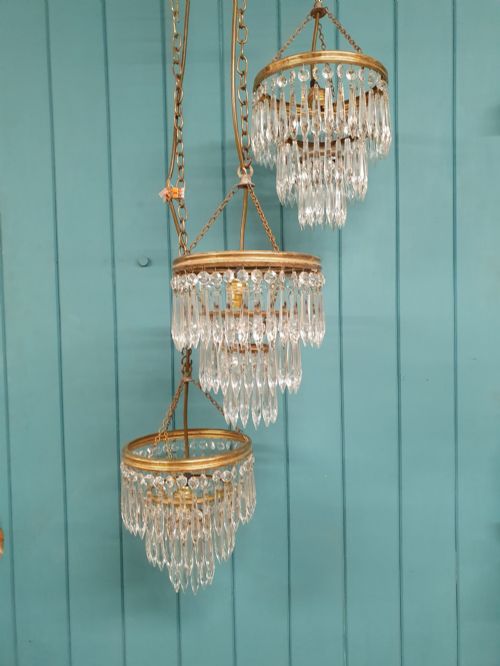
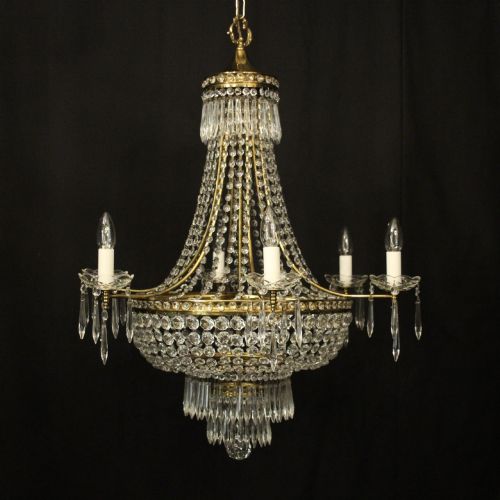
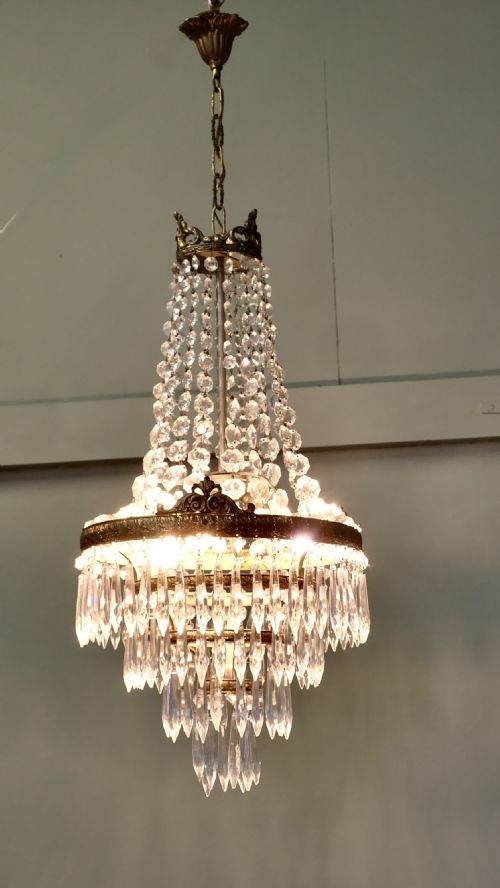
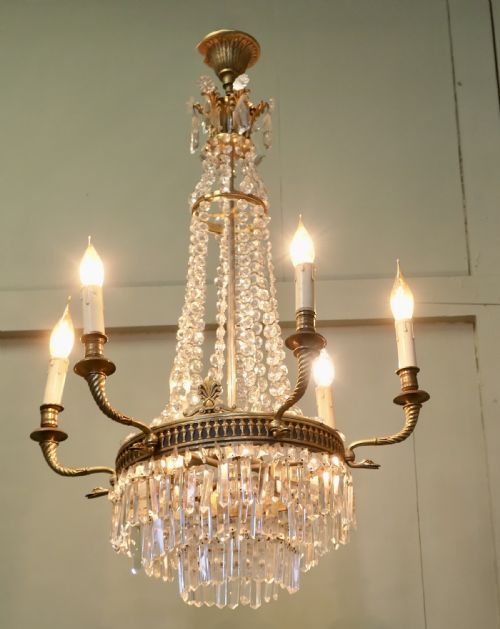
Buyers encounter numerous French examples spanning the 19th Century through the 1930s, including French Empire style tent and waterfall configurations, alongside Italian fixtures featuring coloured crystals and porcelain flowers.
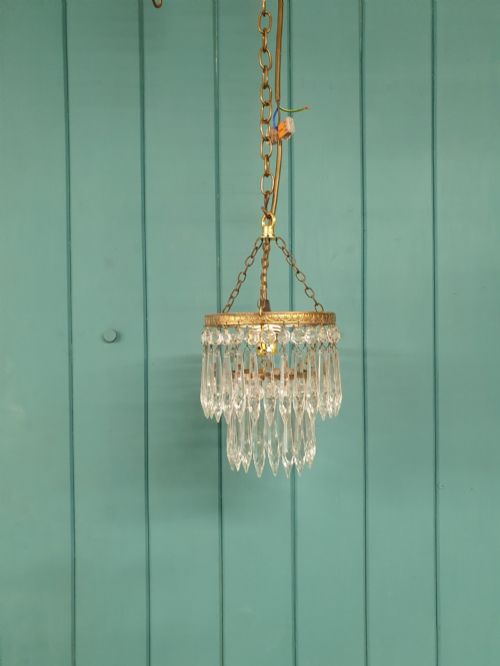
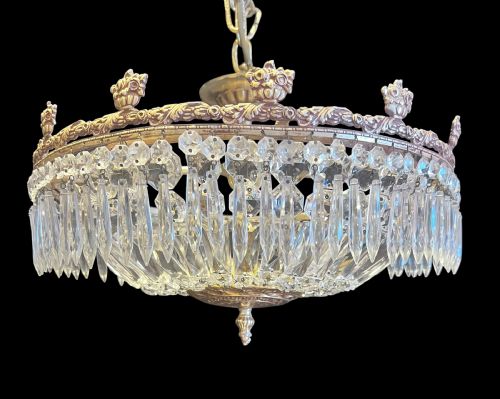
Edwardian pieces appear frequently in smaller scales such as bag chandeliers, dome tops, and spike chandeliers, often measuring under ten inches. Swedish and general early 20th century pieces complete the selection.
Materials and construction methods
Structures rely on cast brass, gilded bronze, and gilt brass, occasionally decorated with cast lion masks or leafy details. Metals provide the rigid armature required to support heavy arrangements of glass components.
Refractive hanging elements utilise cut glass and cut crystal, shaped into prisms, beads, and pendants to disperse light. Some variations incorporate coloured crystals, porcelain flowers, or turquoise elements for added visual depth.
The listings span the 19th Century through the 1930s, featuring brass, gilt bronze, cut glass, and crystal across French Empire, Rococo, and Edwardian styles.
Distinctions in standard and execution
Quality rests in the precision of the metal casting and the clarity of the glass elements. Heavier frames with crisp chased bronze or detailed brass mounts sit apart from simpler commercial variations.
The sophistication of the drop arrangement dictates the visual success of the piece, particularly in complex tent and waterfall configurations where the density and cut of the crystal prisms determine how light refracts through the room.
The Brass Crystal Fitting Glossary
- Tent and waterfall
- A chandelier style featuring an upper canopy of gathered crystal strands forming a tent shape above a cascading lower tier of drops.
- Gilded bronze
- Metal alloy cast and treated with a gold-coloured surface finish, providing rich warmth to French period chandelier frames.
- Plafoniere
- A ceiling-mounted lighting fixture set flush or close to the ceiling surface, often utilising brass frames and glass panels.
- Coffin prisms
- Elongated, flat-sided glass drops shaped like coffins, historically used on Edwardian and earlier chandeliers to catch and refract light.
- Bag chandelier
- A compact lighting fixture enclosed in a pear-shaped or bag-like mesh of small glass beads, common in early twentieth-century formats.
Brass Crystal Fitting: Frequently Asked Questions
How do I hang a heavy chandelier safely?
Suspension requires fixing directly into ceiling joists or utilising a structural hook rated to bear the total weight of the brass frame and crystal drops.
Professional electrical installation ensures the internal wiring safely handles the number of lamp holders specified on the fixture.
What rooms suit a tent and waterfall chandelier?
These large fixtures suit principal reception rooms with high ceilings where the cascading crystals have adequate vertical space to catch natural and artificial light.
Dining rooms and entrance halls provide traditional placement options where the scale of the multi-light arrangement commands the interior.
How do I clean crystal chandeliers?
Maintenance involves spraying a dedicated glass cleaner onto the crystals while placing a cloth underneath to catch drips, allowing the liquid to dissolve accumulated dust.
Intricate drops can be wiped individually by hand using a lint-free cloth, avoiding harsh chemicals that might damage the underlying brass or gilt surfaces.
How do I identify an Edwardian spike chandelier?
Edwardian spike chandeliers typically feature a central vertical metal spike surrounded by radiating arms and small cut glass crystals, often measuring under ten inches across.
These compact fixtures were designed for smaller bedrooms or hallways during the early twentieth century, maintaining the refractive qualities of larger saloon chandeliers on a reduced scale.