

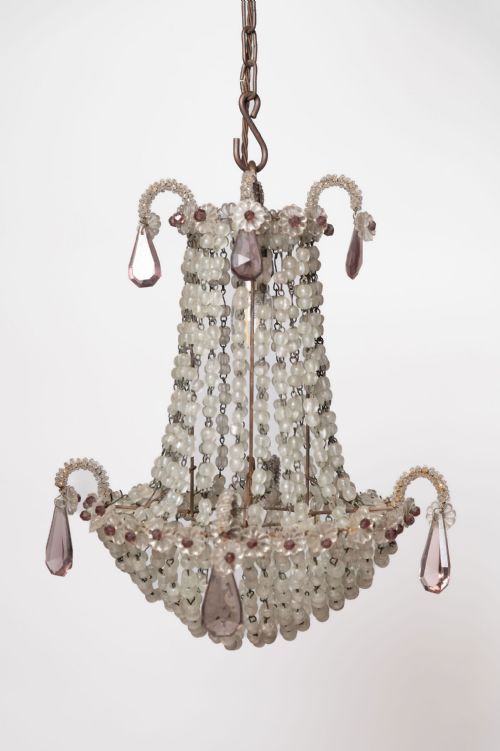
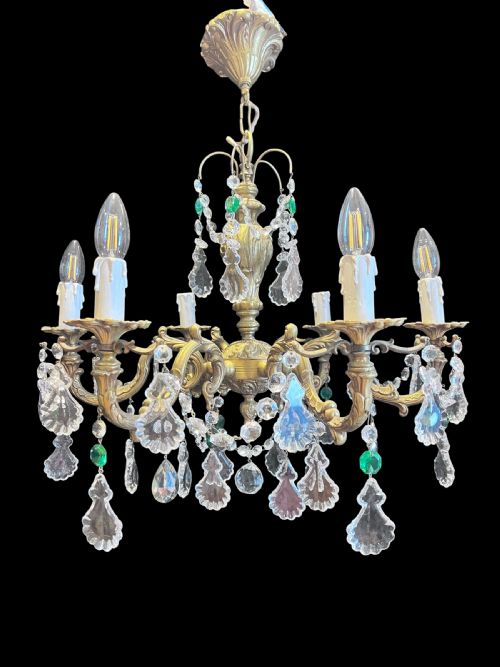
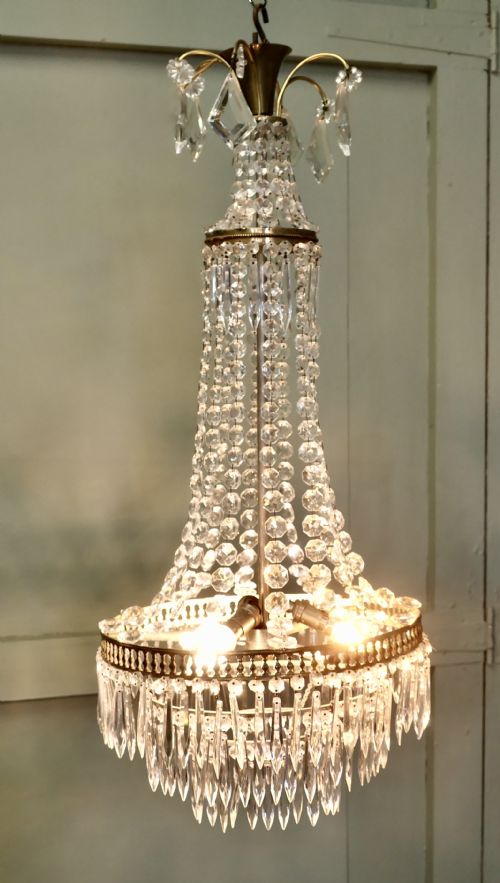
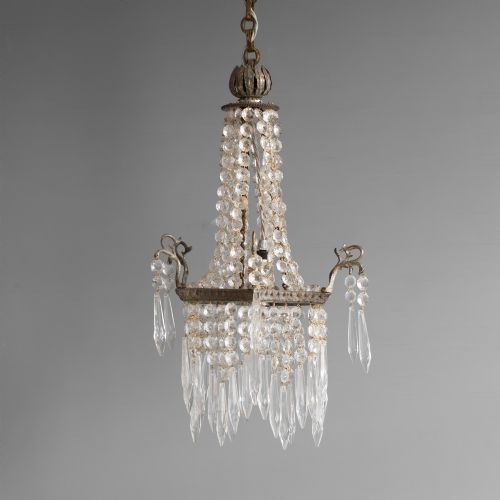


Brass Crystal Ceiling Lamp
A brass crystal ceiling lamp brings immediate brilliance to a room, combining metallic warmth with refractive glass.
Brass Crystal Ceiling Lamp
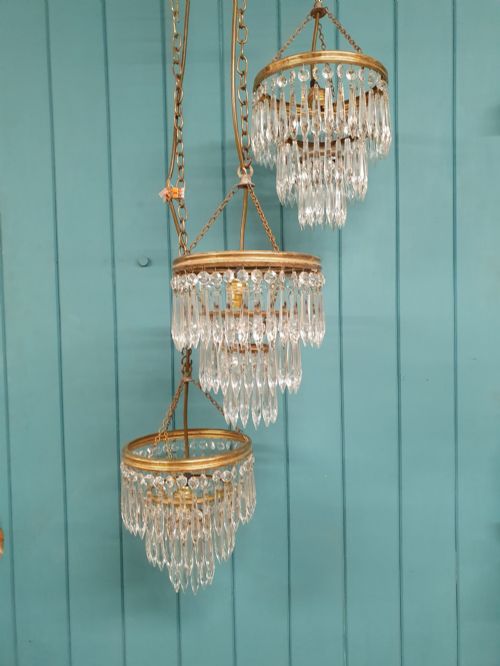
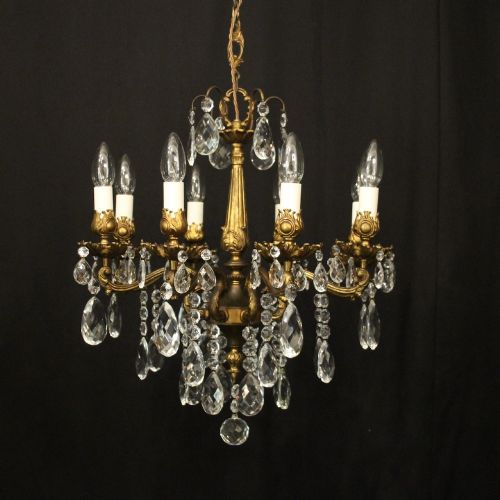
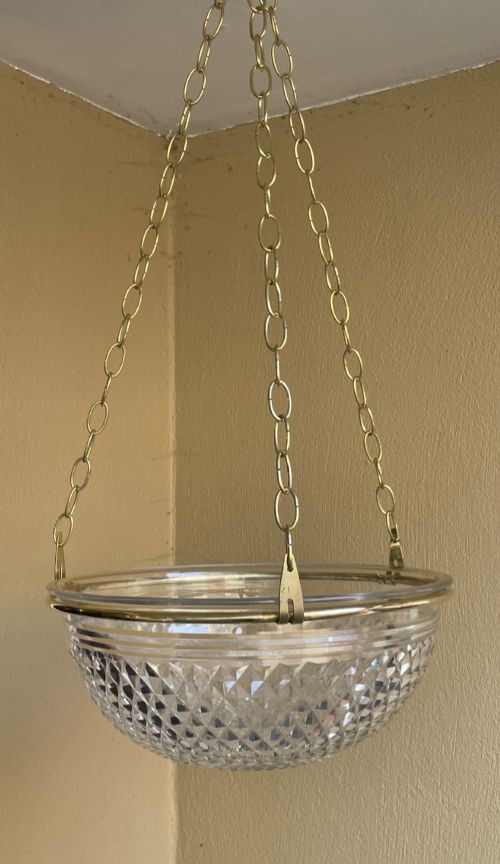
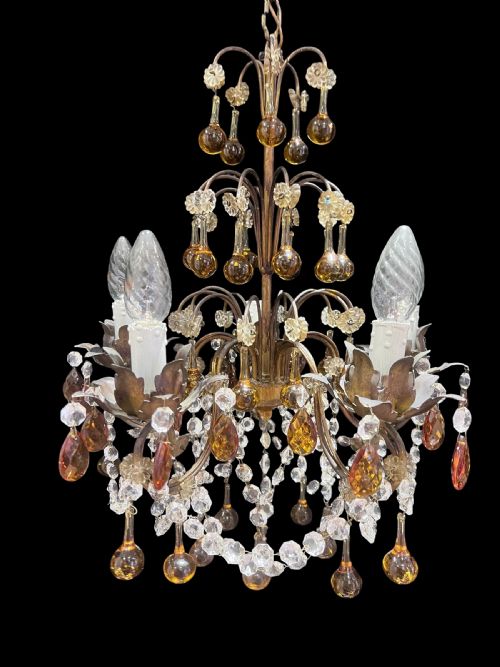
A brass crystal ceiling lamp unites structural metalwork with suspended glass elements designed to illuminate and catch light. These pieces appear primarily as multi-light chandeliers, pendant lights, and flush-fitting plafonniers originating from early twentieth-century workshops, Edwardian drawing rooms, and continental salons.
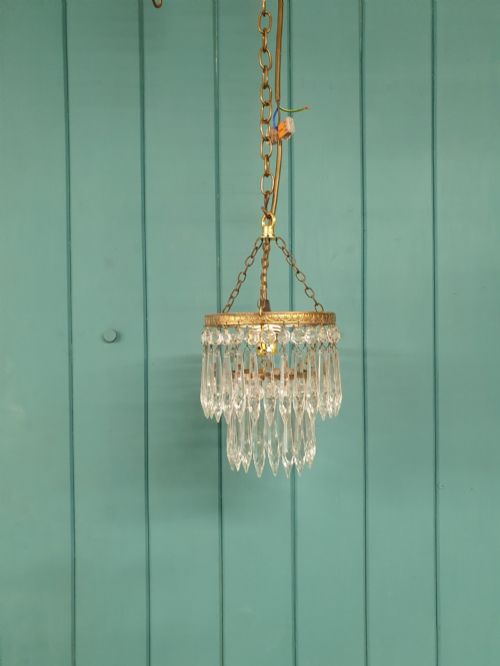
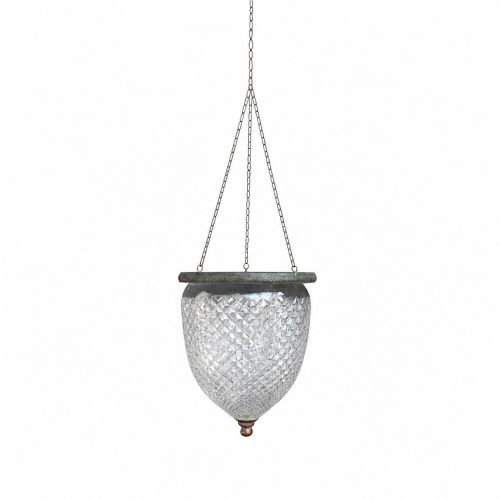
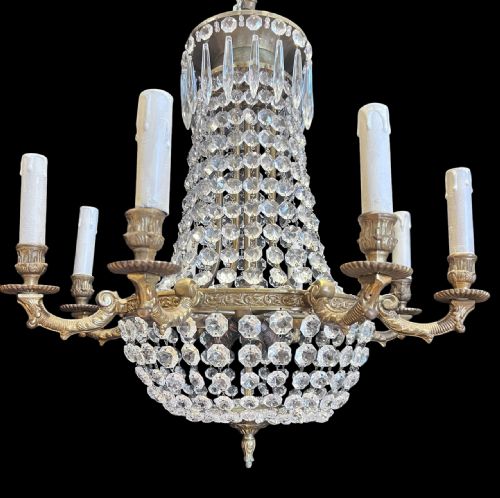
The most common examples on this page are French empire style fixtures and Edwardian cut glass designs, ranging from single-light basket pendants to multi-tier chandeliers with numerous lights. The eras represented stretch from the late Victorian period through the Art Deco epoch.
Makers and designers drew on French rococo, empire, and chateau aesthetics to create elaborate hanging arrangements of brass, gilt bronze, and cut crystal. Buyers select these fittings to anchor a room with period character and reflective illumination.
Materials and Construction Methods
The framework of these lamps relies on cast and spun brass, gilt bronze, and gilt brass, providing a rigid armature to support heavy glass components. Metal mounts are often chased or gilded to enhance the decorative profile before the glass is hung.
Prisms, drops, beads, and central bowls are formed from cut crystal, cut glass, and crystal glass, shaped by hand or machine before being wired onto the metal frame with brass pins. Coloured crystals and lustres are integrated into specific regional designs to alter the refraction of light.
The current selection spans pieces dated from 1800 through the 1930s, featuring brass, gilt bronze, cut glass, and crystal.
Evaluating Craftsmanship and Finish
Quality in a brass crystal ceiling lamp rests upon the depth of the metal casting, the precision of the gilding, and the clarity of the glass elements. Heavier brass armatures and hand-cut crystal drops with sharp facet edges distinguish finer workshops from simpler commercial output.
The intricacy of the assembly also determines standard, seen in how tightly droplets are wired and how harmoniously the brass mounts complement the crystal tiers. Superior examples maintain structural balance and retain matching original glass components across every tier.
The Brass Crystal Ceiling Lamp Glossary
- Plafonnier
- A ceiling light designed to sit close or flush to the ceiling surface rather than hanging on a long chain. These fixtures often feature a glass dome or shallow bowl held by brass mounts.
- Waterfall chandelier
- A lighting fixture featuring overlapping strands of crystal beads or drops that cascade downward in a tiered formation. This design creates a dense sheet of refractive glass.
- Gilt bronze
- An alloy of copper and tin treated with gold leaf or mercury gilding to produce a rich metallic surface. It provides a durable and decorative alternative to plain brass.
- Lustre
- A hanging glass pendant or drop attached to a light fitting to diffuse and reflect illumination. Lustres appear in various cuts including spear, acorn, and prism shapes.
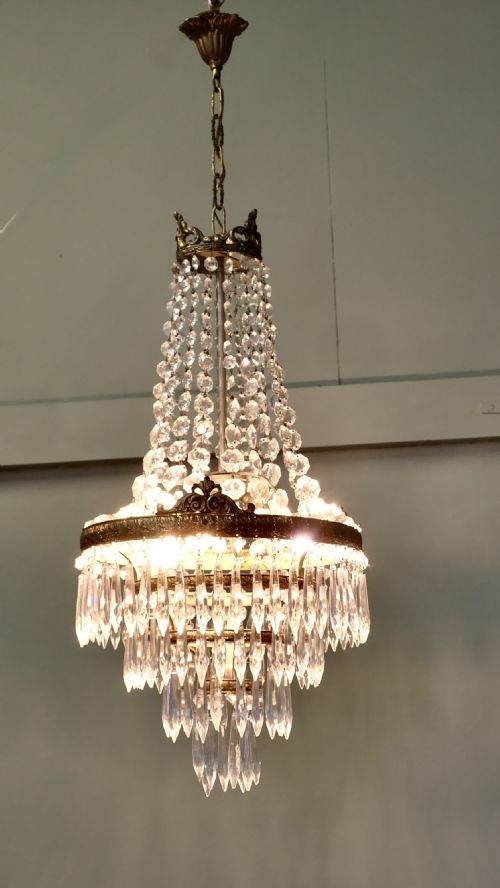
- Tent and bag chandelier
- A style featuring an upper conical section of strung beads resembling a tent above a gathered bag of crystal drops. This classic configuration originated in eighteenth-century designs and persisted into the twentieth century.
Brass Crystal Ceiling Lamp: Frequently Asked Questions
How do I clean a brass crystal ceiling lamp?
Maintenance involves removing the glass drops individually and washing them in warm soapy water before drying them with a soft cloth. The brass frame can be dusted gently with a dry brush to preserve its historic finish without stripping the metal.
Harsh chemical polishes should be avoided on both the metal and the crystal to prevent scratching the surfaces or damaging the original patination.
Can these antique lamps take modern bulbs?
Most of these fittings accommodate standard modern lamp holders once checked by a qualified electrician. Rewiring is frequently necessary to meet current safety standards while retaining the exterior appearance.
LED bulbs designed to mimic historical candle shapes work well because they emit minimal heat and reduce energy consumption while maintaining the period aesthetic.
How do I distinguish Edwardian pieces from Art Deco examples?
Edwardian designs tend to favour organic motifs, naturalistic acorn drops, and softer cut glass elements mounted in polished brass. They reflect traditional craftsmanship rooted in late nineteenth-century revival styles.
Art Deco pieces introduce geometric tiers, streamlined silhouettes, and stepped arrangements of crystal glass. These fixtures embrace industrial symmetry and modernism rather than ornate floral or classical curves.
What rooms suit a basket chandelier best?
Basket chandeliers and flush plafonniers suit rooms with lower ceiling heights where a traditional hanging pendant would obstruct movement. Hallways, bedrooms, and dining spaces benefit from their compact yet decorative proportions.
Because they direct light both outward through the cut glass and downward through the basket base, they provide balanced illumination without overwhelming smaller architectural spaces.