



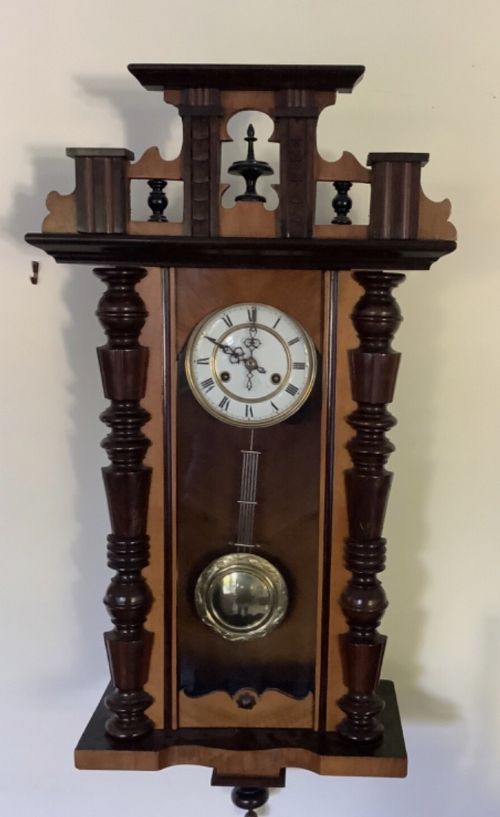


Brass Column Clock
A brass column clock brings weighted nineteenth-century presence to a mantelpiece, offering visible mechanical movement housed in architectural metalwork.
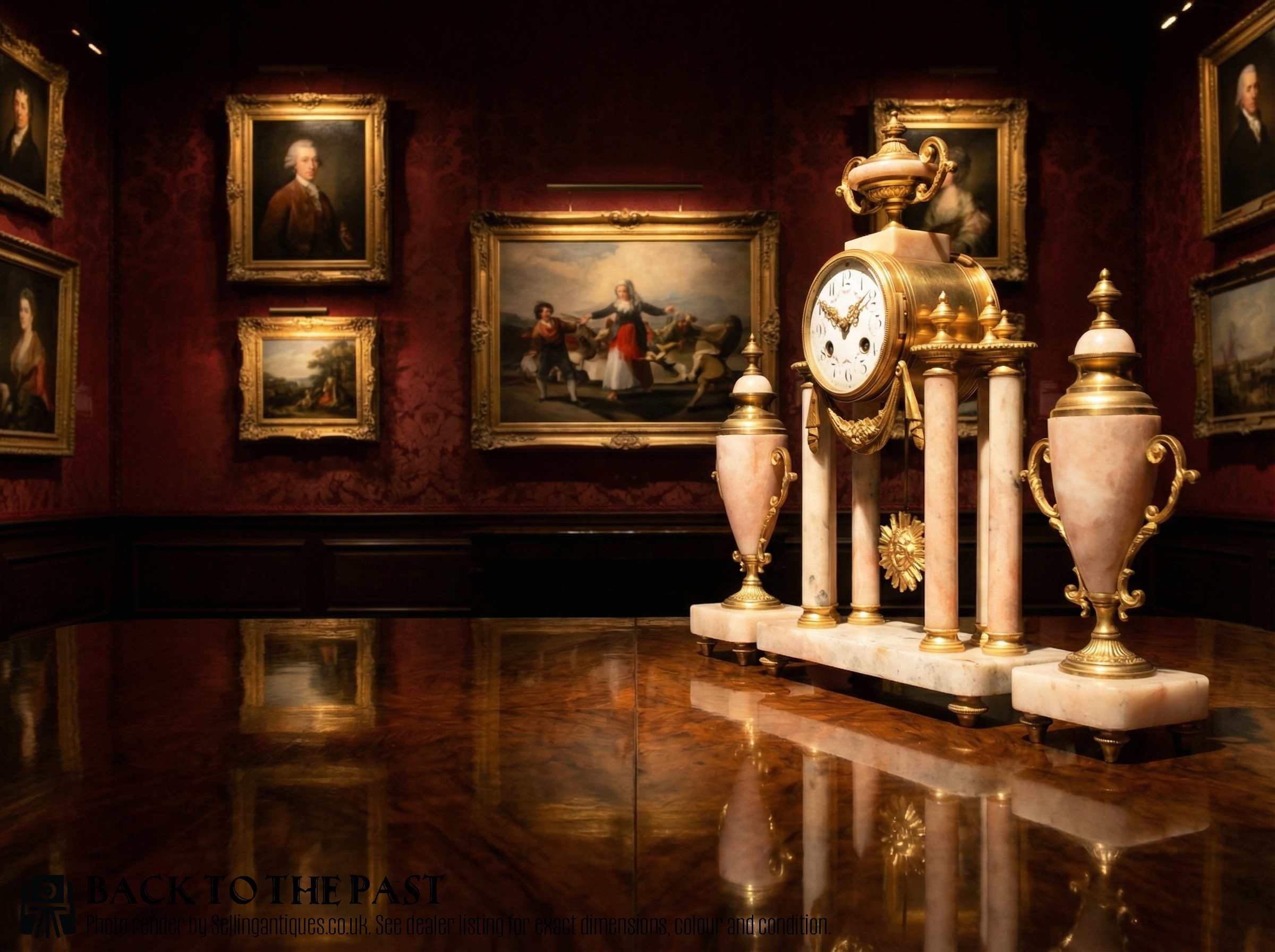
Brass Column Clock
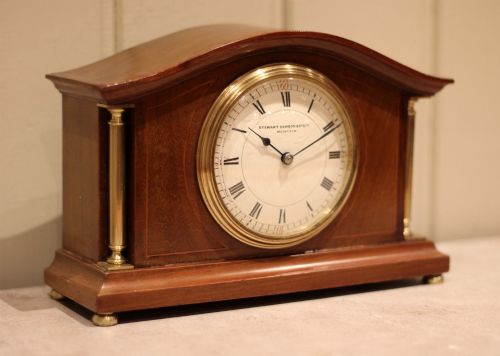
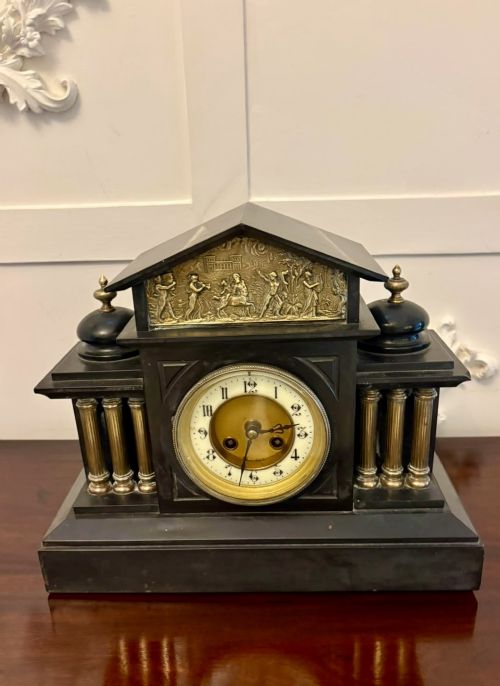
A brass column clock stands as a formal timekeeper shaped by nineteenth-century architectural styles, taking cues from Victorian classical revival and French empire design. The selection includes architectural mantel clocks and portico forms, alongside repeating carriage clocks featuring distinct corner pillars.
Most examples hail from the Victorian era and the decades around nineteen hundred, driven by French and English workshops. Buyers will encounter substantial marble and slate bodies punctuated by bright metal columns, or cased brass designs made for portability.
Materials and construction
Construction relies heavily on cast brass, gilt bronze, and ormolu paired with heavy stones like black marble, pink marble, and slate. Glass panels frequently protect delicate enamel dials and expose the oscillating pendulum or repeating gear trains within.
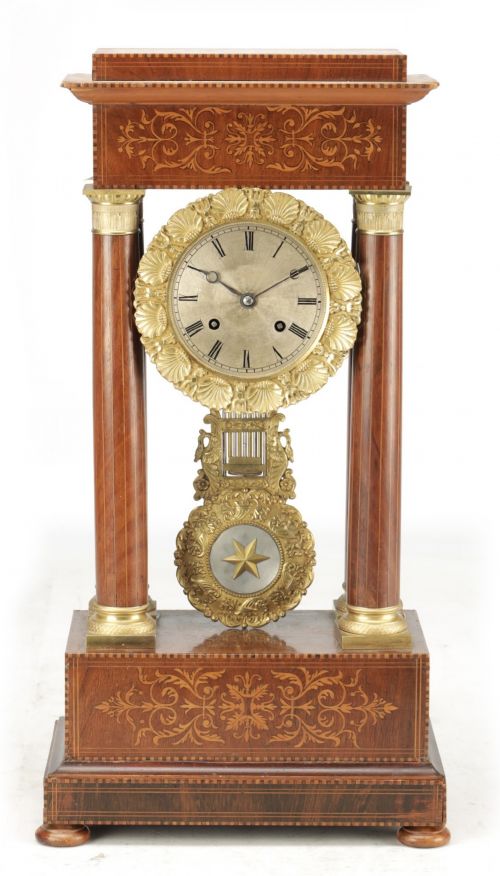
Cabinetmakers and metalworkers utilised fine inlays of rosewood, satinwood, and lemon wood on specific portico frames. Movements were precision-tooled to run for eight days, often incorporating complex striking mechanisms and moon-phase complications.
Listings span the nineteenth and early twentieth centuries, featuring heavy Victorian marble alongside polished brass carriage cases.
Assessing quality and execution
Quality reveals itself in the crispness of the cast brass enrichments and the depth of the marble polishing. Superior examples display intricate engine-turned mask dials, finely painted enamel panels, and substantial architectural proportions rather than stamped sheet metal.
Signed movements by known makers elevate a piece significantly above unmarked workshop production. The integration of complex complications like grand sonnerie striking or calendar work distinguishes high-tier horology from standard timepieces.
John Morley·Philippes Paris·Baby and Jannings·Mappin and Webb·A Delépine·George Adams
The Brass Column Clock Glossary
- Portico clock
- A distinct architectural mantel clock supported by four columns framing a central suspended pendulum. This neoclassical style gained favour during the nineteenth century.
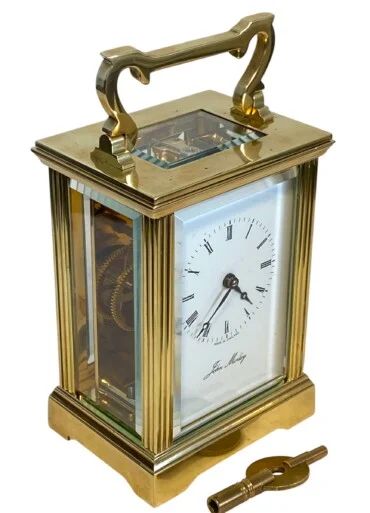
- Carriage clock
- A portable spring-driven timepiece originally designed for travel during the Victorian and Edwardian periods. They typically feature brass cases with glass panels and a folding handle.
- Gilt brass
- Base metal treated with a thin layer of gold or brass wash to impart a bright reflective surface. It provides the decorative gleam characteristic of architectural clocks.
- Grand Sonnerie
- A complex striking mechanism that sounds both the hours and the quarters automatically on bells or gongs. It represents a high level of nineteenth-century mechanical achievement.
- Enamel dial
- A metal clock face coated in fused powdered glass to create a smooth white surface. Numerals are hand-painted onto the vitreous layer before firing.
Brass Column Clock: Frequently Asked Questions
How do I wind a mechanical brass column clock?
Most antique mechanical models utilise a small winding key inserted into dedicated holes on the enamel dial. Turn the key gently until resistance signals the mainspring is fully wound.
Take care not to overwind the movement, as this can strain the historic springs. Ensure you set the time by moving only the minute hand forward where possible.
Where should I place a heavy marble mantel clock?
Choose a sturdy, level surface such as a fireplace mantel or a heavy sideboard to support the substantial weight of marble and slate bodies. Uneven placement can prevent the pendulum from beating in true rhythm.
Keep the clock away from direct sunlight, draughts, and damp walls to protect the delicate internal steel components and exterior gilt surfaces.
What does a repeating carriage clock do?
A repeating mechanism allows the clock to chime the last elapsed hour and quarter on demand when a small lever or button is pressed. This feature was originally designed for checking the time in the dark.
These models feature complex internal gear trains that require careful handling and professional servicing to maintain their acoustic accuracy.
How do I tell a Victorian clock from an Edwardian one?
Victorian models often feature heavier architectural elements, rich coloured marbles, and ornate classical revival ornamentation. Edwardian pieces tend toward cleaner lines and slightly more restrained proportions.
Examining the maker's signature, dial typography, and any surviving case labels will often provide a clearer date of manufacture.