

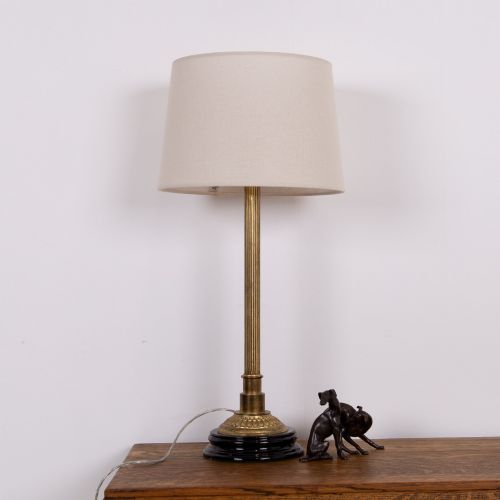
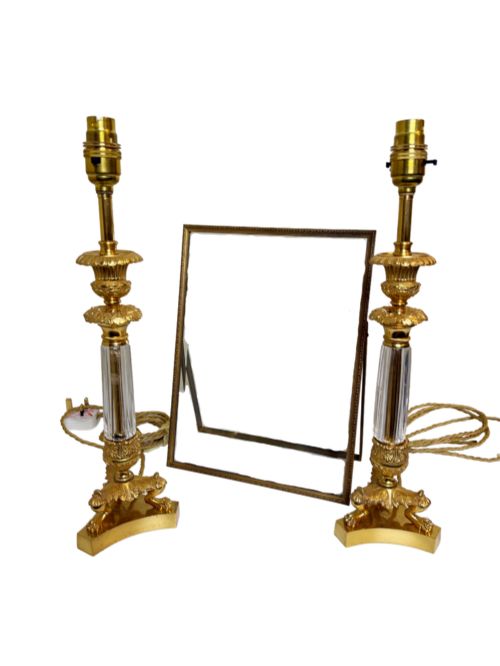
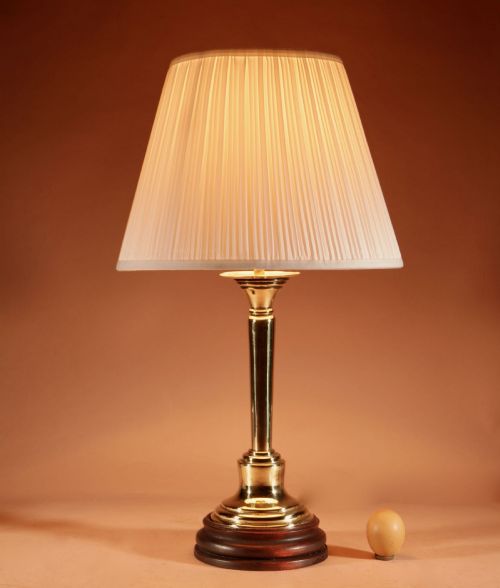
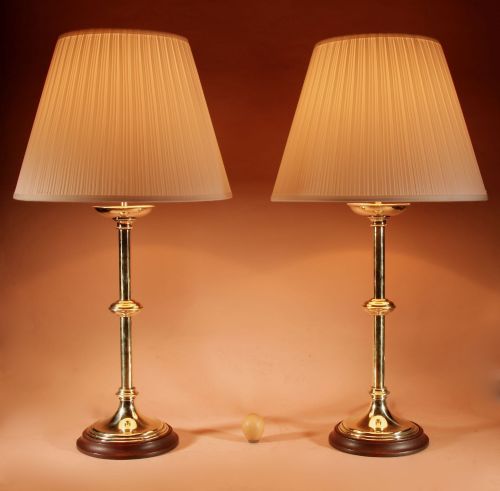

Brass Column Bedside Lamp
A brass column bedside lamp brings classical architecture to a nightstand, offering solid weight and bright metal warmth.
Brass Column Bedside Lamp
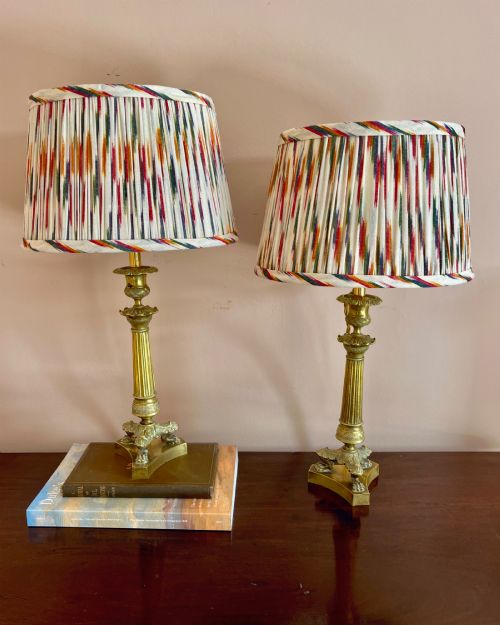
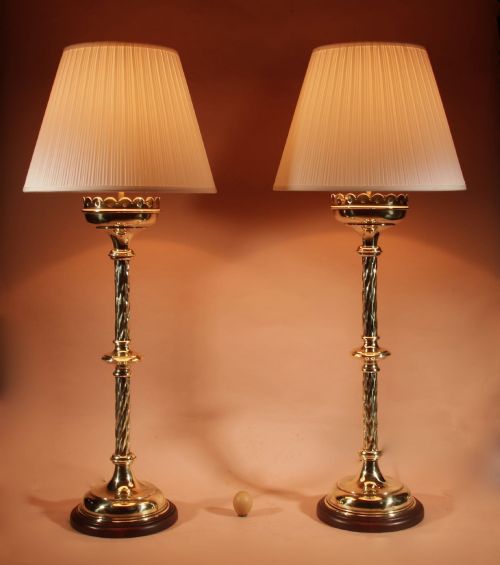
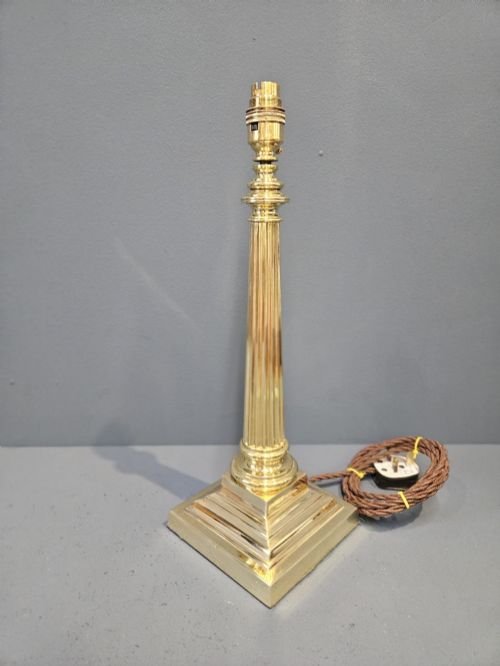
A brass column bedside lamp is primarily drawn from Victorian, Edwardian, and early twentieth-century periods. These pieces adapt architectural orders for domestic lighting, using slender shafts to support light fittings.
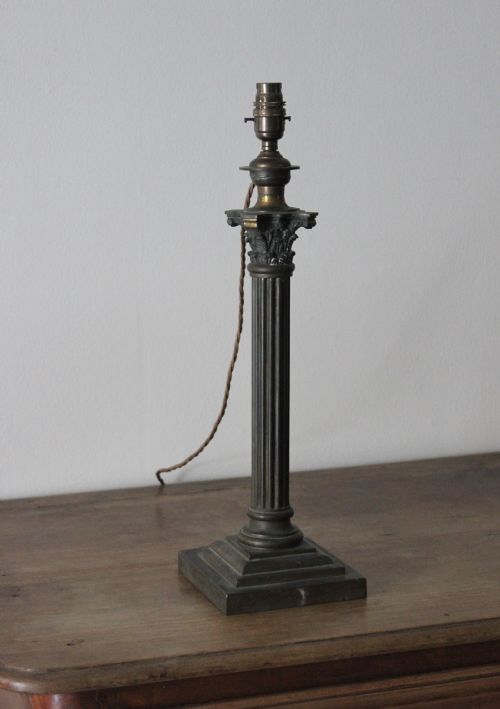
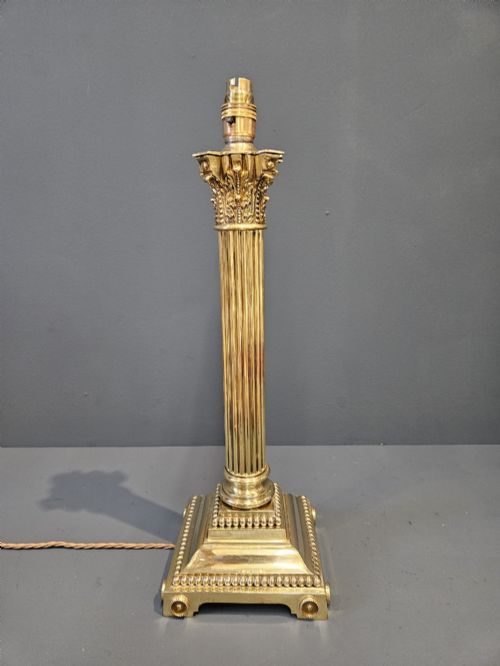
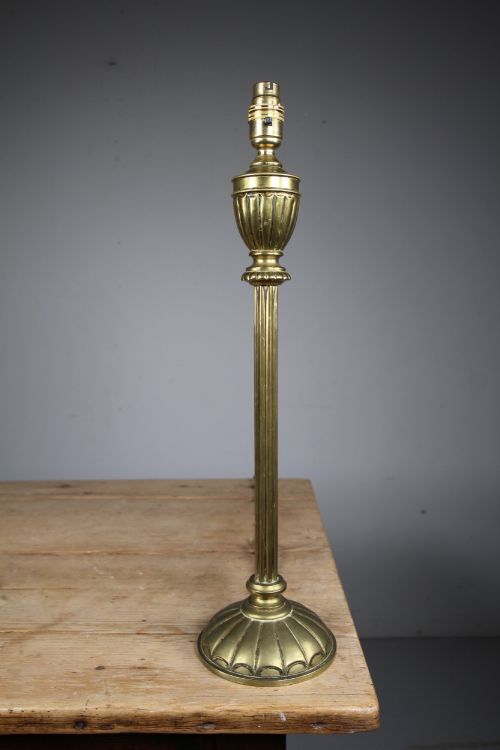
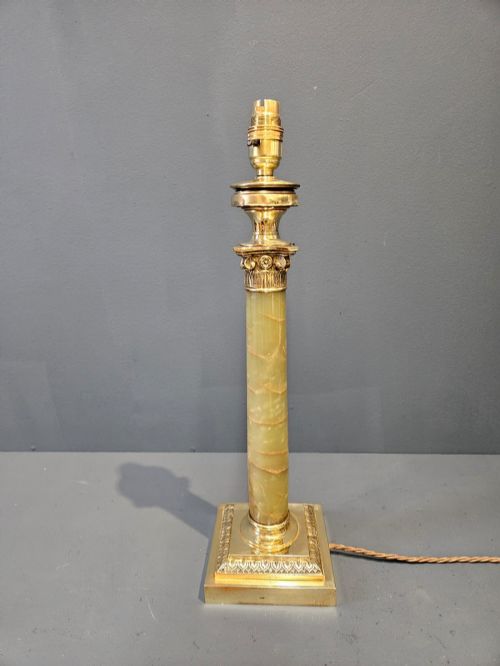
The most common version encountered on this page is the Corinthian column, alongside Doric and plain reeded shafts. Makers also utilised Gothic Revival and Neoclassical styles to shape these upright forms.
Originating largely from British and French workshops, these lamps often began life as candlesticks before conversion to electricity. Their proportions suit smaller surfaces like bedside tables while retaining monumental presence.
Materials and construction methods
Foundry work relied on cast brass, gilt bronze, and ormolu, sometimes paired with cut glass, opaline glass, or polished marble bases. Heavier examples incorporate weighted iron internal rods to ensure stability on domestic furniture.
Surface finishes include electroplating and silver plating over a brass core, alongside hand-polished patination. Architectural capitals and stepped bases were cast separately and joined mechanically to the central tubular or solid shafts.
Brass Column Bedside Lamp Retail Price Guide 2026
Typical asking prices for brass column bedside lamp among the pieces listed under this phrase on Sellingantiques today, from the lower quarter to the upper quarter. They describe what is for sale here now, not the wider market.
Listings span from the nineteenth century through the nineteen-thirties, featuring brass, marble, glass, and ormolu across Victorian and Art Deco styles.
Distinctions in quality and finish
The crispness of the casting marks the separation between standard production and finer workshops. Sharp acanthus leaves on a Corinthian capital and deep, clean fluting on a column shaft indicate superior craftsmanship.
Material integration also dictates standard; combining solid brass with genuine marble or cut glass reservoirs elevates a piece above simple spun-metal construction. Heavier gauge metal prevents the flexing common in lighter modern reproductions.
The Brass Column Bedside Lamp Glossary
- Corinthian column
- An architectural order featuring an ornate capital decorated with carved acanthus leaves. This motif appears frequently on the top of classical table lamps.
- Ormolu
- Finely ground high-carat gold applied to a bronze object using a mercury amalgamation technique. It provides a bright, durable golden surface on French decorative items.
- Reeded shaft
- A decorative column design featuring parallel convex mouldings running vertically along the length. This texture catches the light and adds visual interest to plain metal pillars.
- Opaline glass
- A pale, translucent white glass developed during the nineteenth century. It diffuses light softly and often forms the body or shade of period electrical conversions.
- Doric column
- The simplest and most sturdy of the classical Greek architectural orders. Lamps utilising this style feature a plain capital without decorative scrollwork.
Brass Column Bedside Lamp: Frequently Asked Questions
How do I date a brass column lamp?
Dating relies on examining the assembly methods, switches, and material combinations typical of periods from the nineteenth century to the interwar years.
Victorian and Edwardian pieces often display heavier cast components and older wiring channels compared to later twentieth-century iterations.
Were these originally made for electricity?
Many period examples started life as oil lamps, candlesticks, or altar lights before conversion to electrical fittings in the twentieth century.
Traces of burner mechanisms or wick adjusters often remain visible beneath modern lamp holders.
How should I clean antique brass?
Gentle dusting with a soft, dry cloth preserves the historical patination accumulated over decades. Avoid harsh chemical polishes that strip away the aged surface character.
Are pairs common for bedside use?
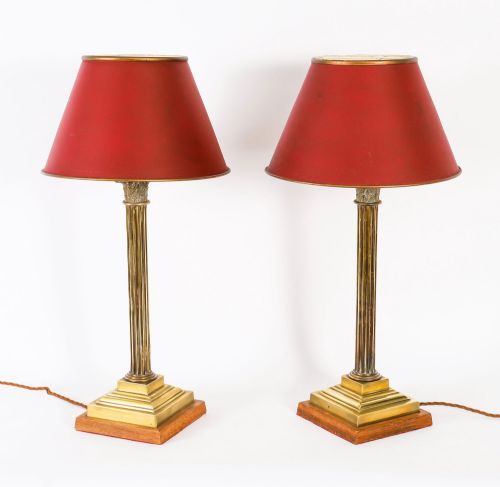
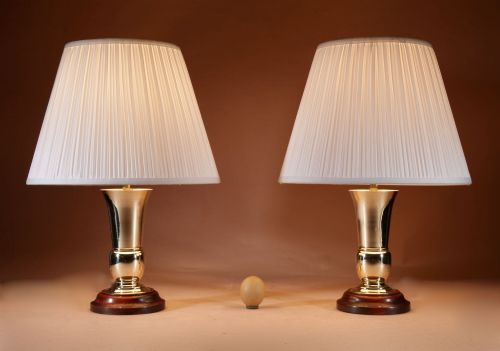
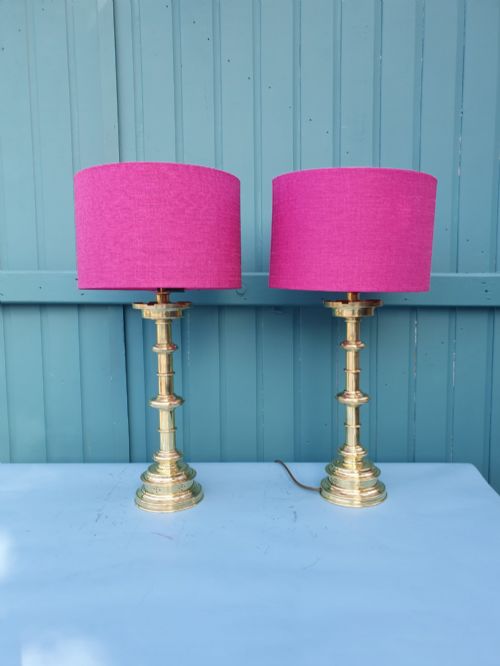
Matched pairs appear frequently across Victorian and Edwardian inventories, often originating from church or grand domestic settings.
Using them on opposite sides of a bed provides symmetrical illumination in a bedroom.