



Brass Chain Lighting
Brass chain lighting brings together functional suspension and period charm through fittings of glass and metal.
Brass Chain Lighting
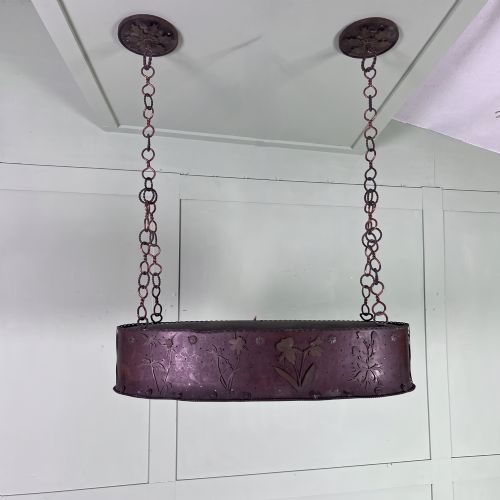
Brass chain lighting encompasses ceiling lights, pendant lights, chandeliers, and lanterns spanning the Victorian era through the 1930s. These fixtures originate from English and French workshops, utilising suspended metal chains to hold various forms of glass shades.
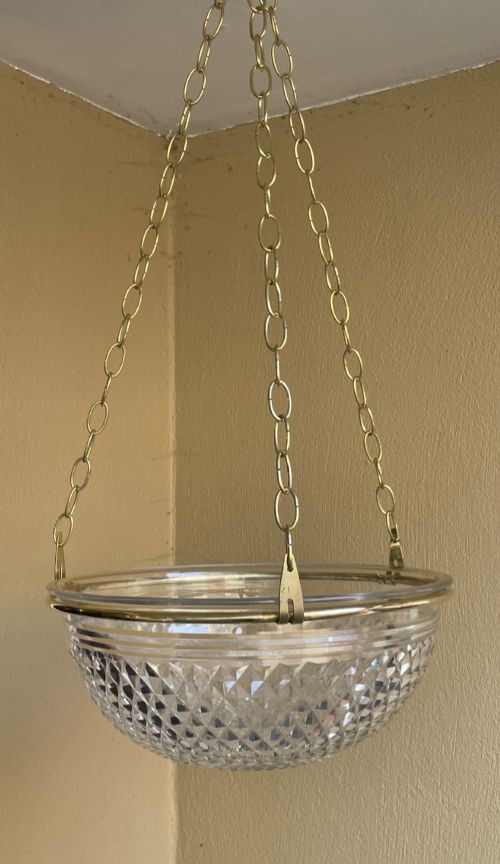
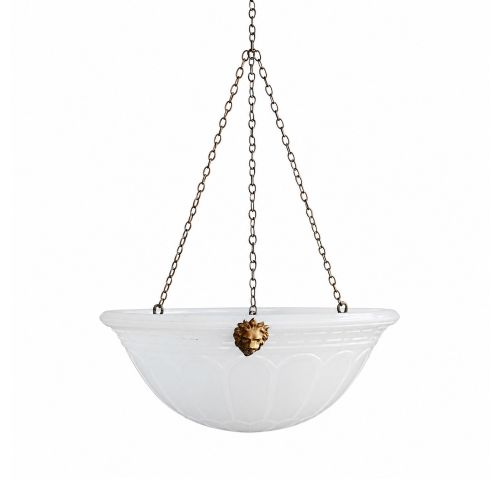
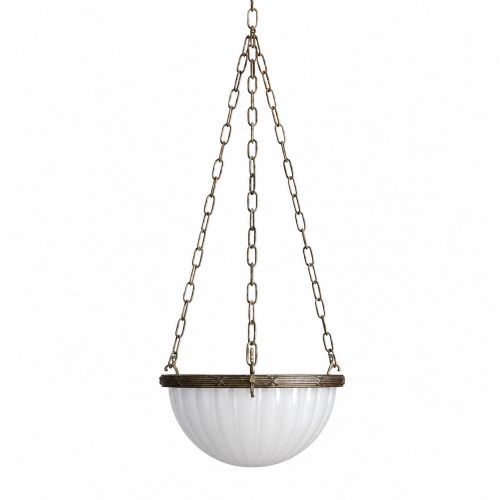
The version most commonly met on this page is the early 20th century or Edwardian glass pendant and plafonnier. These pieces often feature opalescent, moonstone, or cut glass bowls hung from brass hardware, reflecting domestic lighting trends of the period.
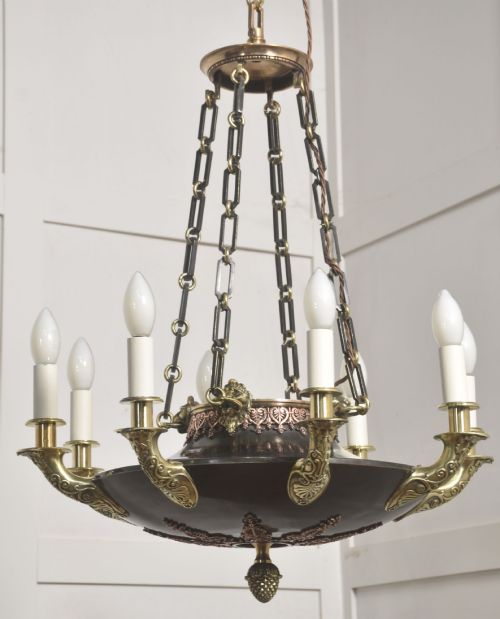
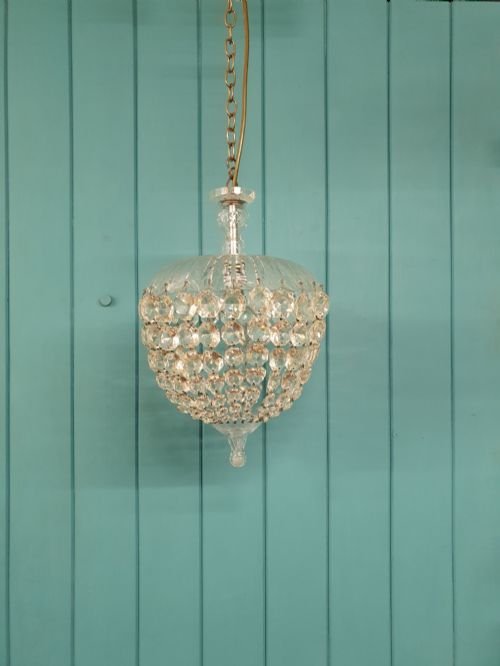
Larger examples include multi-light chandeliers and gilded brass candelabras dating back to the nineteenth century. Empire Revival, Arts and Crafts, and Art Deco styles appear alongside simpler utilitarian hall lanterns.
Materials and construction
Construction relies heavily on cast and sheet brass paired with lead and other metals for the structural frames and suspension chains. Glass is the dominant medium for the shades, encompassing frosted, cut, prismatic, opaline, and moonstone varieties.
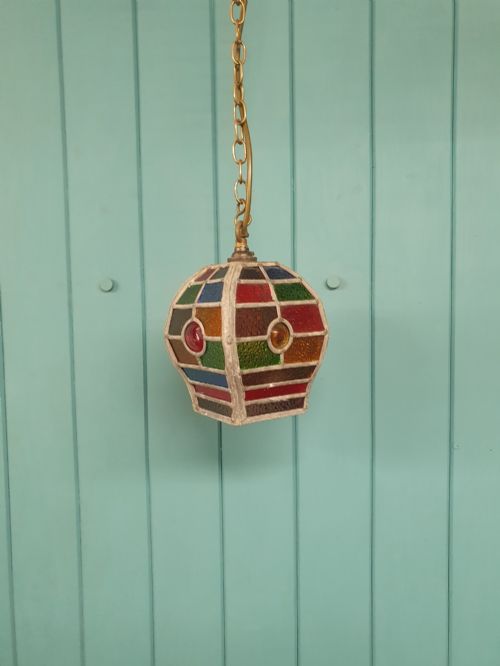
Techniques range from intricate hand-cutting on heavy crystal bowls to mould-blown opalescent and pink glass clamshell shades. Some lanterns incorporate leaded stained glass panels soldered together within metal frameworks.
Brass Chain Lighting Retail Price Guide 2026
Typical asking prices for brass chain lighting among the pieces listed under this phrase on Sellingantiques today, from the lower quarter to the upper quarter. They describe what is for sale here now, not the wider market.
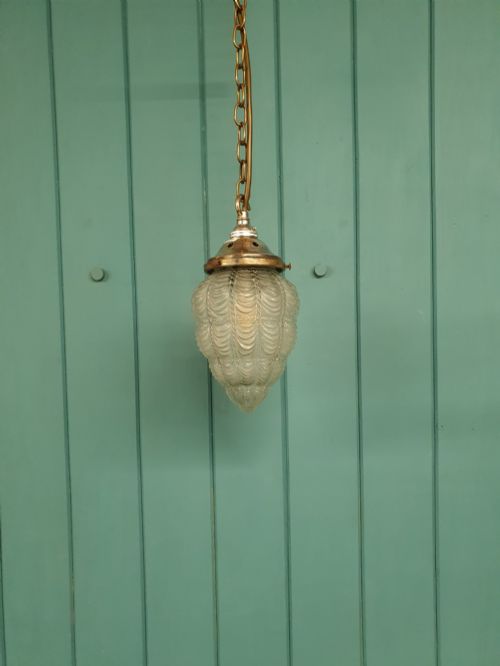
Some early twentieth-century shades use frilly glass edges designed to catch the soft glow of gas-electric conversion bulbs.
Judging quality in suspension fixtures
Quality shows in the weight and thickness of the brass components and the clarity or depth of the glass shades. Superior pieces display crisp moulding, substantial metal gauges, and refined surface patination rather than thin, pressed alternatives.
The integrity of the hanging mechanism and the finish of the glass determine the standing of a piece. Finer examples retain their original matching chains and undamaged decorative shades without structural compromise.
The Brass Chain Lighting Glossary
- Plafonnier
- A ceiling light fixture with a bowl-shaped shade mounted close to the ceiling or suspended by short chains. These fixtures direct illumination downward into a room.
- Holophane
- A brand of scientific glass shade featuring prismatic ribs designed to diffuse light efficiently. These shades are frequently found on early twentieth-century pendants.
- Moonstone glass
- An opacified white glass that resembles the soft sheen of a moonstone. It diffuses bulb glare evenly across the surface of the pendant.
- Opalescent glass
- A type of glass that displays milky, milky-blue, or fire-like colour variations when lit. It gained widespread popularity during the Art Deco and Arts and Crafts periods.
Brass Chain Lighting: Frequently Asked Questions
How do I hang a heavy brass chandelier?
Heavy chandeliers require secure anchoring into ceiling joists using a rated metal hook and electrical box. The brass chain must be adjusted to the desired drop before connecting the internal wiring.
Professional installation is recommended for older fixtures to ensure the structural weight is supported safely without straining the historic metal links.
Can I clean vintage glass shades safely?
Vintage glass shades should be removed from the brass chains and washed gently in warm, soapy water. Avoid harsh chemical cleaners that might damage delicate opaline or painted surfaces.
Dry the glass thoroughly with a soft cloth before rehanging it to prevent water spots or corrosion on the adjacent metal fittings.
Are these lights wired for modern electricity?
Many antique fixtures retain older wiring or have been partially updated, but safety standards require an inspection by a qualified electrician. Rewiring allows the use of modern lamp holders while preserving the exterior brass and glass components.
Ensure that any replacement flex matches the period aesthetic, using braided silk or twisted cord where appropriate.
How do I date an antique pendant light?
Dating relies on stylistic markers such as the geometric lines of Art Deco pieces or the organic forms typical of Arts and Crafts design. The manufacturing techniques of the glass and the composition of the brass also provide clues to the era of production.
Comparing the shade type and suspension hardware against established period examples helps narrow down the decade of manufacture.