



Brass Castors Magazine Rack
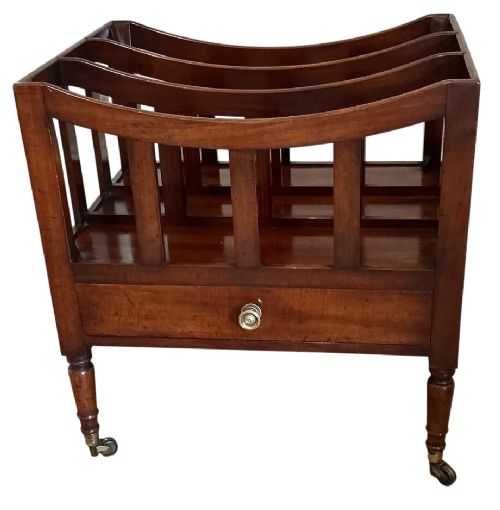
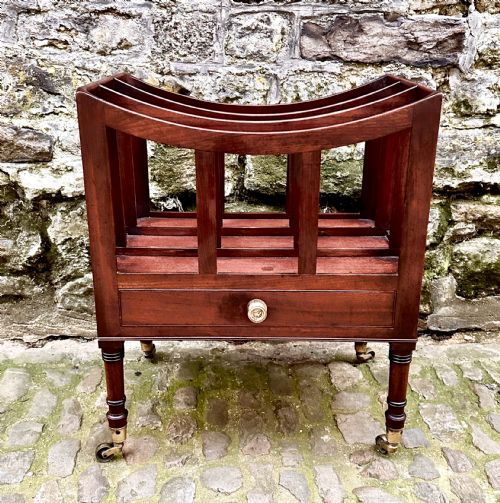
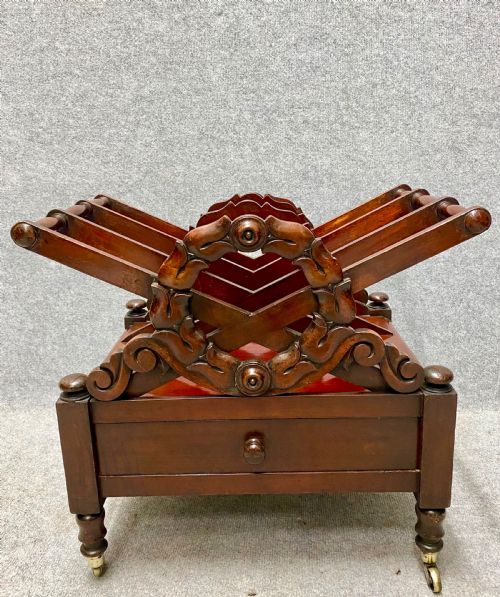
These brass castors magazine rack pieces are classic nineteenth century canterburys designed to hold newspapers and periodicals in style.
Brass Castors Magazine Rack
When you search for brass castors magazine rack, you encounter traditional canterburys and newspaper stands dating from the Regency, Georgian, and Victorian periods. These practical furnishings were made to house folios, sheets of music, and periodicals within formal living spaces.
Originating predominantly from English workshops of the early nineteenth century, these items bridge the gap between utility and refined interior decoration. Their compartmentalised frames kept reading matter organised while remaining mobile enough to shift across carpeted floors.
How they were made
Cabinet makers utilised dense native and imported timbers, primarily selecting rich mahogany and decorative rosewood, alongside occasional ebonised treatments. These woods were shaped into slatted divisions and sturdy lower frameworks designed to bear the weight of heavy paper collections.
The integration of brass castors required precise joinery to ensure smooth mobility beneath heavy timber bodies. Turned corner supports and finely carved details completed the construction, reflecting the high standards of nineteenth century British furniture production.
Current listings feature pieces spanning the Regency, Georgian, and Victorian periods, executed in mahogany, rosewood, and ebonised mahogany.
What varies in quality
The distinction between standard examples and exceptional pieces rests in the choice of timber figure, the crispness of the turned columns, and the integration of the lower compartments. Finer specimens display superior grain selection in the mahogany or rosewood alongside harmonious proportions.
Attribution to notable workshops or specific cabinet makers elevates an example beyond everyday utility. The presence of original brass hardware and well executed structural divisions marks the boundary between ordinary room furniture and distinguished collector pieces.
Gillows of Lancaster·J C Loudon
The Brass Castors Magazine Rack Glossary
- Folio stand
- A larger piece intended for loose prints, maps, or large format books. These often mirror the proportions of grand canterburys.
- Regency
- A style period spanning the early nineteenth century, characterised by classical restraint, elegant curves, and dark polished woods. It heavily influences the design of these racks.
- Ebonised
- Timber treated with a dark stain or finish to resemble expensive ebony. This technique was favoured during the Victorian era for striking contrast.
Brass Castors Magazine Rack: Frequently Asked Questions
What is a canterbury?
A canterbury is a small compartmentalised stand originally built to hold sheets of music or daily newspapers within easy reach of a seating area.
Over time, these versatile pieces evolved to serve as general magazine racks in drawing rooms and libraries.
Why do they have wheels?
The small metal wheels, known as castors, allowed owners to shift the loaded rack easily across heavy carpets without marking the floor.
This mobility was essential in large nineteenth century rooms where furniture arrangement shifted frequently throughout the day.
How do I date a piece?
Dating relies on observing the timber choice, construction methods, and stylistic cues such as Regency curves or Victorian ebonising.
Earlier examples often display lighter mahogany and restrained classical lines, whereas later Victorian versions lean towards heavier proportions and darker finishes.
Where were they used?
These stands lived primarily in the principal reception rooms of country houses and town residences, such as drawing rooms, studies, and music rooms.
They kept current reading material tidy and accessible for family members and guests alike.