
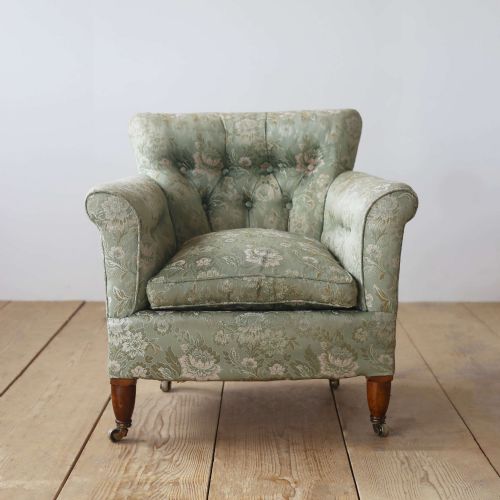
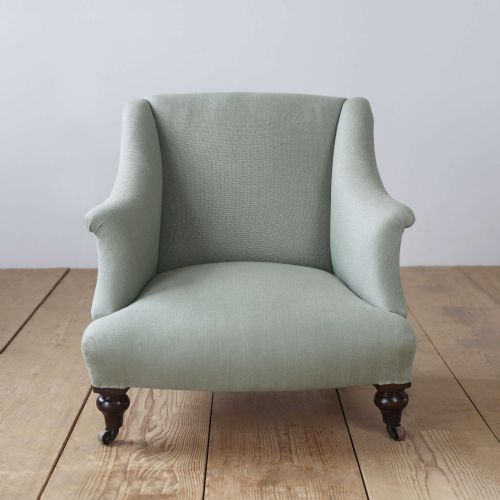
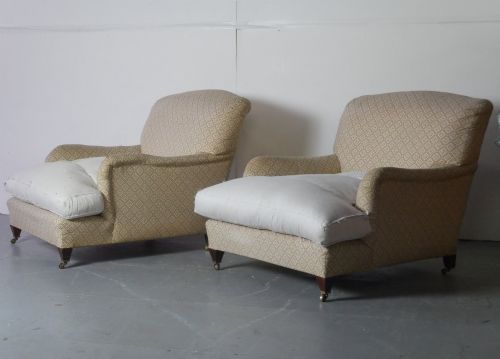
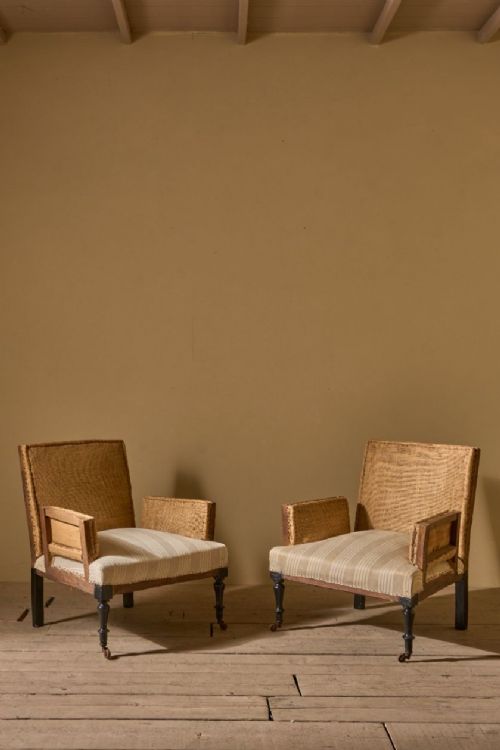

Brass Castored Armchair
A brass castored armchair brings mobility and solid nineteenth century seating to a room, offering deep upholstery and timber frames.
Brass Castored Armchair
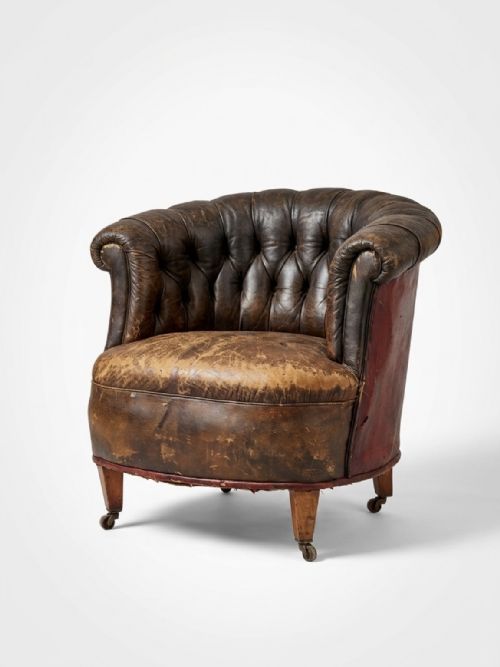
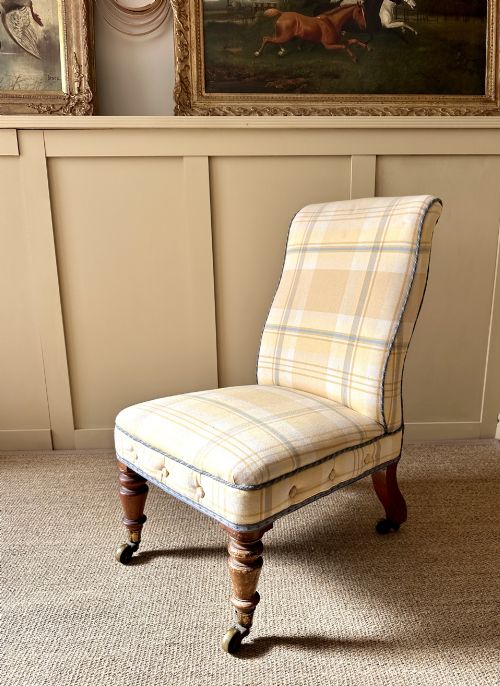
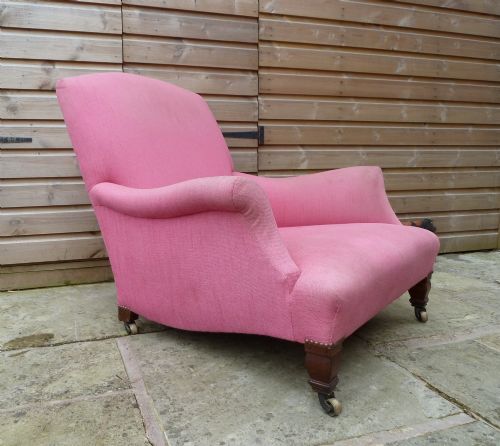
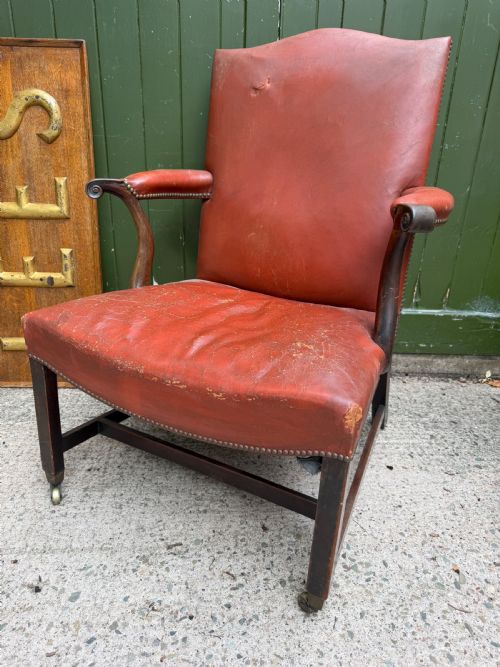
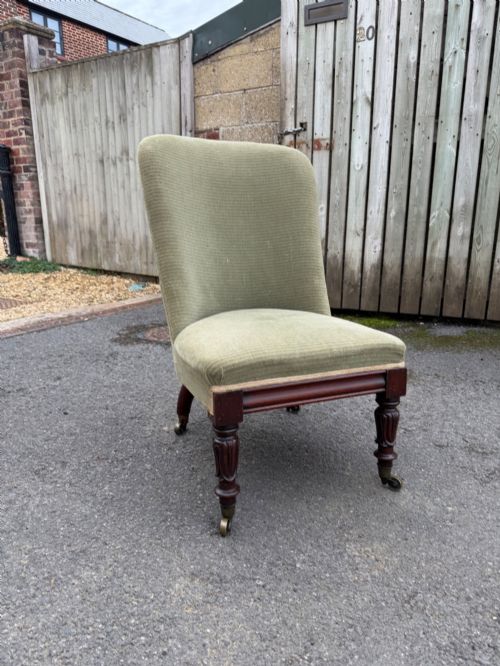
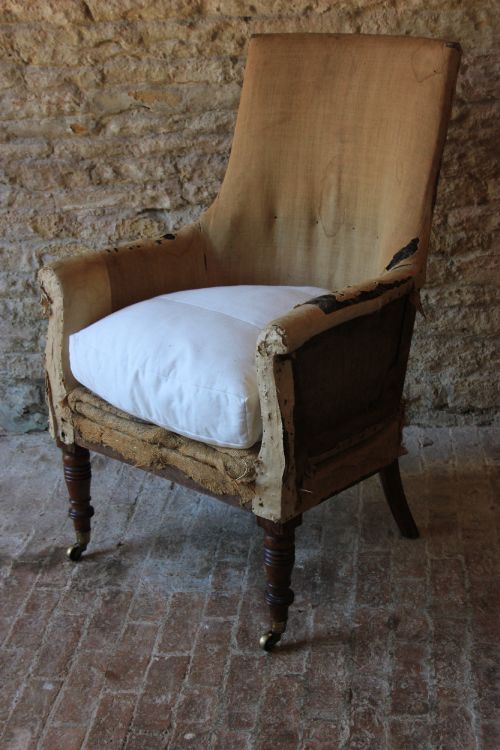
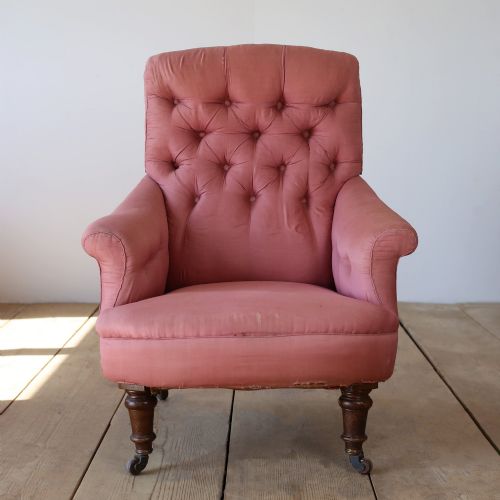
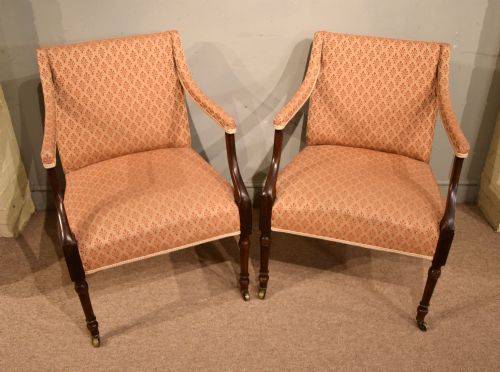
A brass castored armchair combines a sturdy timber frame with small metal wheels that allow the heavy seat to move across a floor without lifting. These chairs appear in forms ranging from button back library seats to low slipper chairs and deep country house armchairs.
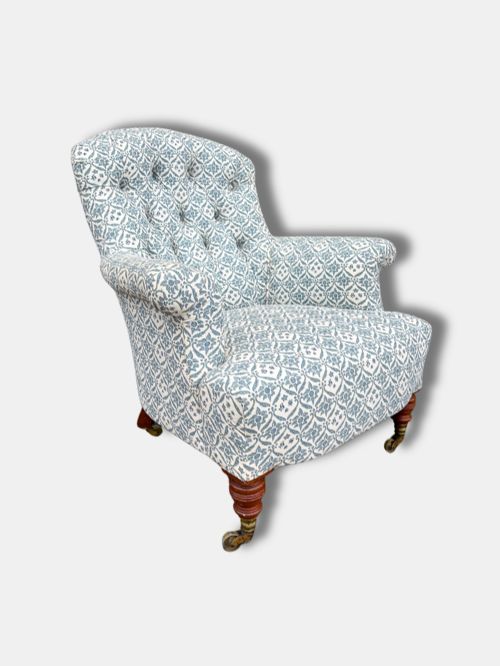
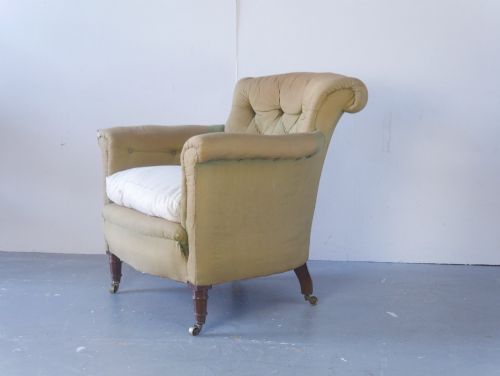
The version most commonly met on this page is the nineteenth century upholstered lounge chair, frequently associated with makers such as Howard and Sons or Gillows. These pieces span periods from the Georgian era through the Victorian and Edwardian years, utilising traditional frames set on brass and wooden wheels.
Makers produced specific regional and stylistic variants, including Woodstock styles, Napoleon III models, and caned bergère chairs. Each type maintains the characteristic wheeled base designed for shifting heavy seating about a grand interior.
Materials and construction
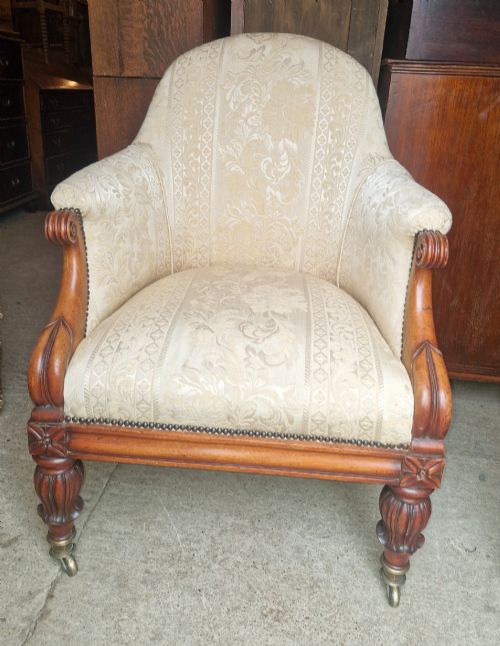
Frames rely primarily on dense hardwoods such as mahogany and walnut, providing the structural skeleton needed to support heavy internal webbing and stuffing. Cabinetmakers shaped these timbers into reeded legs, square sides, and raked backs.
Upholstery involves traditional layers of calico, hessian, and fabric, often finished with deep buttoning or leather covers. Metal castors made of cast brass attach to the base of the legs via wooden sockets, enabling smooth movement across carpets and wooden floorboards.
Some nineteenth century armchairs were built with castors so large they appear to wear tiny golden boots.
Judging quality and craftsmanship
Quality rests upon the integrity of the underlying hardwood frame and the subtlety of its joinery. Finer examples display carefully turned mahogany or walnut supports, balanced proportions, and maker stamps on the back legs or castors.
The distinction between standard commercial production and exceptional workshop output lies in the weight of the timber and the refinement of the brass fittings. Superior armchairs retain original castors and undisturbed internal stuffing methods characteristic of premier cabinetmakers.
Howard and Sons·Charles Hindley and Sons·Whytock and Reid·George Jack For Morris and Co·Gillows
The Brass Castored Armchair Glossary
- Castor
- A small wheel attached to the foot of a piece of furniture to allow easy movement. These are typically cast from brass on nineteenth century seating.
- Bergère
- An enclosed upholstered armchair with cane or upholstered sides. The seat usually includes a drop-in cane panel or a loose cushion.
- Button back
- An upholstery style where depressions are formed in the padding by pulling buttons deep into the stuffing. This secures the internal materials and creates a distinctive geometric pattern.
- Reeded
- Decorated with parallel convex mouldings carved directly into the timber. This technique appears frequently on nineteenth century chair legs.
- Library chair
- A heavy, comfortable armchair designed for reading rooms and studies. They often feature leather upholstery and sturdy wooden frames.
Brass Castored Armchair: Frequently Asked Questions
What defines a brass castored armchair?
A brass castored armchair is a seat built with small metal wheels at the base of its legs. These wheels are pinned into wooden mounts to help move heavy upholstered furniture.
Such chairs rely on hardwood frames and deep padding. The metal wheels make repositioning simple on thick carpets.
How do I identify the period?
Periods reveal themselves through timber choice, leg turning, and upholstery styles. Georgian and Regency pieces show refined mahogany frames, while Victorian examples often feature buttoned backs.
Later Edwardian variations adopt deeper proportions and looser cushions. Examining the timber framing beneath the fabric confirms the era of construction.
Where were these chairs used?
These armchairs sat in libraries, drawing rooms, and country house parlours. Their sturdy frames suited daily use in formal reception spaces.
Wheels allowed residents to pull the seating closer to fireplaces or writing desks. The mobility made them practical for shifting around large residential interiors.
How should I care for the castors?
Keep the brass components clean and dry to prevent tarnishing. Check that the pins securing the wheels into the wooden legs remain tight.
Avoid dragging the chair sideways across rough flooring. Smooth rolling preserves both the wooden foot and the metal wheel mechanism.