


Brass Castor Upholstered Settee
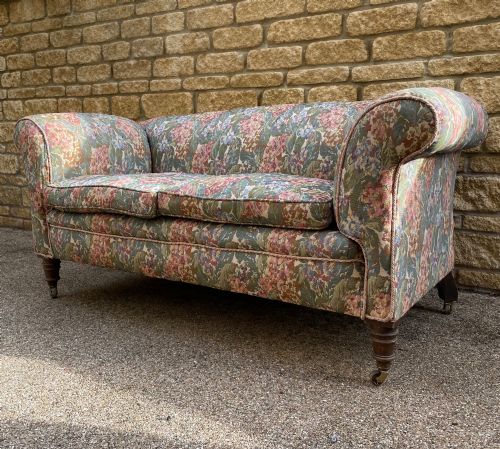
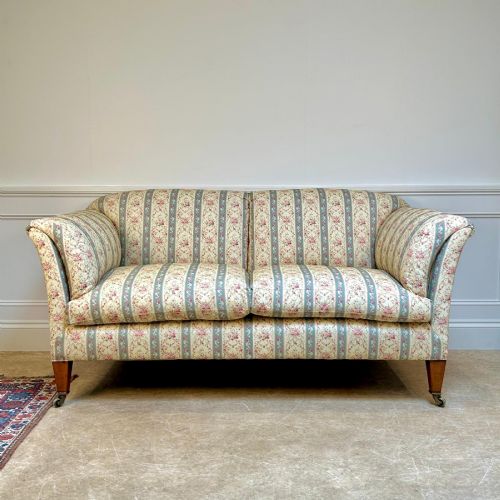
A brass castor upholstered settee brings solid Victorian and Edwardian comfort to a room, resting on neat metal wheels.
Brass Castor Upholstered Settee
A brass castor upholstered settee provides deep seating framed in timber and covered in fabric, resting upon small metal rollers that protect the floorboards. When you search for a brass castor upholstered settee, you find pieces spanning the eighteenth, nineteenth, and early twentieth centuries, including styles such as Victorian, Edwardian, Regency, and George III.
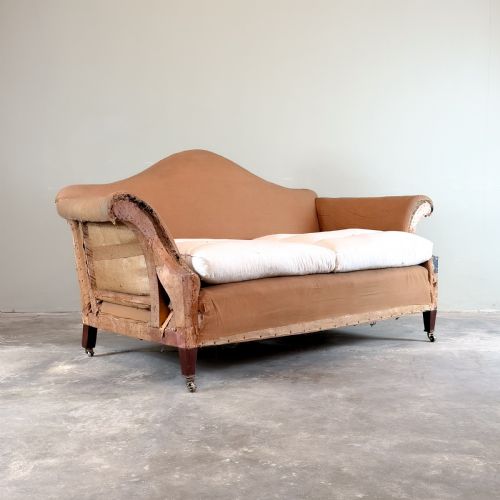
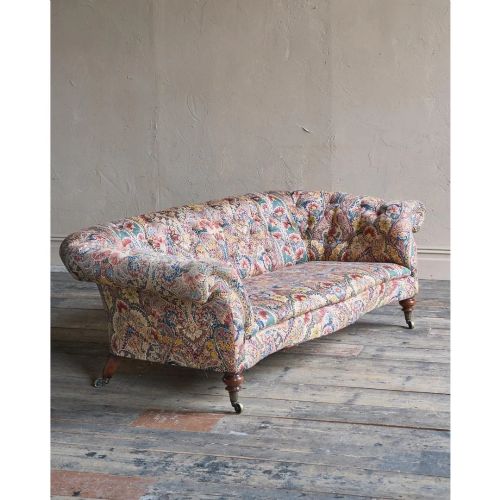
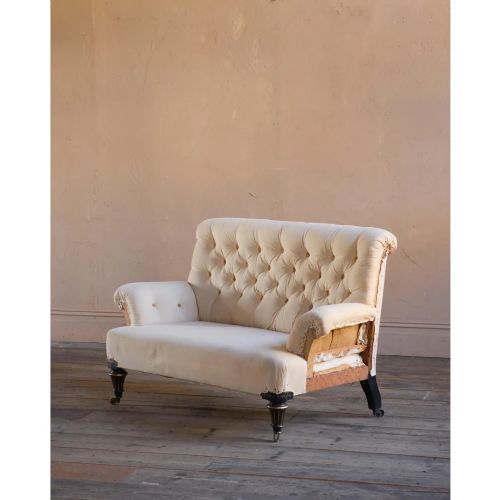
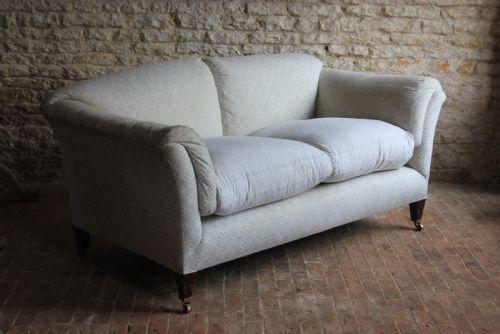
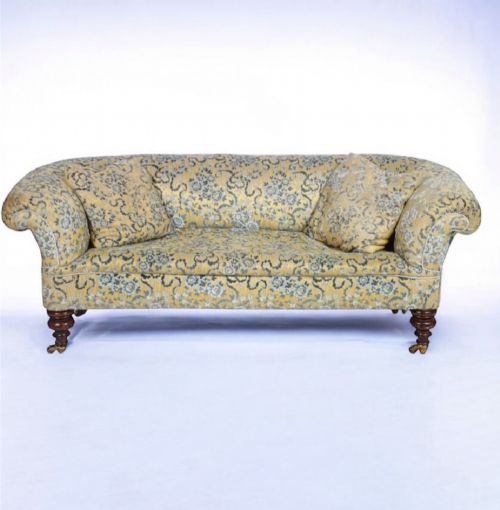
The selections on this page lean heavily towards nineteenth-century Victorian and Edwardian pieces, particularly Chesterfield forms, drop-arm two-seaters, and camel-back designs. These sofas range from compact walnut frames to larger padded couches, often upholstered in calico or heavier textiles.
Makers and workshops of note appear among the listings, alongside plain country pieces and formal Regency items with lyre shapes. The defining feature across them all remains the combination of fabric upholstery and the small metal castors fitted to the feet.
Materials and construction
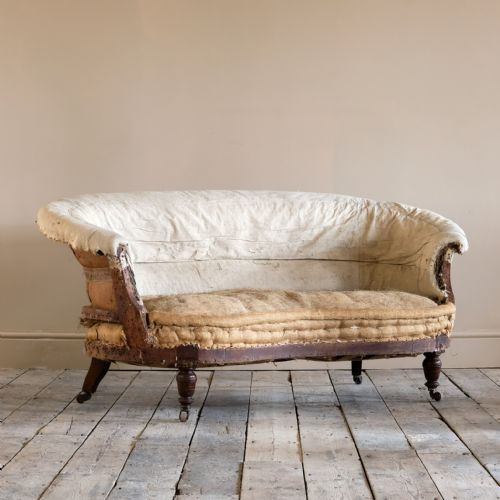
Makers built the foundational frames of these settees using hardwoods such as mahogany and walnut, ensuring a rigid structure to bear the weight of heavy stuffing and springs. Upholstery layers utilised calico, jute, and various woven fabrics stretched tightly over internal padding.
The metalwork consists of cast brass castors attached to the base of the legs, allowing the heavy furniture to move across carpets and floorboards without catching. Joinery relied on traditional woodworking methods, while the external finish kept the natural grain of the timber visible beneath polish.
Listings span the eighteenth century through the Edwardian era, featuring woods like mahogany and walnut paired with brass hardware.
Judging quality in a settee
The distinction between ordinary and exceptional examples lies in the integrity of the timber frame and the precision of the upholstery work. A finer settee maintains a rigid, silent structure under weight, whereas lesser pieces show movement in the joints.
The quality of the brass castors and the execution of the woodwork, whether a simple country frame or a sophisticated Regency lyre shape, dictate the standing of the piece. Attention to detail in the padding and the finishing of the fabric separates standard workshop output from distinguished maker production.
Howard and Sons·Jackson and Graham·Hampton and Sons
The Brass Castor Upholstered Settee Glossary
- Castor
- A small swivelling wheel attached to the base of a furniture leg to permit smooth rolling. These are typically cast from brass on nineteenth-century seating.
- Chesterfield
- A large padded sofa with arms and back of the same height, deeply buttoned in traditional examples. This form is common among nineteenth-century listings.
- Calico
- A plain-woven unbleached cotton cloth used historically as a tight inner lining beneath the final decorative upholstery layer. Many period sofas retain this foundational covering.
- Lyre shape
- A decorative furniture motif resembling an ancient Greek stringed instrument, seen here shaping the wooden framework of Regency settees.
- Drop arm
- A furniture arm designed to lower on a mechanical hinge, allowing the user to recline horizontally upon the seat.
Brass Castor Upholstered Settee: Frequently Asked Questions
What is a brass castor upholstered settee?
It is a padded sofa or couch raised on small metal wheels, designed during the eighteenth, nineteenth, and early twentieth centuries.
These pieces combine wooden frames of mahogany or walnut with deep textile upholstery, ranging from compact drop-arm seats to large Chesterfield designs.
How were these settees used?
They served as principal seating in drawing rooms, parlours, and libraries, offering comfortable places for lounging or receiving guests.
The castors allowed servants to reposition the heavy furniture easily when cleaning or rearranging a room.
How do I date a Victorian settee?
Dating relies on observing the stylistic markers of the period, such as the proportions of the frame, the shape of the arms, and the timber used.
Victorian pieces often display heavier padding and deep buttoning, while earlier George III or Regency examples show lighter, more geometric lines.
Are these settees comfortable for daily use?
Yes, their traditional sprung interiors and padded backs provide robust support suitable for modern living spaces.
Buyers often select them to anchor a traditional room scheme while retaining full functional use.