




Brass Cased Compass
These brass cased compass instruments are precise historical tools housed in durable metal, offering both practical navigation and classic desk appeal.
Brass Cased Compass
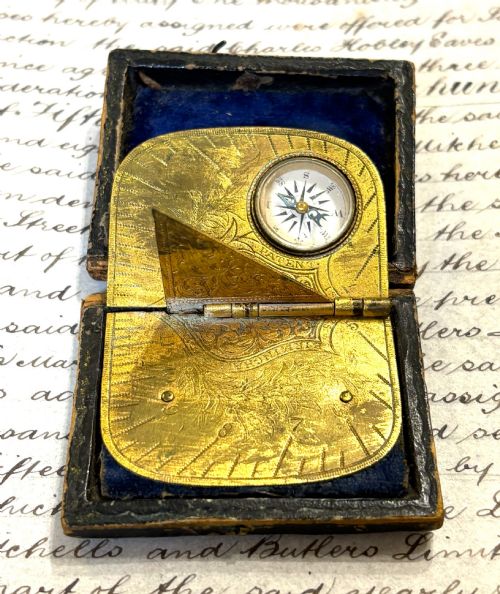
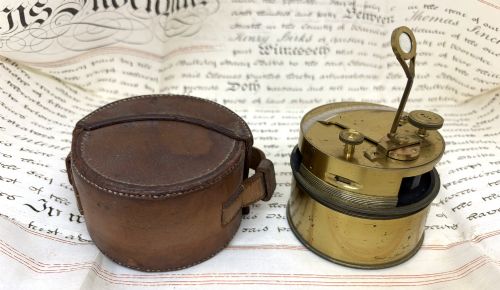
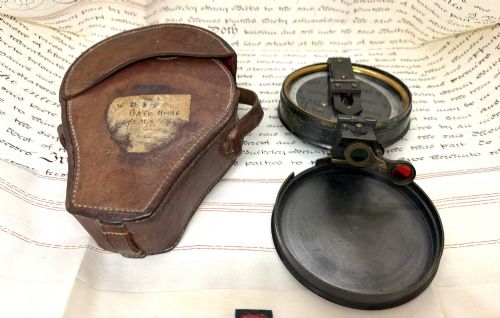
A brass cased compass is a precision scientific instrument typically housed in a durable metal enclosure, often paired with fitted wooden boxes or leather cases. When you search for a brass cased compass, you encounter objects spanning the Georgian, Victorian, Edwardian, and First World War military eras. These pieces range from simple pocket compasses and desk instruments to complex surveyors' equipment and carriage clocks incorporating navigational dials.
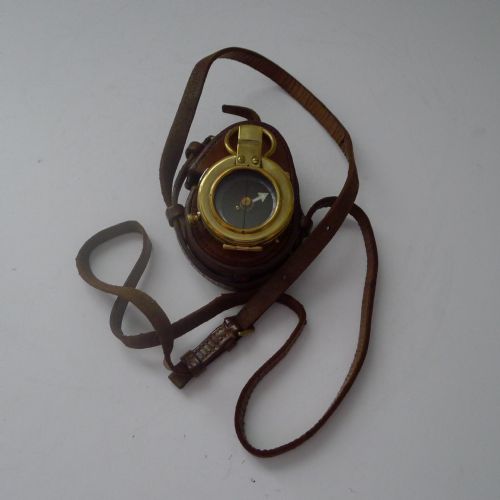
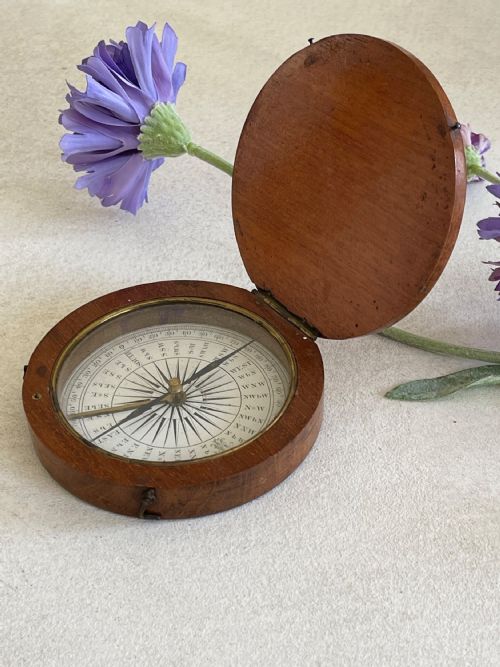
The versions most commonly met on this page include Victorian and Edwardian pocket models, alongside military items such as Verner's pattern instruments. Many feature protective outer housings made from mahogany or leatherette, lined with velvet or paper to safeguard the delicate internal needles and glass faces. They reflect the practical cartography and surveying needs of the nineteenth and early twentieth centuries.
Materials and Construction
These instruments are constructed primarily from cast or turned brass, providing a sturdy, non-magnetic housing that protects the delicate directional mechanisms inside. The dials are often protected by thick bevelled glass, while internal components incorporate paper compass cards and occasionally bone or metal pointers.
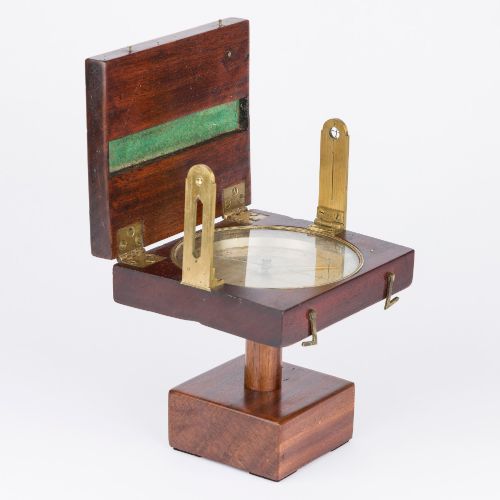
Cased varieties frequently utilise mahogany for the outer protection, sometimes lined with velvet or paper to cushion the instrument. More utilitarian military pieces from the First World War era utilise robust leatherette or leather cases designed for field use by officers.
Brass Cased Compass Retail Price Guide 2026
Typical asking prices for brass cased compass among the pieces listed under this phrase on Sellingantiques today, from the lower quarter to the upper quarter. They describe what is for sale here now, not the wider market.
Listings feature 19th Century, Edwardian, and First World War Military periods, utilising brass, glass, leather, mahogany, and velvet.
Assessing Quality and Execution
Quality in these instruments is determined by the precision of the engraving, the crispness of the paper dial graduations, and the smoothness of any locking mechanisms or gimbals. Finer examples display meticulous hand-engraved markings by established makers, whereas utilitarian models prioritise simple legibility over decorative flourish.
The preservation of original fitted outer cases, whether mahogany boxes or leather travelling pouches, elevates the integrity of the piece. Clear, unblemished glass and a freely moving needle that settles true indicate careful historical maintenance and superior initial manufacture.
French Ltd·G. Davis of Leeds·P. Orr, Madras·Baker, London·Alfred Apps·Stanley, London·John Newman
The Brass Cased Compass Glossary
- Prismatic compass
- A portable directional instrument that allows the user to take a bearing and read the card simultaneously through a prism. This design was widely adopted by the military and surveyors for accurate field mapping.
- Theodolite
- A precision optical instrument used for measuring angles in horizontal and vertical planes. These complex surveying tools frequently incorporate integrated compasses for orientation.
- Galvanometer
- An electromechanical instrument used for detecting and measuring electric current. Some Victorian scientific examples incorporate compass movements to measure current via magnetic deflection.
- Inclinometer
- An instrument used for measuring angles of slope or tilt relative to gravity. These are occasionally found built into desk compasses for specialised surveying or navigational calculations.
Brass Cased Compass: Frequently Asked Questions
How do I date a brass cased compass?
Dating relies heavily on the style of the lettering, the materials used in the case, and any maker signatures engraved on the dial. Victorian and Edwardian examples often feature distinct typographical styles and specific case linings that help narrow their era.
Makers' addresses and military broad arrow marks also provide precise historical markers. Comparing the mechanical complexity with known production periods offers further clarity.
Are these compasses still accurate for navigation?
While many retain functional movement and point towards magnetic north, they are primarily valued as historical scientific instruments rather than modern hiking tools. Age, local metal interference, and loss of original fluid damping can affect their precision.
Treating them as decorative antiques or collection centerpieces preserves their delicate internal pivots and paper cards from unnecessary wear.
What is the difference between a desk compass and a pocket compass?
Desk compasses are typically larger, heavier instruments designed to sit stationary on a table or surface, often housed in heavy mahogany boxes or fitted with inclinometers. Pocket compasses are compact, easily portable versions intended for travellers and field use.
Pocket variants usually feature secure slip covers, screw lids, or small leather cases to protect the glass face during transit.
How should I clean the brass casing?
Harsh metal polishes should be avoided because they can remove historical patina and damage delicate engraved inscriptions or maker signatures. Gentle dusting with a soft, dry cloth is generally sufficient for routine maintenance.
Preserving the natural oxidation protects the surface and maintains the authentic character of the antique.