



Brass Case Barograph
A brass case barograph is a mechanical weather-recording instrument that traces atmospheric pressure onto paper charts, offering both functional utility and classic desk or mantel display.
Brass Case Barograph
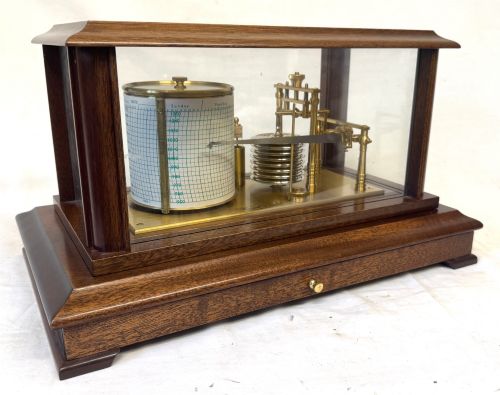
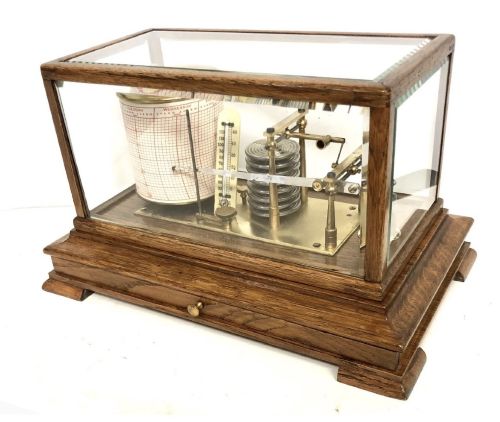
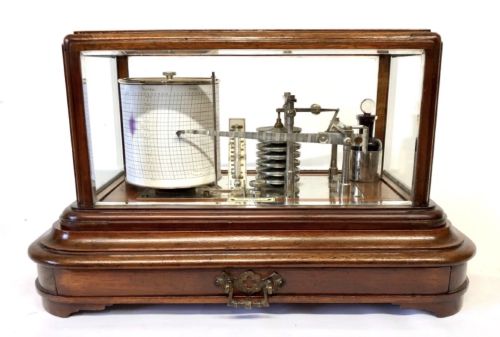
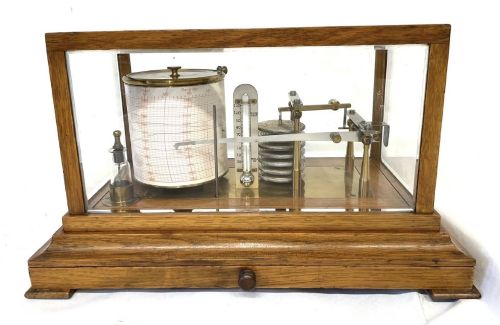
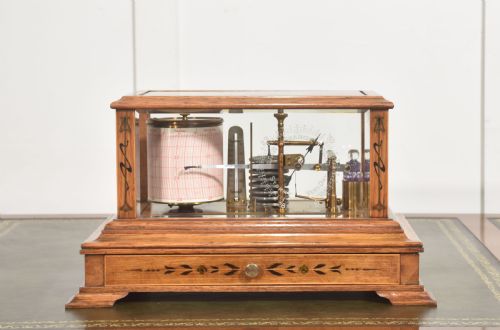
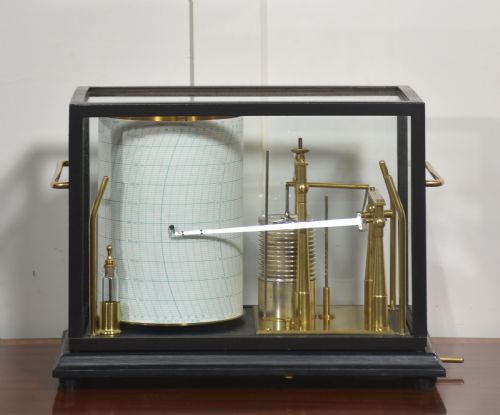
A brass case barograph combines a sensitive barometer mechanism with a clockwork drum that records barometric changes over a week on paper charts. When you examine a brass case barograph on this page, you encounter pieces spanning the Victorian, Edwardian, and interwar periods through to the mid-twentieth century.
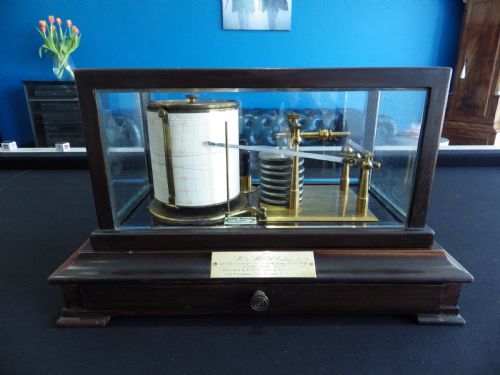
The housing typically pairs brass framing with bevelled glass panels atop wooden bases made of oak, mahogany, or walnut, sometimes incorporating chart drawers and thermometers. Examples range from simple five-glass enclosures to combined weather stations featuring auxiliary barometer dials and maker signatures from London, regional British cities, and international retailers.
Materials and construction methods
Movements required precision engineering, utilising stacked vacuum metal capsules that expand or contract with atmospheric changes to move an inked arm across a rotating clockwork drum. Cabinets frequently featured integrated drawers to store spare weekly charts, alongside brass carrying handles and hinged lids.
Brass Case Barograph Retail Price Guide 2026
Typical asking prices for brass case barograph among the pieces listed under this phrase on Sellingantiques today, from the lower quarter to the upper quarter. They describe what is for sale here now, not the wider market.
Some models recorded pressure drops so precisely they captured distant railway thunder or local maritime activity.
Factors of distinction
Quality in these instruments rests upon the precision of the maker's signature and the crispness of the brass and glass assembly. Prominent scientific makers and notable retailers such as Short & Mason or Negretti & Zambra distinguish the upper tier of instruments through superior mechanical execution and refined cabinetry.
The sophistication of the case also defines the grade, with elaborate Art Nouveau inlay, subsidiary barometer dials, or integrated thermometers elevating standard utility models into decorative library pieces. The clarity of the bevelled glass and the presence of original paperwork or chart drawers further separate standard examples from finer specimens.
Russell Norwich·Gaupp And Co Hongkong·Hezzanith·Short And Mason·Negretti And Zambra·Casella London·Baines Harrogate·R Fuess·Harrods Of London·Short And Mason Limited·Robson Of Newcastle·Jules Richard·Depree And Young Ltd Exeter·Dobbie Son And Hutton London·Richard Freres
The Brass Case Barograph Glossary
- Barograph
- A self-recording barometer that graphs atmospheric pressure over time onto a revolving paper chart. It translates invisible barometric shifts into a permanent inked line.
- Aneroid
- Operating without liquid. An aneroid mechanism uses sealed metal vacuum chambers that flex under air pressure.
- Bevelled glass
- Glass panes with angled, polished edges fitted into the brass framework. This traditional glazing technique catches the light and adds depth to the viewing panels.
- Chart drawer
- A small storage compartment built into the wooden base beneath the instrument. It holds spare weekly recording papers and spare ink.
- Clockwork drum
- A rotating brass cylinder containing a spring-driven clock movement. It turns the paper chart once every seven days.
Brass Case Barograph: Frequently Asked Questions
How does a barograph work?
A stack of sealed metal vacuum chambers expands and contracts as atmospheric pressure rises and falls. This movement transfers through a series of brass levers to an arm holding an ink nib, which marks a revolving paper chart.
The paper chart wraps around a clockwork drum that rotates once every seven days, providing a continuous visual history of local weather patterns.
How do I change the chart paper?
You lift the glass lid or case, gently release the inked nib from the paper surface using the lever lifter, and unclip or slide the paper from the brass drum. A fresh weekly chart is then wrapped securely around the cylinder and secured.
After replacing the chart, you apply a tiny drop of ink to the nib if necessary and lower it gently back onto the paper before winding the clockwork movement.
Where should I place a barograph at home?
Place the instrument on a stable, level surface away from direct sunlight, radiators, and draughts that could artificially influence the delicate internal capsules. A study, library, or hallway mantelpiece provides an ideal environment where the movement can be observed without thermal disruption.
Because the brass and wood cases are sensitive to extreme humidity and temperature swings, a dry, stable room ensures the clockwork and paper charts remain in good condition.
How do I tell different periods apart?
Victorian and Edwardian examples often feature substantial mahogany or oak timber cases with heavy bevelled glass and detailed maker plaques from firms like Short & Mason or Negretti & Zambra. Mid-century and interwar pieces tend towards simpler oak housings or distinct styling such as Art Nouveau inlay.
Examining the casework, retailer signatures, and internal mechanical stamps helps date the instrument to specific manufacturing decades between the late nineteenth century and the mid-twentieth century.