




Brass Carriage Lantern
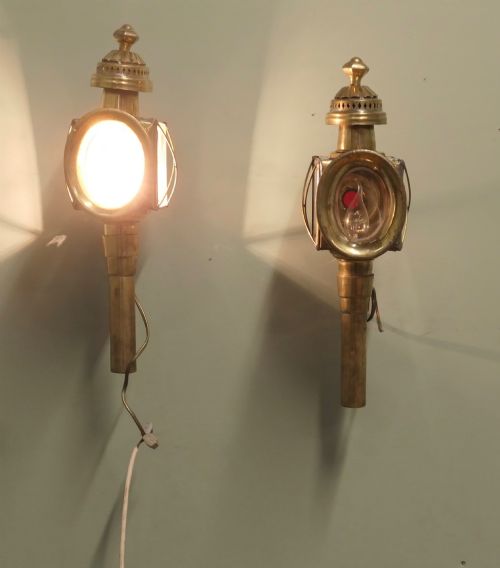
These brass carriage lantern pieces offer solid period engineering and warm metal glow, perfect for grounding a hallway or study.
Brass Carriage Lantern
When you search for a brass carriage lantern, you are looking at robust outdoor lighting adapted from transport use into interior wall lights, table lamps, and ceiling fixtures. These items span the Victorian era through the 1920s and 1930s, reflecting the heavy-duty demands of coaches, railways, and maritime vessels.
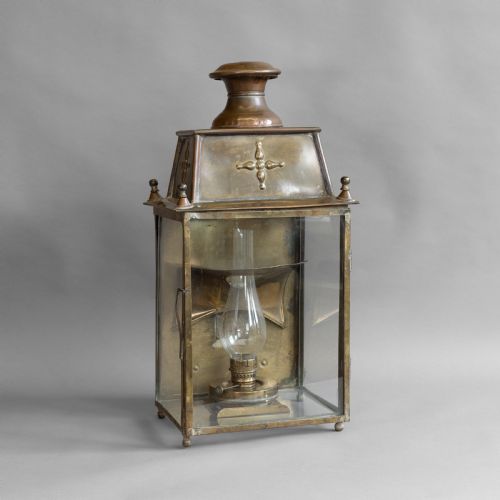
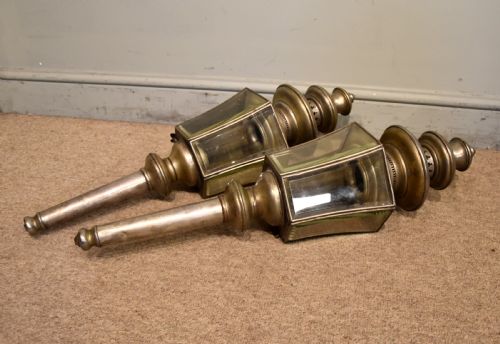
You are most likely to meet pairs of Victorian or 19th century French examples on this page, often engineered with mounting brackets or gimble attachments. Forms range from tall Arts and Crafts wall lights to country house coaching lanterns and railway lamps.
The materials reflect practical utility, combining structural brass and iron with protective glass panes. Many pieces retain their original mounting hardware, allowing them to function effectively as wall sconces or hanging lanterns in modern homes.
How they were made
Maker workshops constructed these lamps using heavy-gauge brass and cast iron to withstand vibration and weather during transit. Structural elements were riveted or soldered together, creating rigid frames designed to hold glass panels securely.
Windows incorporate bevelled glass or flat panes held in place by metal bezels and internal clips. Painted metal components sometimes appear alongside polished brass, offering durability and contrast to the reflective metal surfaces.
Brass Carriage Lantern Retail Price Guide 2026
Typical asking prices for brass carriage lantern among the pieces listed under this phrase on Sellingantiques today, from the lower quarter to the upper quarter. They describe what is for sale here now, not the wider market.
Some railway lamps feature internal gimbles originally designed to stop soup from spilling on rough tracks.
What varies in quality
The distinction between standard utility lamps and finer decorative examples lies in the weight of the metal casting and the precision of the assembly. Heavier brass frames and cleanly bevelled glass panes indicate higher production standards intended for wealthy households or formal conveyances.
Provenance and original hardware also influence desirability, particularly when mounting brackets, maker signatures, or specialised maritime gimbles remain intact. Pieces retaining balanced proportions and crisp decorative mouldings stand apart from simpler utilitarian versions.
Daris
The Brass Carriage Lantern Glossary
- Gimble
- A pivoting ring ring system that allows a lamp to remain level regardless of the motion of a ship or train. This mechanical feature ensured steady illumination during travel.
- Bevelled glass
- Glass panes with angled edges ground and polished to a specific width. This technique adds a decorative prismatic effect as light passes through the window.
- Coach lamp
- A heavy-duty lighting fixture originally mounted to the exterior of horse-drawn carriages. These designs typically feature sturdy metal cowls and ventilation caps.
- Wall sconce
- A lighting fixture fixed directly to a wall surface rather than freestanding. In carriage lighting, conversion usually involves adapting original mounting brackets for interior wiring.
Brass Carriage Lantern: Frequently Asked Questions
What is a brass carriage lantern?
These items are robust lighting fixtures originally built for coaches, railways, and ships during the nineteenth and early twentieth centuries. They combine heavy metal framing with protective glass to shield flames from wind and movement.
Today, they survive primarily as converted wall lights, table lamps, and ceiling fixtures. Their durable construction makes them well-suited for hallways, porches, and studies.
How were they used originally?
Mounted to the exterior of carriages or inside railway compartments and cabins, these lamps provided vital illumination for night travel. Their enclosed designs and top ventilation caps kept flames steady despite motion and weather.
Many featured reflective back plates to project light forward along dark roads or tracks. Gimble versions swung freely to counteract the rolling motion of ships and trains.
How do I mount a wall light?
Most pieces retain their original metal brackets, plates, or hanging loops designed for vertical surfaces. Installation typically requires securing the fixture to wall studs or backing blocks to support the substantial weight of the brass and iron.
Professional wiring ensures that internal lamp holders comply with current safety standards while preserving the historic exterior shell. Positioning them at eye level in hallways or beside doorways highlights their distinctive profiles.
How do I tell Victorian periods apart?
Victorian and nineteenth-century examples tend to feature heavy cast iron components, traditional ventilation cowls, and utilitarian brackets. Later pieces from the 1920s and 1930s often adopt cleaner Arts and Crafts lines or streamlined industrial forms.
French variations frequently display more ornate decorative mounts and stylistic influences like French Empire. Examining the construction methods, metal patination, and glass bevelling helps clarify the era of manufacture.