
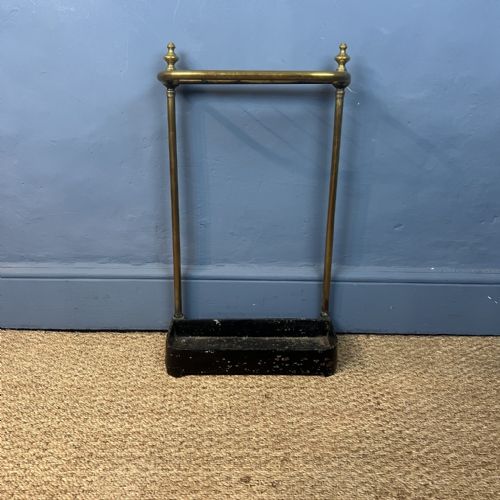
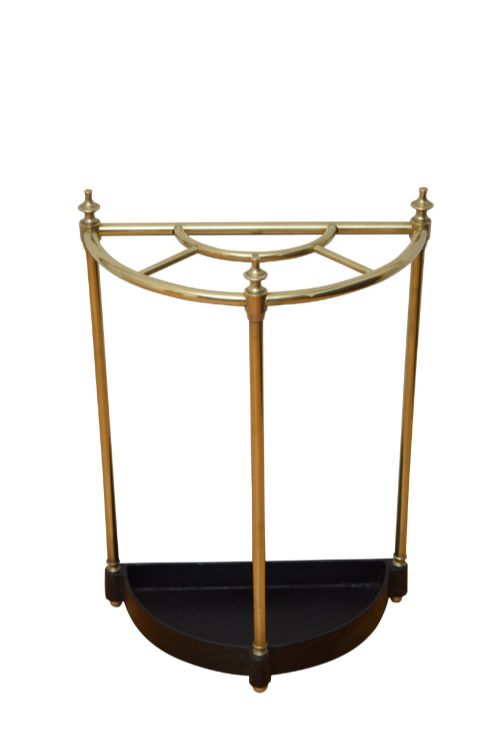
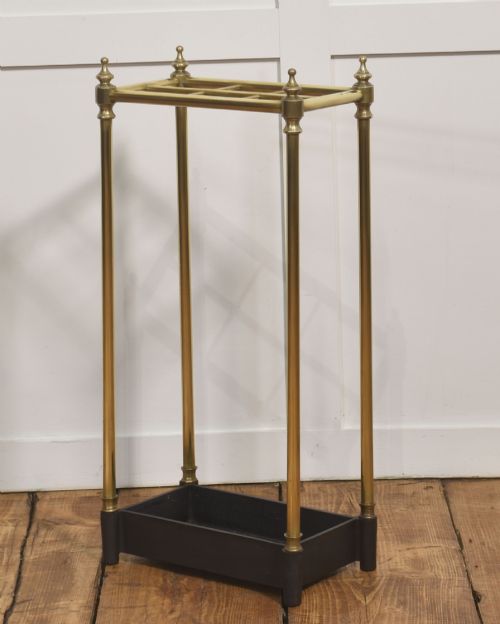
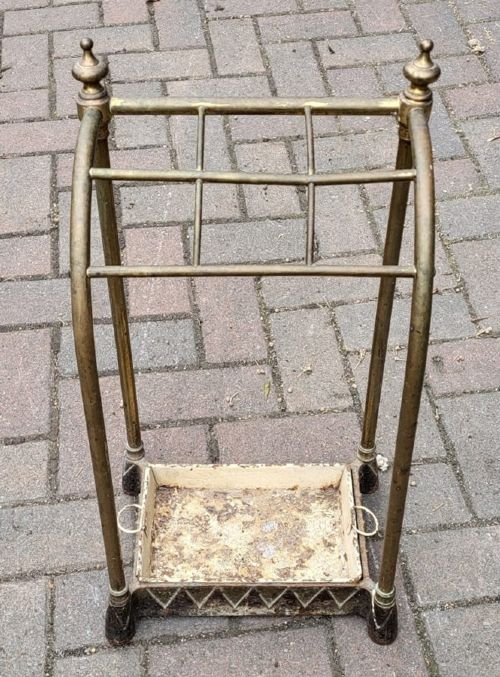



Brass Cane Storage Rack
These brass cane storage rack examples keep hallways orderly through Victorian, Edwardian, and later periods.
Brass Cane Storage Rack
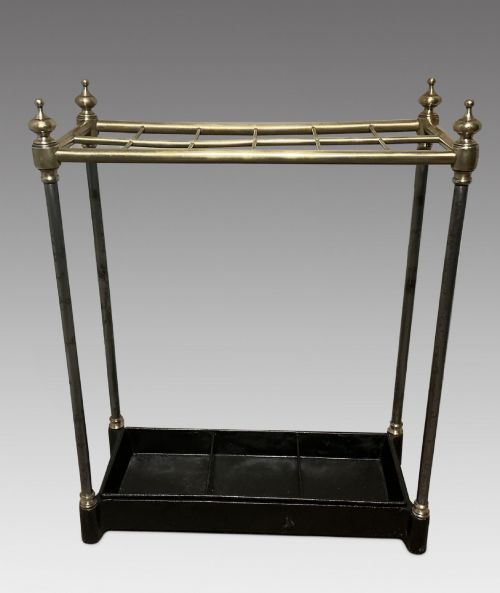
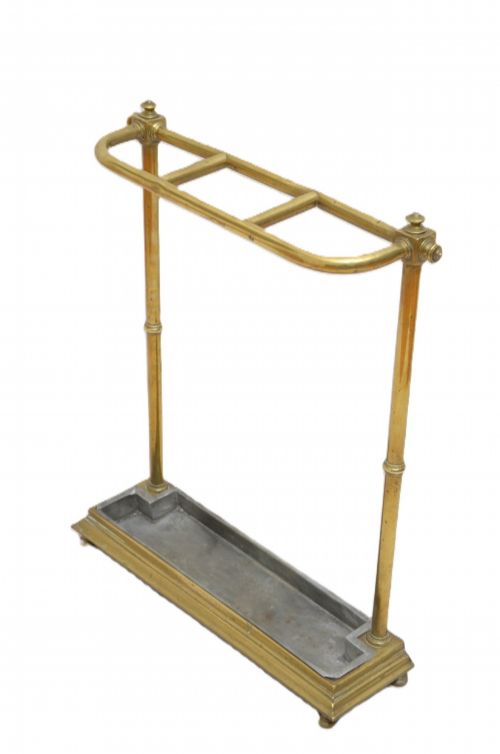
A brass cane storage rack functions as a practical hallway fixture designed to hold walking sticks, canes, and umbrellas neatly in place. When searching for a brass cane storage rack, buyers encounter object types commonly designated as stick stands, umbrella stands, or combined umbrella and stick stands.
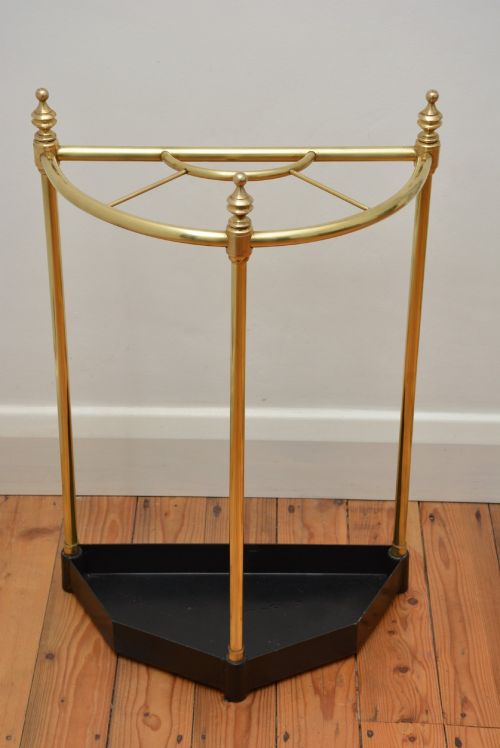
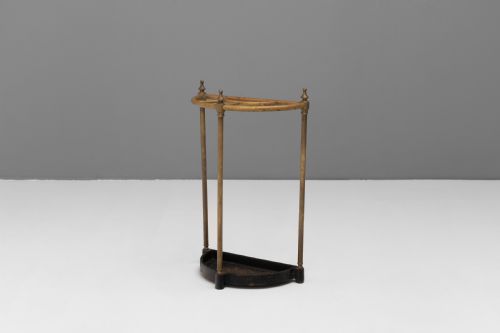
The pieces listed span periods from the 19th Century and Victorian era through Edwardian times and the early 20th Century, including later 1920, 1930, and Mid-Century Modern designs. Forms include demi-lune shapes, corner stands, and umbrella-shaped designs suited for domestic hallways and clubhouses.
Origin details point towards English craftsmanship, with specific pieces linked to makers like Shoolbred and the Honourable Company of Edinburgh Golfers. Buyers find variations ranging from small late 19th-century models to grander paired examples.
How they were made
Makers utilised primary metal components such as brass, cast iron, steel, copper, and zinc to construct the structural framework and decorative loops of each rack. These metals provided the necessary weight and rigidity to support heavy walking sticks and wet umbrellas.
Many examples incorporate secondary materials like mahogany, oak, and walnut for bases, backboards, or frames, combining timber warmth with metal durability. Details such as bun feet and integrated drip trays enhance the utility and aesthetic finish of the stands.
One exceptional piece originates from the Honourable Company of Edinburgh Golfers.
What varies in quality
Quality differences emerge through the integration of materials, such as the combination of heavy cast iron bases with polished brass loops and designated drip trays. Pieces featuring substantial secondary woods like mahogany or oak alongside detailed brass mounts display higher tier construction.
Design complexity also defines the range, moving from utilitarian forms to decorative styles incorporating Art Nouveau or Aesthetic Movement motifs. Marked items or those bearing provenance, such as institutional commissions, sit distinctly within the upper tier of the range.
The Brass Cane Storage Rack Glossary
- Demi-Lune
- Half-moon shape designed to sit flat against a hallway wall. This profile allows the stand to occupy minimal floor space while accommodating multiple sticks.
- Drip Tray
- A removable metal basin positioned at the base to catch rainwater from wet umbrellas. It protects flooring from moisture damage.
- Bun Feet
- Rounded, ball-shaped feet elevating the base of the stand off the floor. They add a decorative flourish while preventing direct contact with damp surfaces.
- Stick Loop
- The upper metal ring or divider that separates individual canes and umbrellas to keep them upright. This component defines the structural silhouette of the rack.
Brass Cane Storage Rack: Frequently Asked Questions
Where should a brass cane storage rack go?
These racks traditionally stand in entrance halls, porches, or boot rooms to catch wet umbrellas and organise walking aids.
Demi-lune and corner forms fit snugly against walls to save space in narrow corridors.
How do I clean a brass stick stand?
Dust the metal regularly with a soft cloth to prevent surface grime buildup from accumulating in crevices.
Avoid harsh chemical polishes that strip away historical patination earned through decades of domestic use.
What is the difference between a stick stand and an umbrella stand?
Many period examples served both functions interchangeably, often labelled as umbrella and stick stands.
Stick stands typically feature tighter upper loops suited for slender walking canes, whereas umbrella stands offer wider apertures.
How do I date a Victorian brass rack?
Examine the construction methods, fastener types, and stylistic indicators such as Aesthetic Movement or Art Nouveau motifs.
Maker signatures or stamps, when present, provide definitive clues to the manufacturing decade.