





Brass Candelabra Set
A brass candelabra set brings architectural symmetry and warm metallic reflection to a mantelpiece or side table.
Brass Candelabra Set
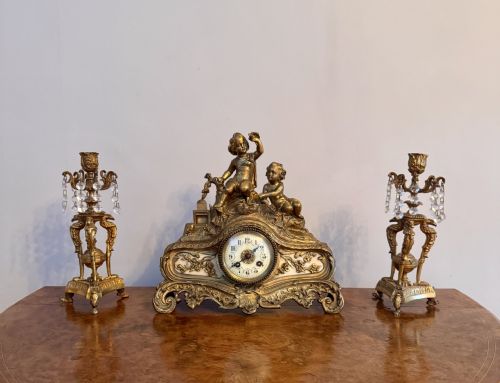
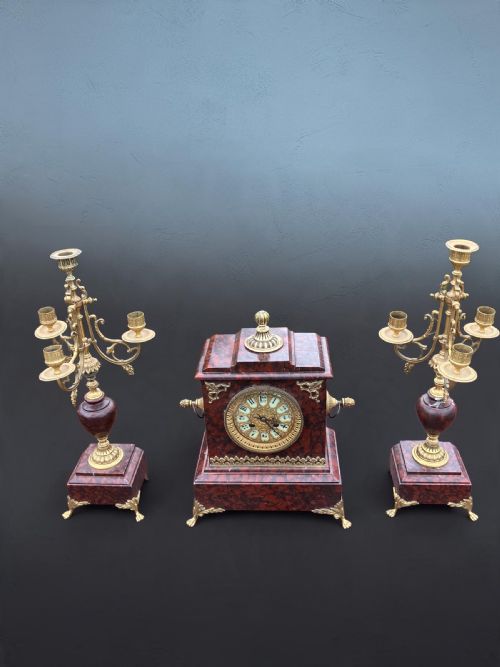
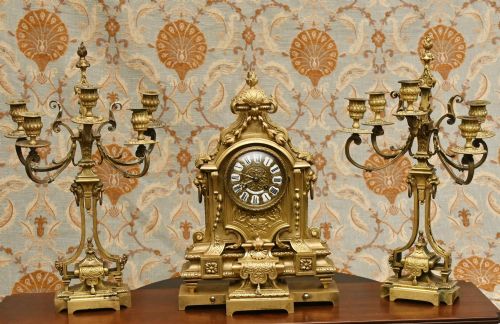
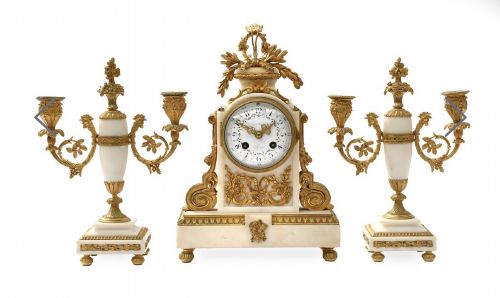
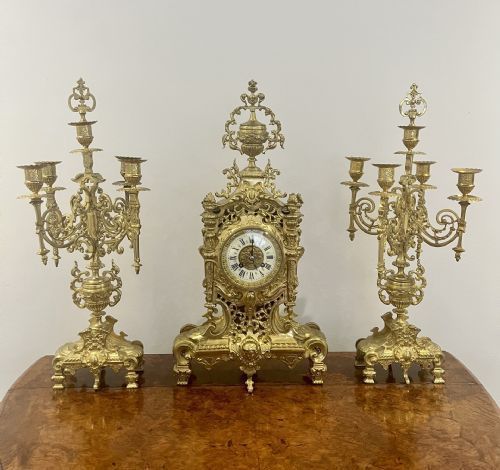
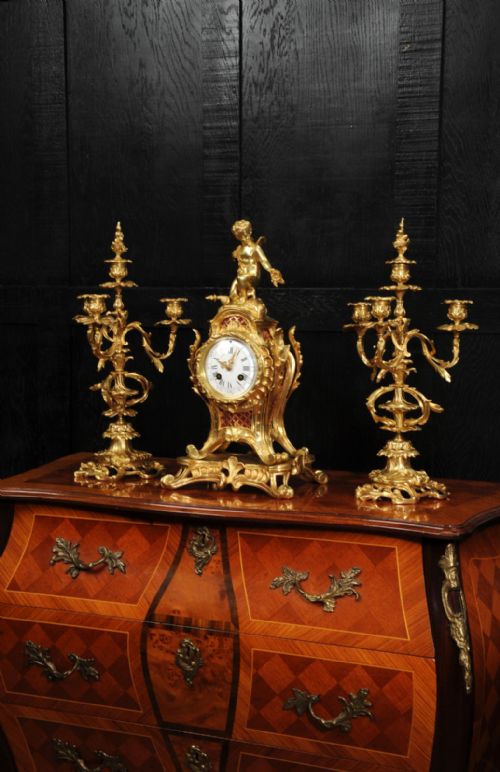
A brass candelabra set typically comprises a central mantel clock flanked by matching multi-branched candle holders, forming a unified decorative arrangement known as a garniture. These pieces emerge predominantly from nineteenth-century French and Italian workshops, reflecting classical revival styles such as Louis XVI, Empire, and Rococo. The selection on this page demonstrates how these matched groupings served as grand centrepieces in formal reception rooms.
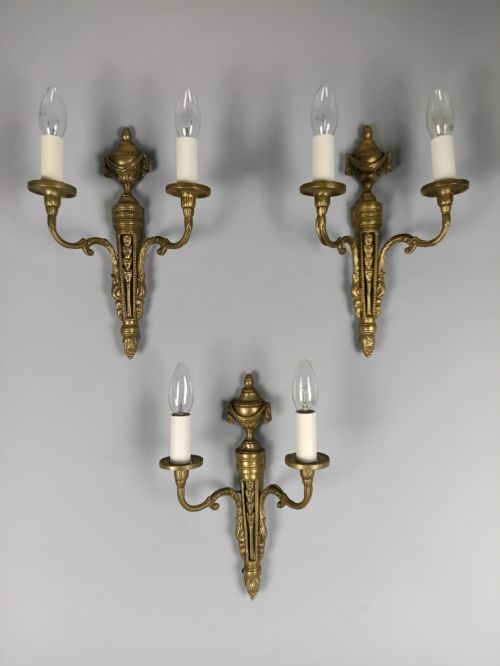
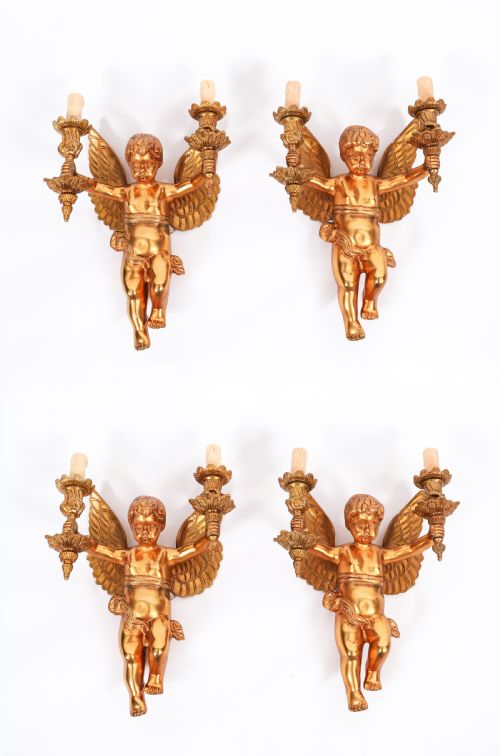
Buyers encounter sets executed not solely in brass, but combined with materials like white and green marble, onyx, gilt bronze, and ormolu. Object types range from three-piece clock garnitures to paired wall sconces and four-branch wall lights featuring cherub motifs. These configurations showcase the heavy ornamentation characteristic of Victorian and Second Empire interiors.
Materials and Construction
Maker workshops utilised foundational metals like brass, bronze, and steel, often applying a gilt or ormolu surface finish to achieve a rich, golden lustre. Structural bases frequently incorporated carved white marble, green onyx, or heavy enamel detailing to provide stability and contrasting texture to the metalwork.
Casting techniques allowed artisans to shape intricate figures such as cherubs, cupids, and floral scrolls. Mechanical components for the associated clocks were housed within these metal and stone bodies, integrating timekeeping with sculptural lighting.
Brass Candelabra Set Retail Price Guide 2026
Typical asking prices for brass candelabra set among the pieces listed under this phrase on Sellingantiques today, from the lower quarter to the upper quarter. They describe what is for sale here now, not the wider market.
Cherubs and cupids frequently guard the clock faces, apparently keeping watch over the passage of time with steady metal wings.
Distinctions in Quality
The integration of materials determines the overall refinement of a garniture. Sets that combine unblemished marble or onyx bases with crisply gilded ormolu and intact mechanical clock movements represent the upper tier of surviving examples.
Deniere, Paris·Vincenti·Japy Freres
The Brass Candelabra Set Glossary
- Garniture
- A set of ornamental objects designed to match and be displayed together, typically consisting of a clock and a pair of candelabras or vases. This arrangement was a staple of formal interior decoration.
- Ormolu
- Gilded bronze or brass, where a finely ground high-carat gold-mercury amalgam is applied to a base metal. It produces a warm, durable metallic finish.
- Louis XVI Style
- A neoclassical design aesthetic characterised by straight lines, symmetry, and classical motifs such as urns, ribbons, and fluting. It experienced a major revival during the nineteenth century.
- Rococo Revival
- An ornate decorative style featuring asymmetrical scrollwork, naturalistic plant forms, and C-scrolls. It influenced many mid-to-late nineteenth-century European metal objects.
Brass Candelabra Set: Frequently Asked Questions
What is a clock garniture?
A clock garniture is a matched set of decorative objects designed to sit together on a mantelpiece or sideboard. The central element is typically a mechanical clock, flanked by matching candelabras, urns, or vases.
These sets were created to establish visual balance and formal symmetry in nineteenth-century interiors. The components share identical stylistic motifs, materials, and finishing techniques.
How do I date a brass set?
Dating these sets relies on examining the stylistic vocabulary, such as the geometric restraint of Louis XVI revival versus the exuberant curves of Rococo forms. Material combinations, such as green onyx paired with gilded metal, also point toward specific decades like the eighteen-sixties.
Maker signatures stamped on internal clock movements or bronze bases provide precise chronological markers. Additionally, casting methods and the composition of the underlying brass or bronze shift across the nineteenth century.
Where were these sets placed?
They were designed principally for prominent display on mantelpieces above fireplaces in formal reception rooms and parlours. The reflective surfaces of the brass and ormolu caught and amplified the light from oil lamps or candles.
Secondary placements included large sideboards, pier tables, and console tables where the symmetrical arrangement could anchor a room's decorative scheme.
Are the clocks mechanical?
The clocks included in these sets are mechanical timepieces driven by springs or weights, often featuring eight-day movements that require periodic winding with a key. Many incorporate striking mechanisms to mark the hours and half-hours.
These movements were produced by specialised clockmakers and integrated into the decorative bronze or marble housings created by casting workshops.