





Brass Cabinet Hinges
Brass cabinet hinges are small functional fittings that secure doors on period cupboards, bringing dependable movement and original detail to fine furniture.
Brass Cabinet Hinges
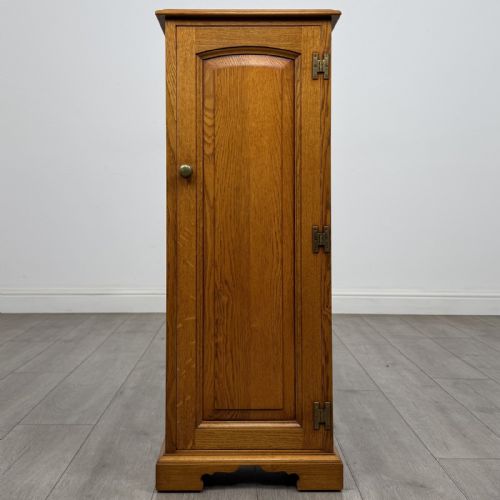
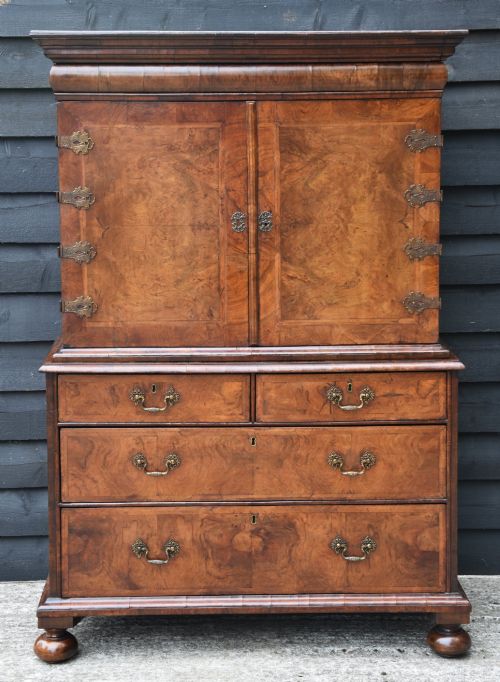
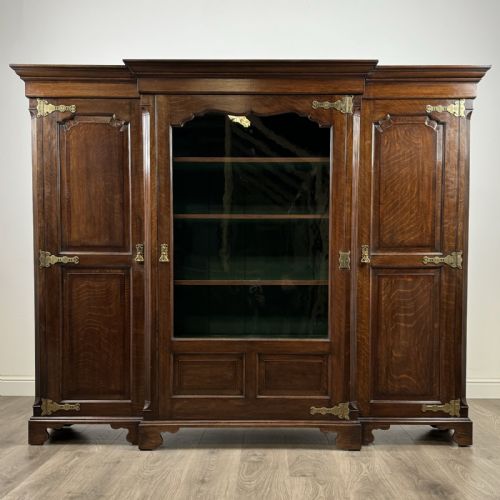
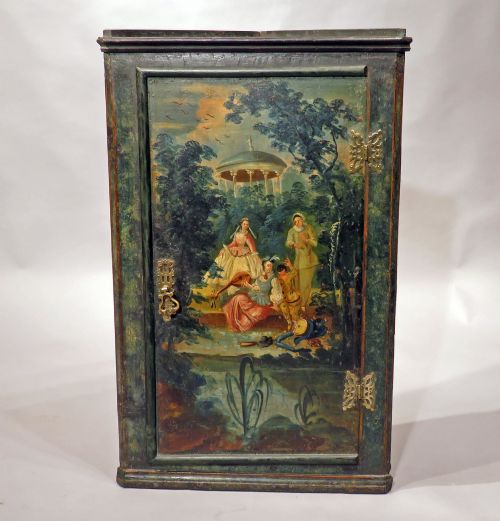
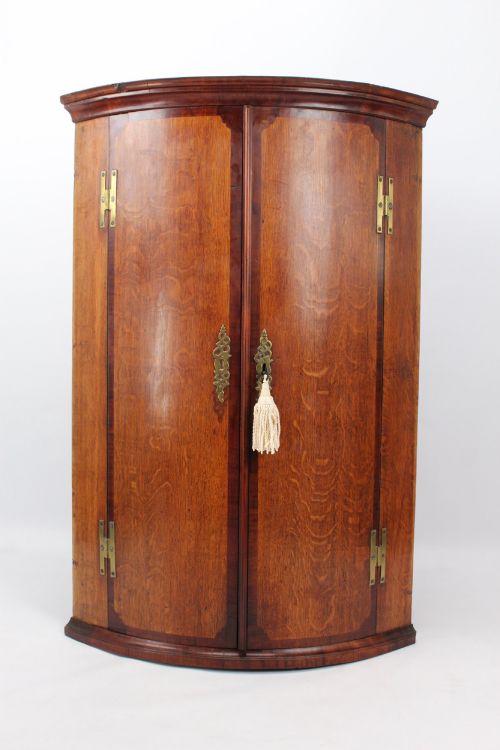
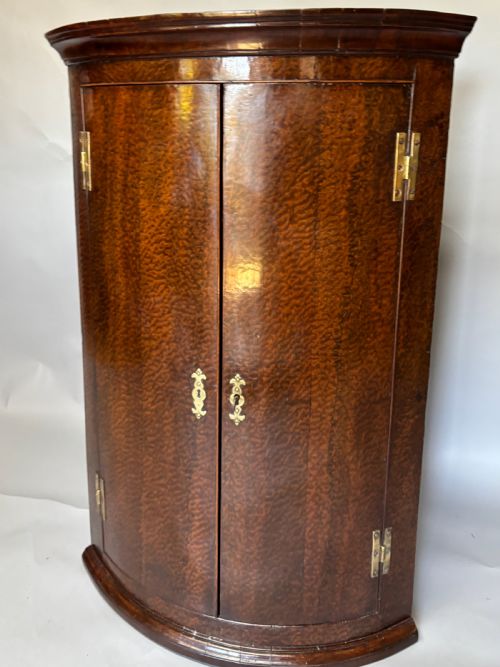
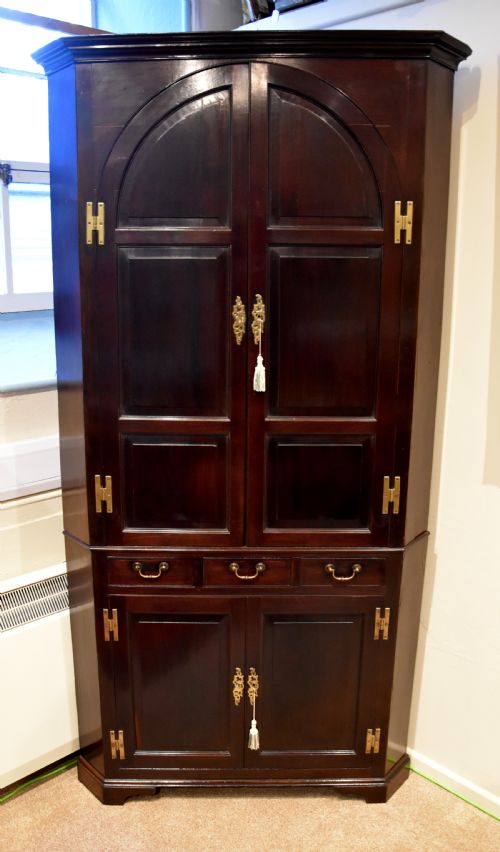
Brass cabinet hinges appear on this page attached to various wooden storage forms spanning multiple centuries, from early Georgian corner cupboards to 1930s cocktail cabinets. Buyers searching for brass cabinet hinges will encounter matching pairs of metal door fixings alongside complete items of antique furniture that retain their original hardware.
The most common items fitted with these hinges on this page are corner cupboards and hanging wall cabinets made from oak and mahogany. These pieces range from simple 18th-century hanging storage to elaborate Victorian and Edwardian display furniture.
The historical scope runs from the seventeenth century through the Georgian and Victorian eras up to the Art Deco period of the 1930s. Each era utilises specific forms of brass hardware suited to the weight and style of the doors they support.
Materials and construction
The hinges themselves are cast or wrought from brass, often paired with dense cabinet timbers such as oak, mahogany, walnut, and burr walnut. Metal components are shaped to fit flush into mortised recesses on the cabinet doors and frames.
Period manufacturing methods involve traditional foundry casting and hand-finishing, resulting in solid brass leaves and fixed pins designed to bear the weight of heavy timber doors over generations.
Listings featuring brass hardware span seventeenth-century walnut pieces through to nineteen-thirties mahogany drinks cabinets.
Quality and proportion
Quality in these fittings lies in the crispness of the casting, the thickness of the metal plate, and whether the hinges retain their original matching screws. Superior examples show careful file work and balanced proportions that match the scale of the cabinet door.
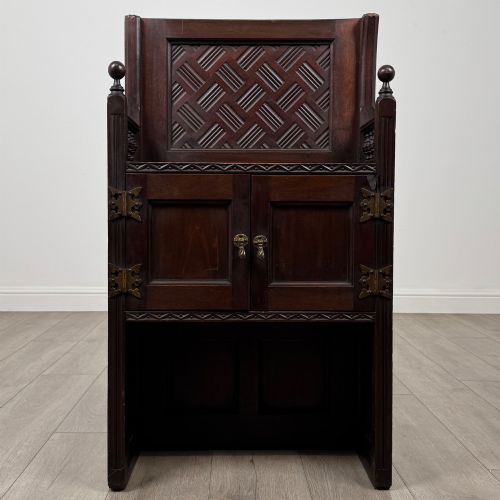
Finer furniture pieces feature hinges integrated seamlessly into the cabinet design, where the brass work contributes to the aesthetic movement or Gothic styling of the piece rather than acting as a purely utilitarian fix.
John Moyr Smith
The Brass Cabinet Hinges Glossary
- Brass
- A durable copper and zinc alloy utilised for decorative and functional hardware across centuries of furniture making. It resists corrosion and develops a deep patina over time.
- Hinge
- A moveable mechanical bearing that connects two solid objects, allowing them to rotate relative to each other. In cabinetry, it permits the door to swing open smoothly from the frame.
- Finial
- A decorative terminal ornament finishing the top or bottom of a hinge pin or furniture post. Victorian examples often incorporate elaborate Gothic shapes.
- Escutcheon
- A protective plate surrounding a keyhole, frequently forged from brass to match the finish of the cabinet hinges. It prevents the surrounding wood from wearing down through repeated use of the key.
- Mortise
- A recess cut into a piece of wood to receive a corresponding projection, such as the leaf of a cabinet hinge. Proper mortising ensures the hardware sits flush with the wood surface.
Brass Cabinet Hinges: Frequently Asked Questions
What are brass cabinet hinges?
Brass cabinet hinges are small metal fittings designed to attach doors to furniture frames while allowing smooth rotation. They provide essential structural support and period detail.
On this page, they appear both as individual hardware pairs and as original fixtures mounted on antique corner cupboards and cocktail cabinets.
How do I date brass hinges?
Dating hinges involves examining the manufacturing technique, the shape of the knuckle, and the style of the surrounding cabinetwork. Cast brass and specific finial designs often align with Victorian or Gothic revival periods.
Matching the hinge type to the construction methods of the cabinet helps establish the correct historical period.
Are these hinges original to the furniture?
Original hinges typically show matching wear patterns, correct screw types for the period, and precise placement within the wood recesses. Old screw holes or mismatched metal indicate later replacements.
Inspecting the patina around the brass leaves reveals whether the fitting has remained in place since the piece was first built.
How should I care for antique brass?
Antique brass requires gentle dusting and cleaning with a soft cloth to preserve the natural aged surface. Avoid harsh chemical polishes that strip away historical patination.
Leaving the accumulated surface tone intact maintains the authentic appearance of the metal fittings on older furniture.