

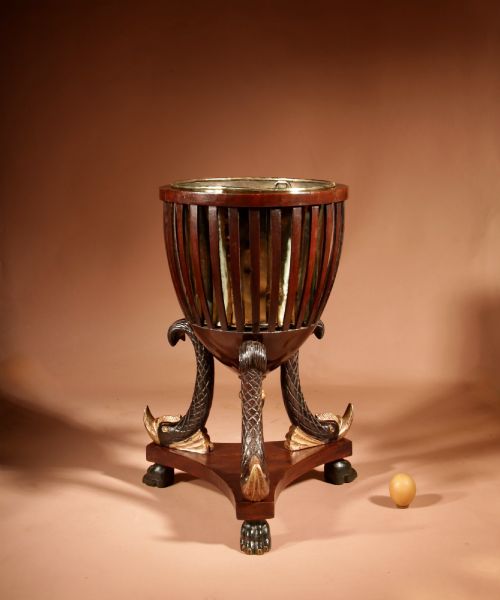


Brass Bucket Plant Stand
These brass bucket plant stands combine metalwork and timber to hold greenery or bottles with robust utility.
Brass Bucket Plant Stand
When searching for a brass bucket plant stand, you encounter jardiniere stands, wine coolers, and planters shaped as deep vessels. These pieces stem from periods such as Regency, Georgian, Victorian, and Edwardian, alongside early twentieth century dates.
The form originates in traditional barrel-making and cooperage, adapted to hold plants or ice-chilled bottles. You meet examples in woods like mahogany, oak, walnut, and ebonised timber, encircled by metal bands.
How they were made
Maker construction relies on coopered staves of mahogany, oak, or walnut joined tightly to form a round or elliptical bucket. Metal bands and liners in brass, copper, or zinc secure the wooden staves and hold moisture.
Cabinetmakers shaped the timber bodies using traditional turning and joining techniques, mounting some examples on dedicated stands or legs. The metal fittings are secured with rivets or screws, framing the grain of the wood.
Brass Bucket Plant Stand Retail Price Guide 2026
Typical asking prices for brass bucket plant stand among the pieces listed under this phrase on Sellingantiques today, from the lower quarter to the upper quarter. They describe what is for sale here now, not the wider market.
The listings show materials spanning mahogany, oak, walnut, ebonised wood, zinc, copper, and brass across various historical periods.
What varies in quality
Quality rests in the precision of the cooperage and the richness of the timber grain used for the staves. Tighter joints, heavier metal gauges, and intact interior liners distinguish finer examples from simpler vernacular pieces.
Design ambition separates basic containers from elaborate French Empire, Dutch Empire, or Georgian style statements. The harmony between the brass fittings and the polished wood defines the visual balance of the piece.
The Brass Bucket Plant Stand Glossary
- Coopered
- Constructed from wooden staves bound together with metal hoops, much like a traditional barrel. This method provides the curved shape essential for bucket forms.
- Jardiniere
- An ornamental pot or stand for holding plants or flowers. These vessels often feature metal liners to protect the surrounding woodwork.
- Stave
- One of the narrow strips of wood that form the sides of a barrel or bucket. The precision of each stave determines the overall curve.
- Cellarette
- A lockable container or stand for holding wine bottles, often sharing forms with plant buckets. They sit low or on legs to keep bottles cool.
Brass Bucket Plant Stand: Frequently Asked Questions
What is a brass bucket plant stand?
These items are deep, tub-shaped vessels constructed from wood and bound with metal, designed to hold potted plants or bottles.
They draw on historical forms like wine coolers and jardiniere stands, originating in periods from the Georgian era through to the early twentieth century.
How were these stands used historically?
Originating as wine coolers or cellarettes, they kept bottles chilled with ice during dining before later serving as indoor plant holders.
Their robust construction and metal liners made them practical for handling damp soil and melting ice within domestic interiors.
What woods are commonly found?
Mahogany, oak, and walnut dominate the construction of these vessels, sometimes paired with ebonised wood or specific fruitwoods.
The choice of timber reflects the prevailing tastes of the Regency, Victorian, and Edwardian periods in which they were made.