

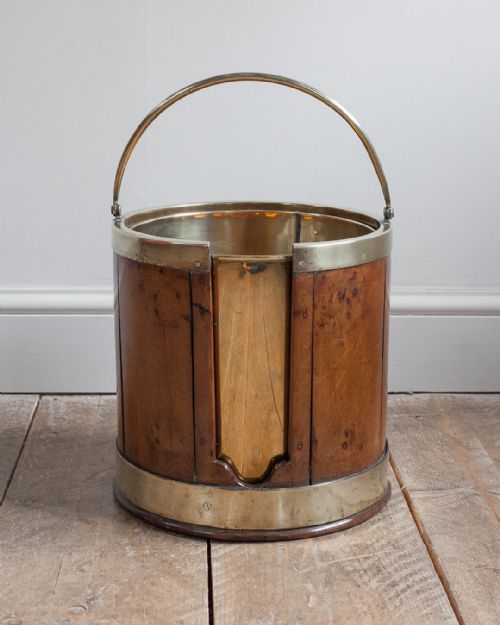
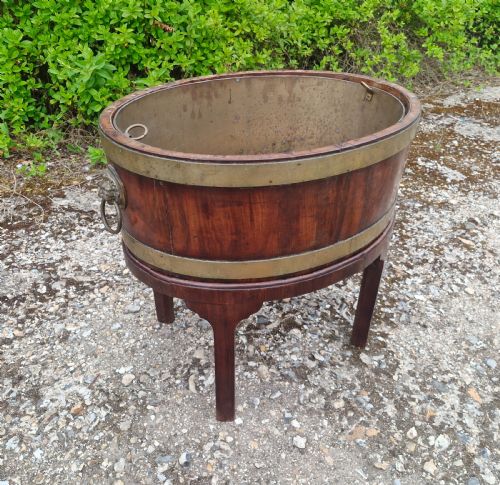

Brass Bound Mahogany Cooler
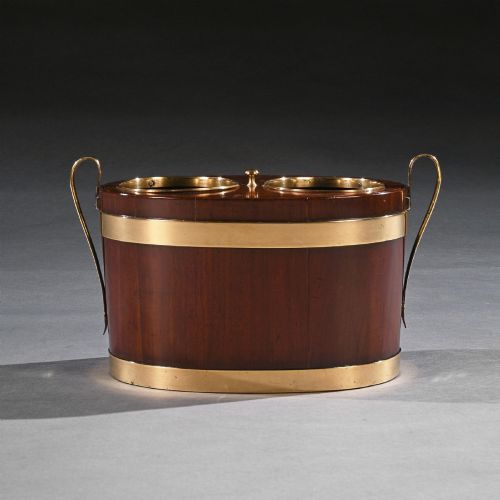
When you search for a brass bound mahogany cooler, you seek a traditional vessel designed to chill bottles or hold peat, combining structural timber with metal strapping.
Brass Bound Mahogany Cooler
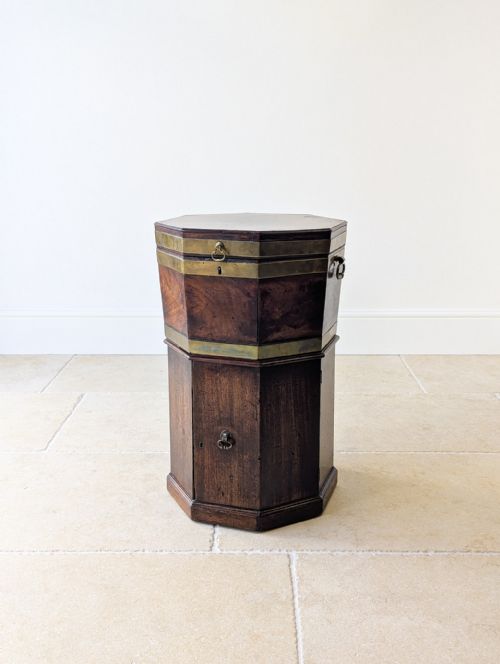
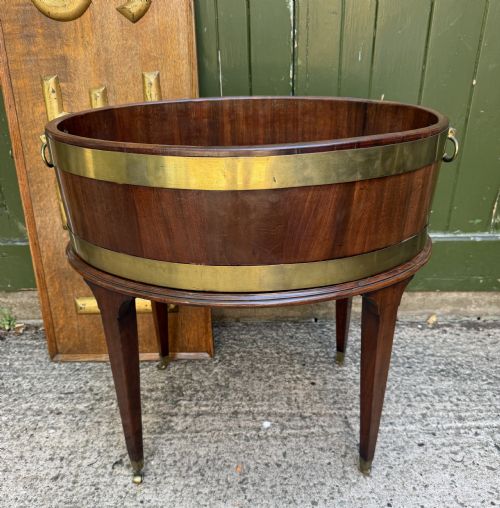
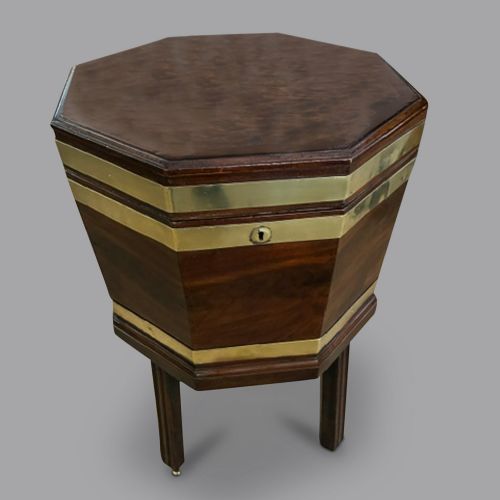
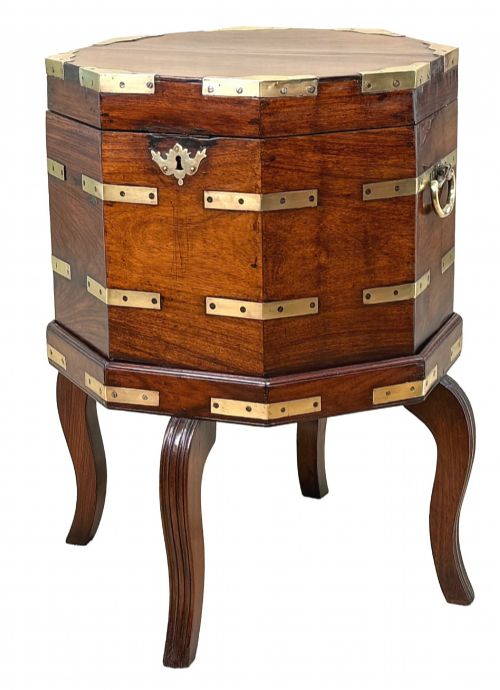
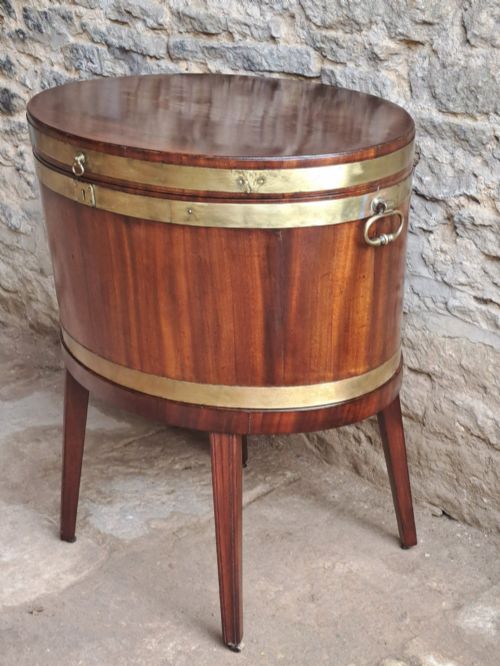
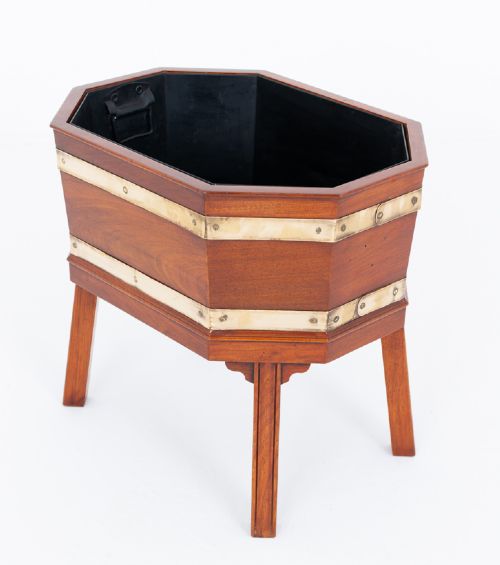
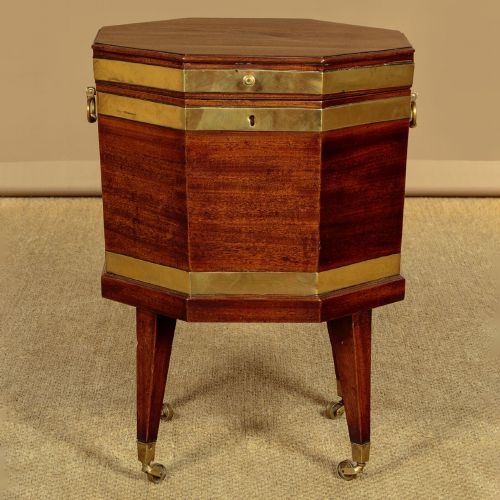
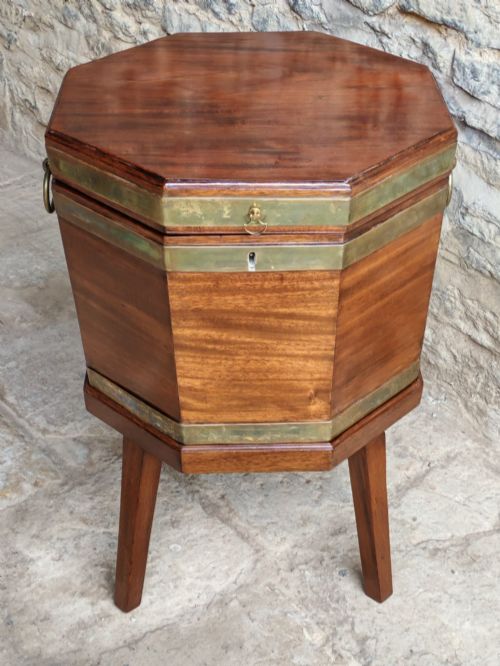
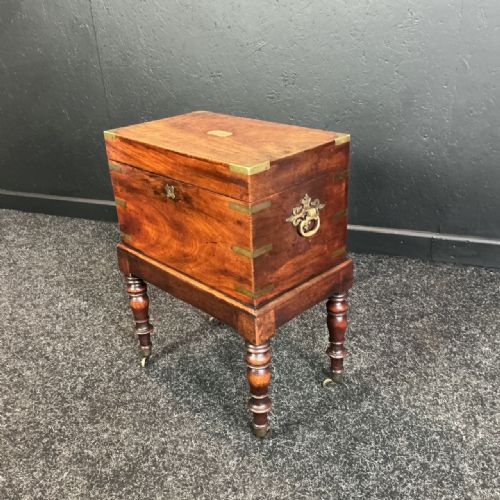
A brass bound mahogany cooler is a traditional timber vessel designed primarily to hold ice and bottles or function as a cellarette, peat bucket, or jardinière. Buyers searching this phrase will find a strong presence of George III and Regency pieces, alongside later 19th-century and early 20th-century revivals.
Origins span standard Georgian and Regency British workshops, with occasional Anglo-Indian colonial examples in padouk and Dutch coopered variants featuring walnut or ebonised wood. The most commonly met version on this page is the George III mahogany oval or octagonal wine cooler secured with prominent brass bands.
How they were made
Construction relies heavily on cooperage techniques, where individual staves of mahogany, padouk, or walnut are shaped and bound together with heavy brass bands or hoops. This method mirrors the creation of casks and barrels, ensuring the thick timber walls could hold liquids and ice without splitting.
Metalwork plays a dual structural and decorative role, utilising solid brass for straps, carrying handles, and occasionally inlaid stringing or escutcheons. Interior linings often incorporated zinc or metal inserts to protect the underlying timber from moisture when used for cooling wine.
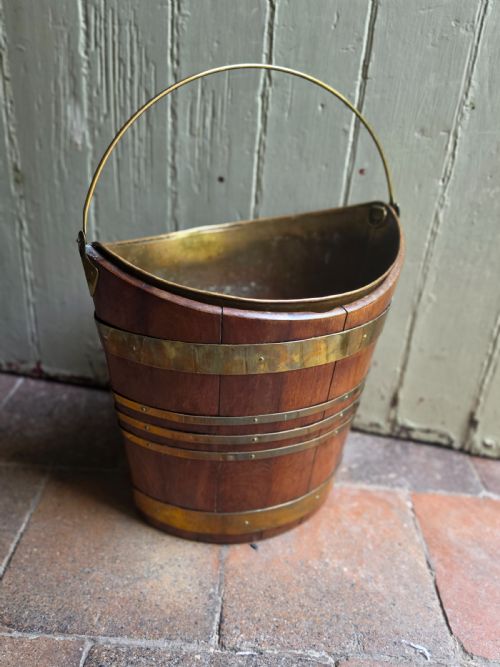
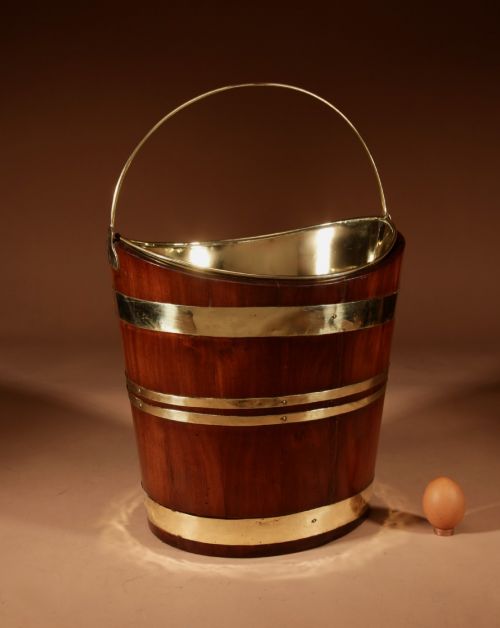
Several boat-shaped vessels meant for holding hearth peat found a second life as grand indoor plant holders.
What varies in quality
Quality separates through the selection of timber figure, the weight and gauge of the brasswork, and whether the object retains its original matching stand. Richness of patina on the mahogany and the precision of the coopered joints distinguish finer workshops from later decorative reproductions.
The presence of original interior metal linings, sturdy carrying handles, and intact brass hoops elevate the integrity of a piece. Finer examples display meticulous attention to detail in the dovetailing, inlay work, and the harmonious proportion of the vessel to its base.
Gillows of Lancaster and London
The Brass Bound Mahogany Cooler Glossary
- Cellarette
- A lockable container used for storing wine bottles near the dining table. They frequently feature internal divisions and sit low on the floor or upon a stand.
- Coopered
- Constructed using curved staves of wood joined tightly together with metal bands, following the traditional method of barrel making.
- Jardinière
- An ornamental pot or stand designed to hold growing plants or flowers. In this context, older vessels are often repurposed for botanical displays.
- Plate bucket
- A deep cylindrical or tapering container used in large dining rooms for carrying plates or washing cutlery. They share similar brass-bound stave construction with wine coolers.
- Patina
- The surface sheen and mellowing developed by timber over decades of handling, polishing, and exposure to light. It serves as an indicator of age and continuous care.
Brass Bound Mahogany Cooler: Frequently Asked Questions
What is a brass bound mahogany cooler?
A brass bound mahogany cooler is a deep, coopered timber vessel reinforced with metal bands, originally utilised in dining rooms for chilling wine with ice or storing bottles.
Over time, many of these sturdy containers transition into general household use as planters, jardinières, or decorative storage bins.
How were these coolers used originally?
In Georgian and Regency dining rooms, servants filled the internal compartments with ice and water to keep wine bottles chilled close to the dining table.
Alternative variants like plate buckets handled heavy tableware, while boat-shaped peat buckets held fuel near the hearth.
How do I care for mahogany and brass?
Protect the timber by keeping the cooler away from direct heat sources and sudden humidity changes that cause wood to crack. Regular application of traditional wax helps maintain the surface sheen.
Polish the brass bands gently with a soft cloth, taking care not to let abrasive cleaning pastes stain the surrounding wood.
How can I tell a Georgian piece apart?
Georgian examples typically display dense, heavy mahogany timber with a deep, natural patina developed over centuries of polishing. The construction methods rely on hand-cut dovetails, traditional cooperage, and heavy gauge brass work.
Later Regency or revival pieces often feature distinct leg designs, different hardware weights, or alternative secondary woods like boxwood and walnut.