

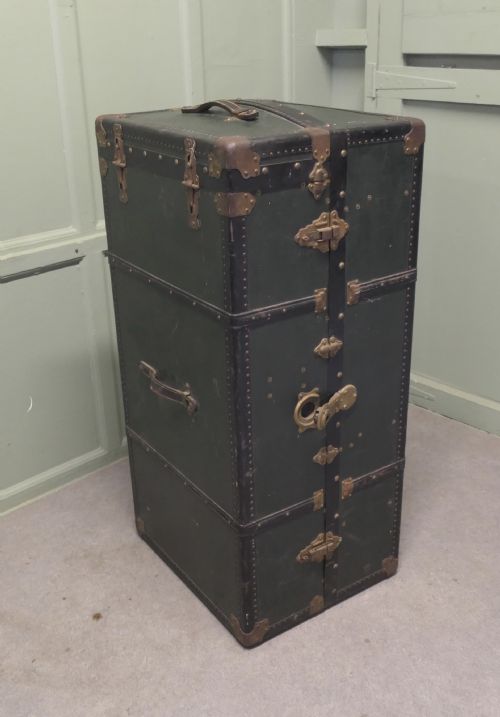
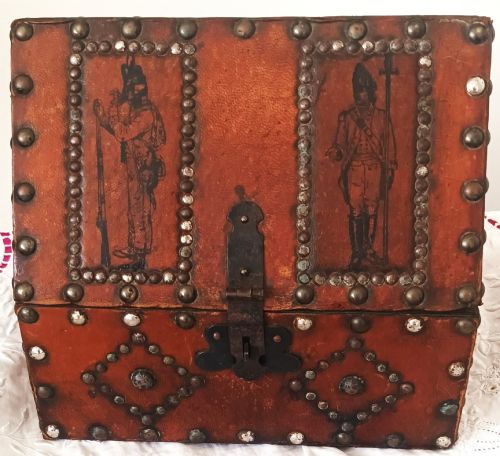


Brass Bound Leather Trunk
A brass bound leather trunk brings centuries of travel history home, offering robust storage built for coaching, shipping and campaign life.
Brass Bound Leather Trunk
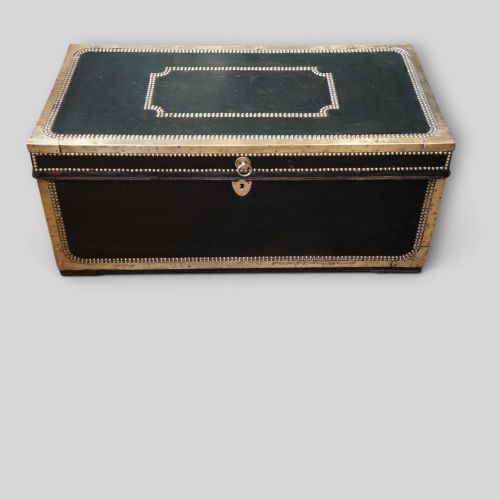
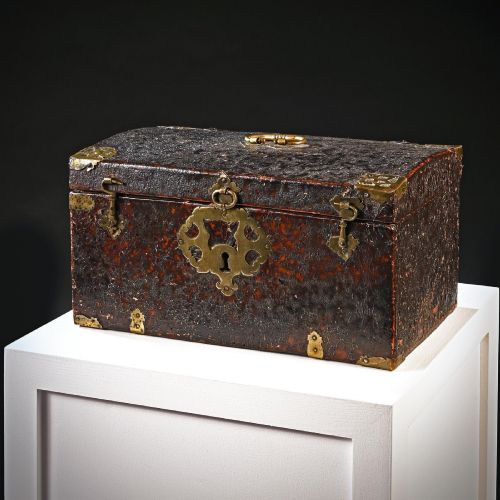
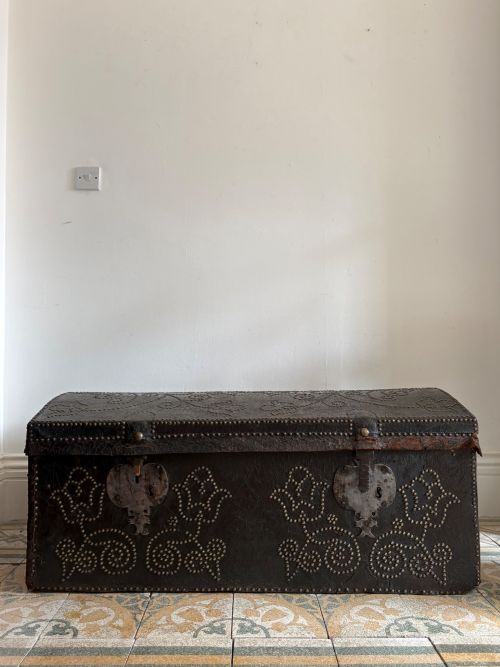
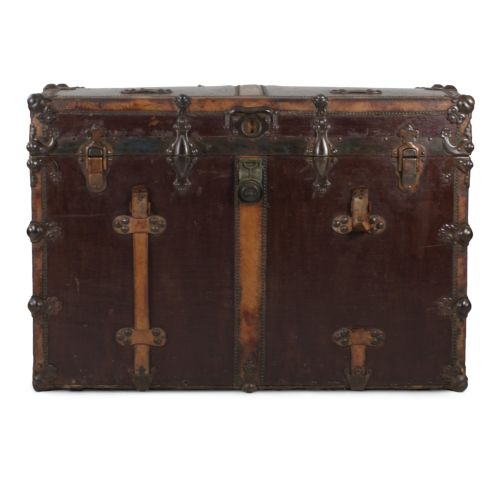
A brass bound leather trunk serves as a tangible link to historical travel, encompassing forms from compact officer cases to large Chinese export chests and French steamer trunks. Buyers searching for a brass bound leather trunk encounter pieces spanning the seventeenth century through to the early twentieth century, with nineteenth-century examples appearing frequently.
The selection ranges from dome-top travelling boxes and coaching trunks to camphor-wood campaign chests and fitted cabin wardrobes. Materials combine leather, hide, or vellum with structural wood, secured by brass corners, straps, studding, and iron reinforcements.
Materials and construction methods
Constructed around timber carcasses using durable woods such as oak and camphor-wood, these pieces rely on leather, hide, and canvas coverings fastened with heavy brass studs and corner brackets. Metal binding in brass and iron provides structural reinforcement along edges and lids to withstand the rigours of transit.
Interiors often feature fitted compartments, trays, or fabric linings tailored for specific travel needs, while exterior details include carry handles and maker stamps.
Listings feature periods ranging from the 17th century through the Regency and Victorian eras to the 1930s.
Distinguishing quality and craftsmanship
Quality rests in the integrity of the original construction, from the thickness of the leather and the weight of the brass mountings to the precision of the joinery on camphor-wood or oak carcasses. Finer examples retain their original locks, keys, hinges, and interior fittings without excessive modern replacement.
The presence of maker signatures, stamps, or historical travel labels elevates a piece, as does the survival of original painted finishes on export items or patinated hide surfaces.
Samuel Pratt·Chapple & Sons·Seabrook of St.Pauls·Drew & Sons·Aux Etats Unis·W Insall·Louis Vuitton·Moynat
The Brass Bound Leather Trunk Glossary
- Campaign case
- A portable chest or trunk designed for military officers on deployment, often featuring recessed handles and robust brass corner protection.
- Camphor-wood
- An aromatic timber frequently utilised in export trunks to protect contents from insects and dampness during long maritime journeys.
- Steamer trunk
- A lower-profile luggage piece developed for ocean liners in the late nineteenth and early twentieth centuries to fit beneath cabin berths.
- Vellum
- A fine parchment material prepared from calfskin, occasionally employed as a luxury exterior covering on high-end travel luggage.
- Portmanteau
- A large travelling bag or trunk that opens into two equal compartments, designed for carrying garments.
Brass Bound Leather Trunk: Frequently Asked Questions
How do I date a brass bound leather trunk?
Dating relies on construction styles, lock mechanisms, materials, and maker signatures where present. Pieces span from seventeenth-century chests to twentieth-century steamer trunks.
Changes in hardware design and interior fittings help narrow down the period of manufacture alongside historical documentation.
What were these trunks originally used for?
These trunks transported personal belongings during coaching journeys, military campaigns, and international maritime voyages. Sturdy exterior metal binding protected contents from rough handling.
Inside compartments kept garments, papers, and valuables organised while away from home.
How do I care for antique leather and brass?
Leather surfaces benefit from appropriate conditioning treatments to prevent drying and cracking over time. Brass elements can be left with their natural patination or gently cleaned depending on preference.
Keeping trunks away from direct sunlight and damp environments preserves both wood and hide.
What is Chinese export furniture?
Chinese export pieces were manufactured in China specifically for Western markets, often utilising local camphor-wood covered in leather and brass. These trunks combined Asian joinery traditions with European luggage forms.
Maritime traders brought them back via clipper ships during the eighteenth and nineteenth centuries.