



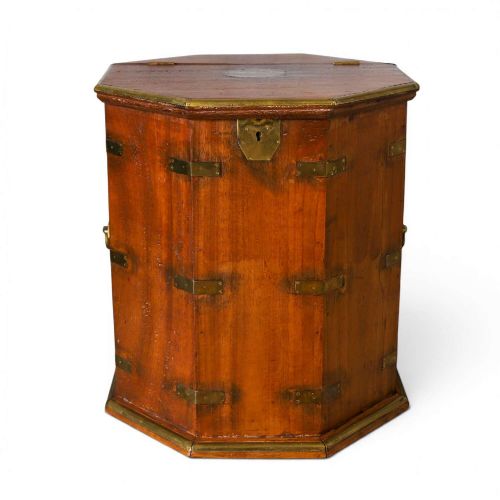
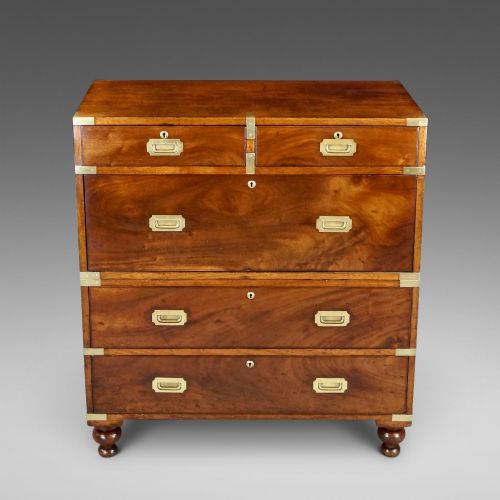
Brass Bound Furniture
Brass bound furniture comprises robust travel pieces and fitted containers made to withstand long journeys.
Brass Bound Furniture
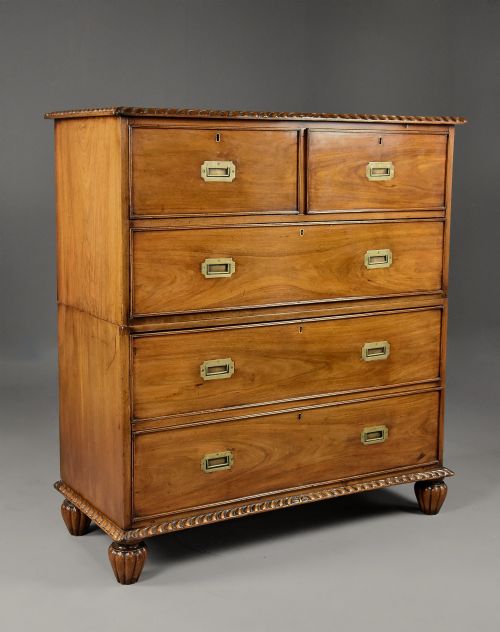
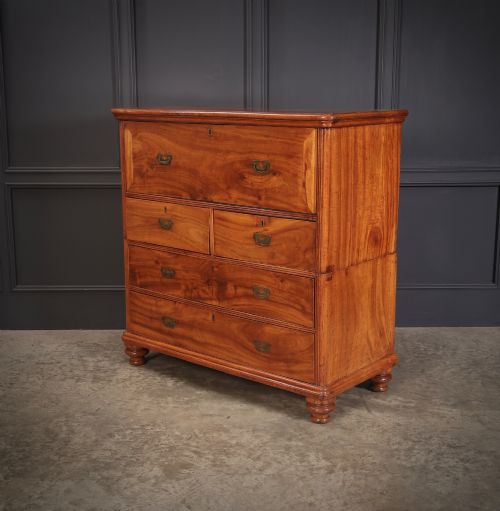
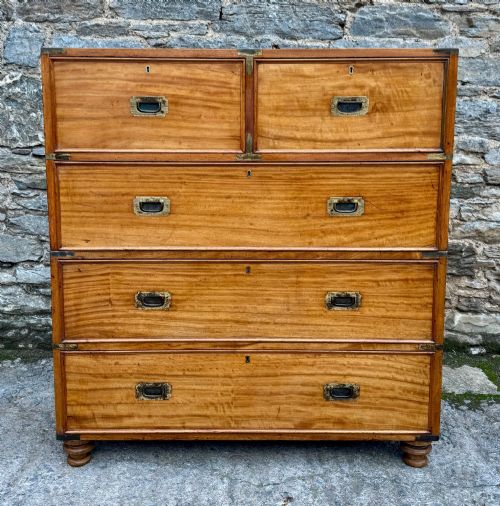
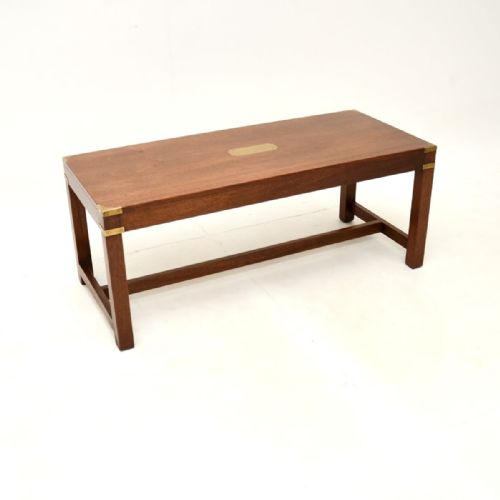
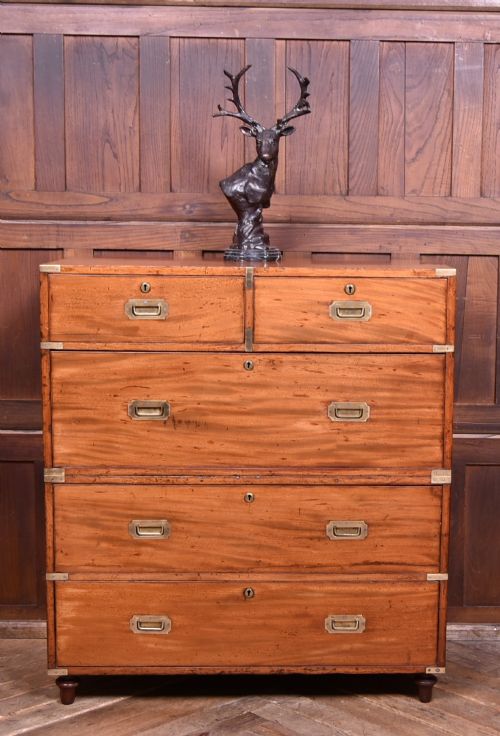
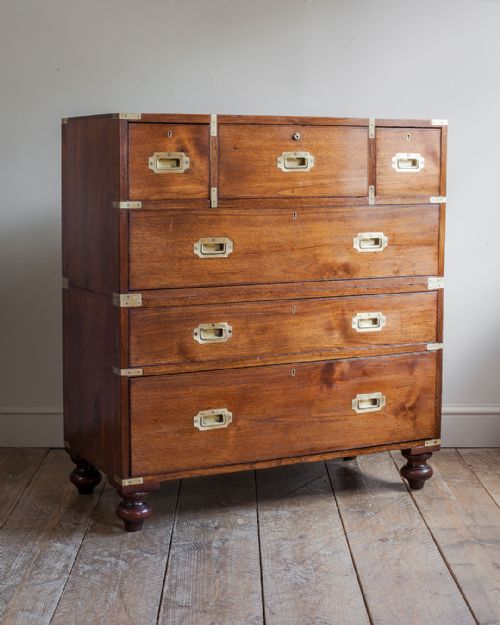
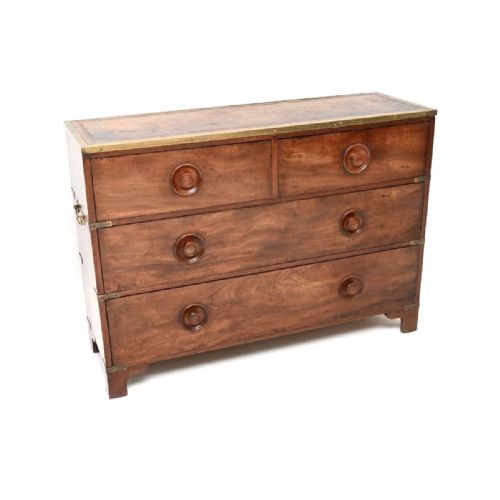
Brass bound furniture encompasses sturdy campaign chests, writing slopes, cellarettes, and trunks built for mobility and durability. When exploring brass bound furniture, the most frequent encounters are with nineteenth-century mahogany, teak, and camphor wood pieces designed in sections for ease of transport.
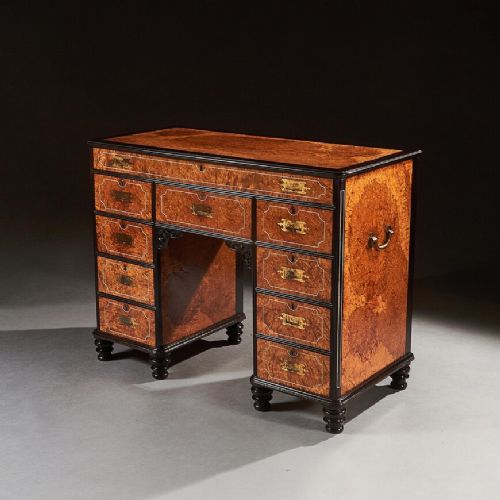
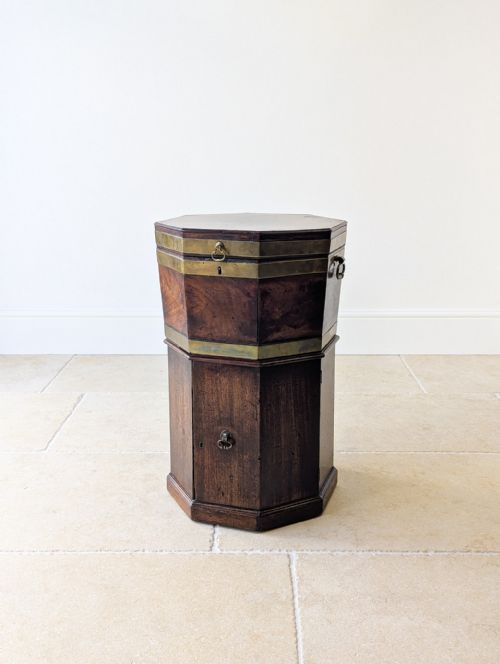
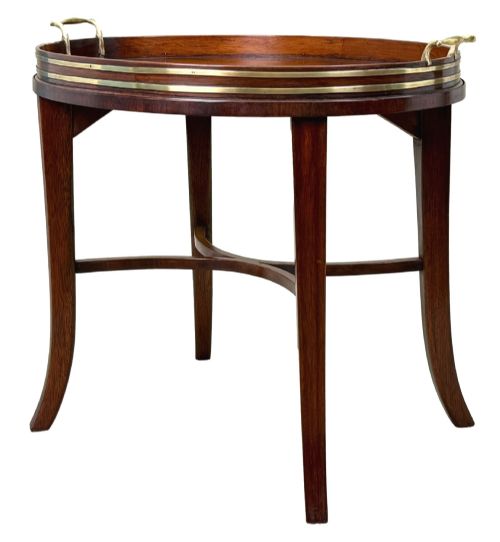
The selection ranges from George III cellarettes and Georgian oval trays to Victorian military chests and campaign desks. These utilitarian objects combine practical corner straps and flush handles with dense hardwoods suitable for rigorous travel.
Materials and Construction
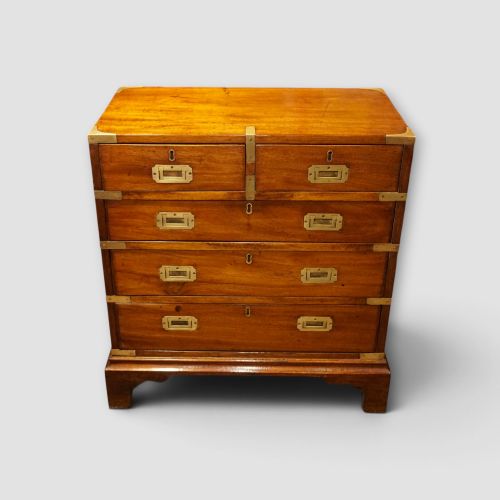
Cabinetmakers constructed these pieces using durable timbers such as mahogany, teak, camphor wood, and ebony, reinforced to endure moisture and transit. Brass banding, corner brackets, and flush-fitting hardware protected vulnerable edges while keeping profiles smooth for packing.
Many chests utilised a two-part modular construction held together by metal pins or bolts, allowing officers to separate the units easily. Linings of leather appeared on writing surfaces and desks, while brass carrying handles were recessed into the wood.
Brass Bound Furniture Retail Price Guide 2026
Typical asking prices for brass bound furniture among the pieces listed under this phrase on Sellingantiques today, from the lower quarter to the upper quarter. They describe what is for sale here now, not the wider market.
Some travel chests still retain their original brass-bound keys, offering a complete set of locks for possessions on the move.
Distinctions in Quality
The standard of execution depends upon the precision of the brass work and the integration of the hardware into the timber. Superior examples feature hand-dovetailed drawer construction, original recessed brass fittings, and secondary woods chosen for stability rather than appearance alone.
Finer pieces maintain their structural integrity across separable sections, with well-fitted secretaire drawers and matching internal compartments. The choice of dense tropical hardwoods and the crispness of the brass corners distinguish standard camp equipment from exceptional commissions.
S. W. Silver & Co. London & Liverpool·Ross & Co.·Army & Navy
The Brass Bound Furniture Glossary
- Campaign chest
- A modular chest of drawers built in two or more stackable sections with recessed handles and protective brass corners for military transport.
- Secretaire chest
- A cabinet featuring a fitted pull-out writing drawer with small pigeonholes and subsidiary compartments behind a drop front.
- Cellarette
- A fitted wine cooler or container designed to hold bottles securely during transport or dining, often octagonal and lined with lead.
- Writing slope
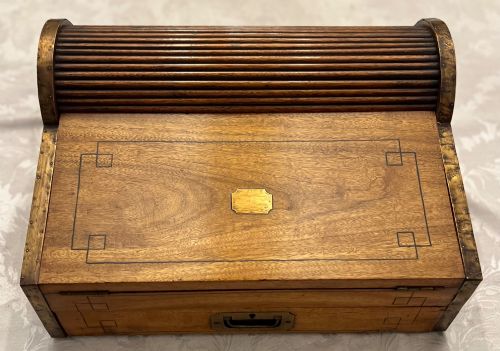
- A portable desktop box with a hinged, sloping lid that opens to reveal a slanted writing surface and storage wells for ink and pens.
- Flush handle
- A metal pull inset into the surface of the wood so it does not project beyond the plane of the drawer or panel.
Brass Bound Furniture: Frequently Asked Questions
What is a military campaign chest?
A military campaign chest is a portable set of drawers constructed in modular sections to facilitate packing and transport during military deployment.
These chests feature inset brass corners, flush drawer pulls, and side carrying handles to prevent snagging while moving through rough terrain.
Why use camphor wood for chests?
Camphor wood was selected for travel chests because its natural aromatic oil repels insects and protects stored garments from damp conditions.
This dense timber resists moisture damage effectively, making it a preferred material for boxes and trunks built for tropical journeys.
How do two-part chests work?
Two-part chests are built as upper and lower carcass units that stack together and lock into place using internal metal pins or side brackets.
This division reduced the weight and bulk of each individual load, allowing servants or porters to carry the furniture more easily.
Where were writing slopes used?
Writing slopes served as portable desks for officials, travellers, and officers who needed a stable writing surface while away from permanent offices.
The hinged lid opened to create a slanted leather-lined board, while internal compartments secured paper, inkwells, and pens.