



Brass Bound Coffee Table
A brass bound coffee table brings rugged campaign utility and warm timber grain into a modern room.
Brass Bound Coffee Table
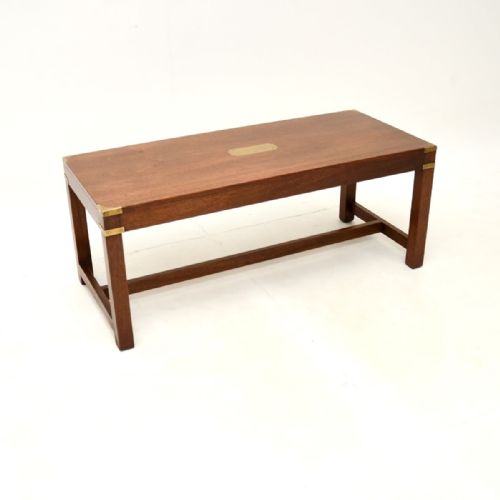
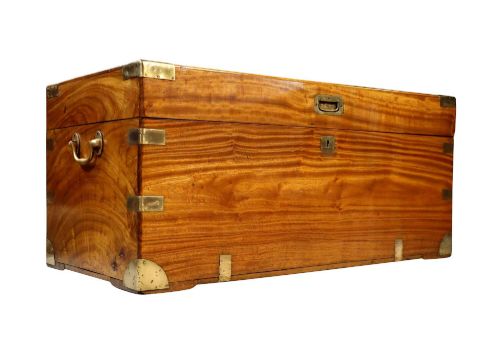
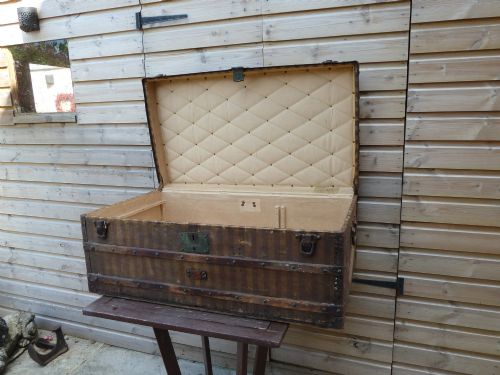
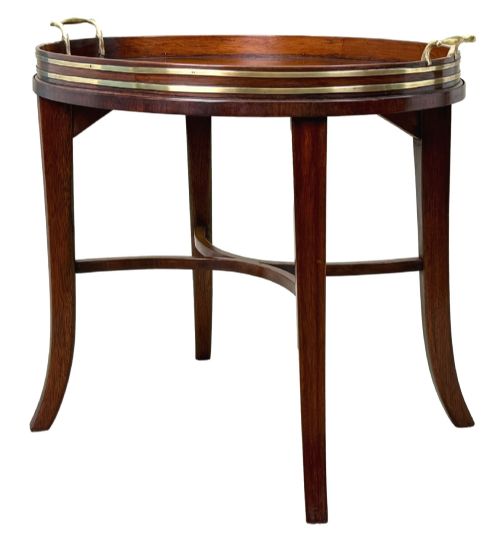
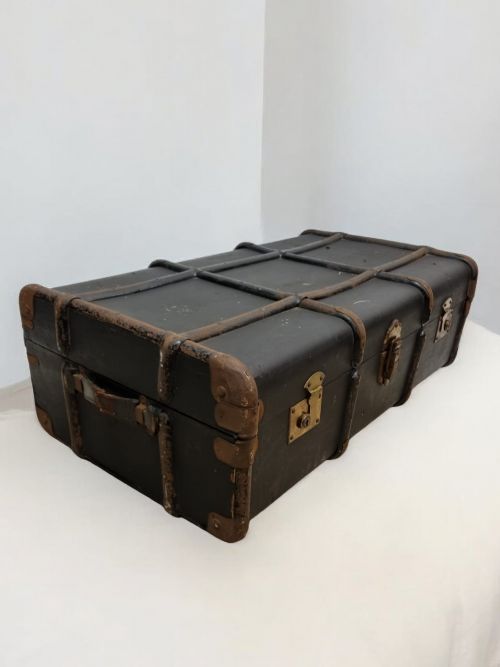
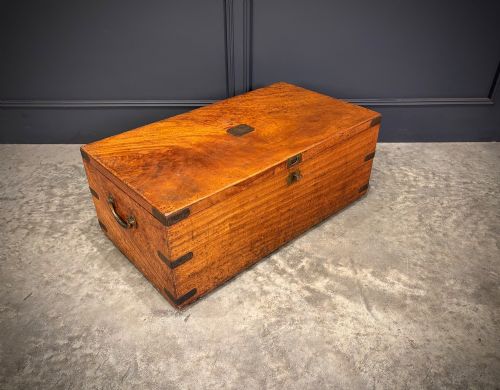
A brass bound coffee table is typically formed from converted travel luggage, campaign chests, or trays adapted for domestic living. The pieces listed under this phrase span 18th century Georgian mahogany, Victorian camphor wood and pitch pine, through to 1920s vintage travel trunks.
Most examples originate from military or colonial luggage designed for transit, featuring reinforced corners, recessed handles, and substantial metal straps. These practical travel trunks and chests now function as low tables in contemporary interiors.
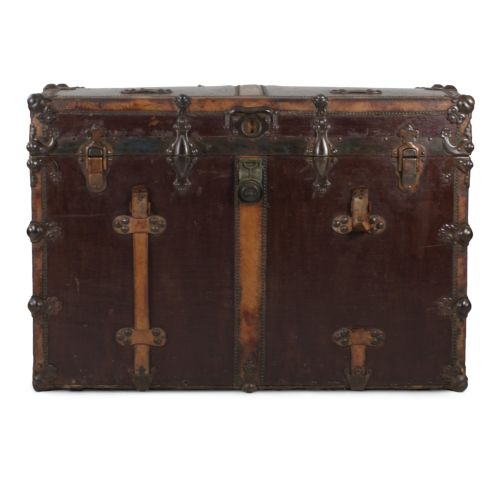
The selection ranges from oak and teak chests to leather and metal bound steamer trunks, alongside occasional tables and trays on stands. Camphor wood and mahogany forms appear frequently across the periods recorded.
Materials and construction
Construction relies on durable timbers such as camphor wood, mahogany, oak, teak, and walnut, chosen for strength during travel. These woods are joined with robust framing to withstand heavy journeys.
Brass binding, corner plates, and metal straps are fastened to protect vulnerable edges and joints against impact. Leather and canvas coverings also appear alongside original hardware and fitted interior compartments.
Some chests still retain faint travel shipping labels from overseas journeys taken over a century ago.
Assessing quality and character
Quality rests in the integrity of the original timber and the retention of authentic brass mounts, locks, and handles. Untouched surfaces and patinated leather separate genuine travel pieces from later adaptations.
The weight of the timber and the precision of the brass work distinguish standard utility luggage from finer campaign pieces commissioned for officers or long-distance travel.
Louis Vuitton·Aux Etats Unis
The Brass Bound Coffee Table Glossary
- Campaign trunk
- A portable chest built in sections with recessed brass fittings for military transport. These sturdy pieces form the basis of many low tables.
- Camphor wood
- An aromatic hardwood frequently utilised in colonial and military chests to deter insects. Its distinctive grain and scent mark out many 19th century examples.
- Steamer trunk
- A low-profile travel chest designed to fit beneath ship cabins during ocean voyages. They often feature canvas or leather coverings with metal binding.
- Zanzibar chest
- A heavily brass-studded and bound storage chest originating from East trade routes. They display intricate decorative brass work and heavy timber construction.
- Coaching trunk
- A sturdy chest built for travel on horse-drawn coaches before the railway era. These pieces generally feature robust leather and metal bindings.
Brass Bound Coffee Table: Frequently Asked Questions
Are these tables converted from real trunks?
Many examples began life as authentic travel trunks, campaign chests, or steamer luggage used during the 18th, 19th, and early 20th centuries. Over time, some have been set on stands or adapted in height to serve as functional coffee tables.
Others retain their original low proportions, making them suitable for living spaces without structural alteration. The presence of original hardware and travel labels often confirms their history.
How do I care for leather and brass bindings?
Leather surfaces benefit from occasional treatment with a neutral wax or conditioner to prevent drying and cracking over the years. Brass bindings can be left with their natural aged patina or gently polished depending on personal preference.
Avoid harsh chemical cleaners that strip the historical character from the metalwork and timber. Regular dusting with a soft cloth keeps the wood and brass in stable condition.
How do I tell an 18th century chest from a Victorian one?
Eighteenth century pieces, such as Georgian mahogany or walnut colonial chests, typically display simpler, finer cabinet proportions and hand-cut joinery. Victorian examples often introduce heavier pitch pine, camphor wood, or elaborate brass strapping associated with military campaign use.
Examining the interior linings, locks, and fastening methods helps clarify the manufacturing period. Later pieces from the 1920s frequently incorporate canvas coverings and modern travel hardware.
Will camphor wood trunks keep their scent?
Camphor wood retains its characteristic aromatic smell for generations, though the intensity diminishes slightly with age and exposure to air. This natural scent originally protected stored clothing from moths and insects during long sea voyages.
Placing items inside the chest may absorb some of the fragrance, which airs out quickly once removed. The scent remains a defining feature of many campaign trunks from this period.