

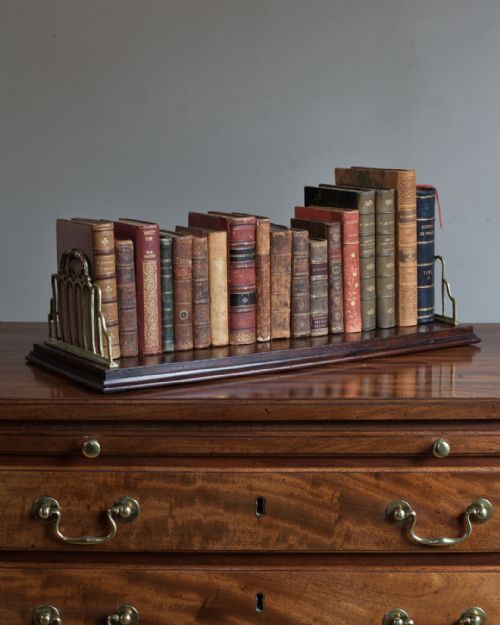

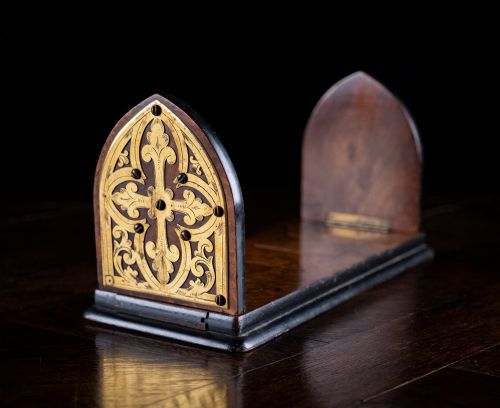



Brass Book Rack
These brass book rack designs combine heavy metal mounts with rich timber frames to keep shelves tidy.
Brass Book Rack
A brass book rack typically takes the form of an extending book slide or rest designed to hold volumes upright on a desk or table. These pieces emerge across the nineteenth century, including Victorian, Edwardian, and Regency periods, alongside related library accessories like revolving book tables and music stands.
The most common versions met here are extending book slides featuring folding or fixed brass ends attached to wooden bases. Makers pair solid timbers such as mahogany, walnut, and rosewood with heavy brass galleries, mounts, and inlay work to create durable desktop fittings.
How they were made
Cabinet makers construct the wooden bases from dense hardwoods like mahogany, walnut, coromandel, and rosewood, often incorporating sliding mechanisms for adjustable length. Metal workers shape solid brass into pierced galleries, hinges, and mounts to protect the wood and secure the expanding frame.
Workshops occasionally inset decorative elements such as painted porcelain plaques, pietra dura panels, or ormolu mounts into the timber bodies. These combined techniques produce sturdy desk accessories designed for heavy library use.
Brass Book Rack Retail Price Guide 2026
Typical asking prices for brass book rack among the pieces listed under this phrase on Sellingantiques today, from the lower quarter to the upper quarter. They describe what is for sale here now, not the wider market.
Listings feature brass book racks and slides spanning the Regency, Victorian, and Edwardian periods.
What varies in quality
Quality depends on the weight and finish of the brass components, from plain cast metal to finely chased or pierced work. Finer examples feature superior timber selection, such as figured burr walnut or coromandel, paired with patented extending actions.
Execution of decorative details like painted porcelain plaques, pietra dura inlays, or ormolu mounts separates standard workshop output from exceptional pieces. The precision of the sliding mechanism and the thickness of the brass fittings define the overall standard.
Betjemanns·Tiffany and Co·Harrods
The Brass Book Rack Glossary
- Book slide
- An adjustable desktop rack with expanding sides to hold varying quantities of books upright. The extending mechanism often relies on a scissor action or a sliding track concealed within the base.
- Coromandel
- A dense, heavily grained dark brown timber with black streaks imported from Asia. Cabinet makers prize this hardwood for luxury nineteenth century desktop accessories.
- Pietra dura
- An inlay technique using cut and fitted polished coloured stones to create pictorial designs. These panels appear set into the wooden bodies of high quality Victorian book rests.
- Ormolu
- Gilt bronze mounted onto furniture and decorative objects. This technique provides metallic embellishment across nineteenth century side tables and stands.
- Gothic Revival
- A nineteenth century design style incorporating pointed arches, trefoils, and heavy architectural motifs. Book slides from this movement use these structural forms in brass and carved wood.
Brass Book Rack: Frequently Asked Questions
How do extending book slides work?
Most extending book slides utilise a central wooden channel or a folding scissor mechanism hidden beneath the base. This allows the two ends to pull apart smoothly to accommodate a growing row of volumes.
Heavier brass mounts add weight to the ends, ensuring the sliding action remains stable when books lean against the supports.
What woods are used for book stands?
Makers select dense hardwoods such as mahogany, walnut, and rosewood to withstand the daily weight of heavy volumes. Exotic timbers like coromandel and burr walnut appear on finer pieces intended for prominent display.
These rich veneers and solid boards provide a dark, contrasting background that highlights the bright polished brass mounts.
Where were these pieces used?
These accessories sit upon library tables, writing desks, and side cabinets to keep working volumes close at hand. Their compact footprint suits studies and drawing rooms where desk space remains at a premium.
Revolving versions allow users to access reference books from multiple seating positions around a room.
How do I date a brass book rack?
Dating relies on the prevailing style, timber choices, and construction methods visible in the piece. Regency and William IV examples favour rosewood and brass inlay, while Victorian items frequently display Gothic Revival motifs or inset porcelain plaques.
Patent marks and maker stamps on the brass hardware provide additional clues to the exact decade of manufacture.