

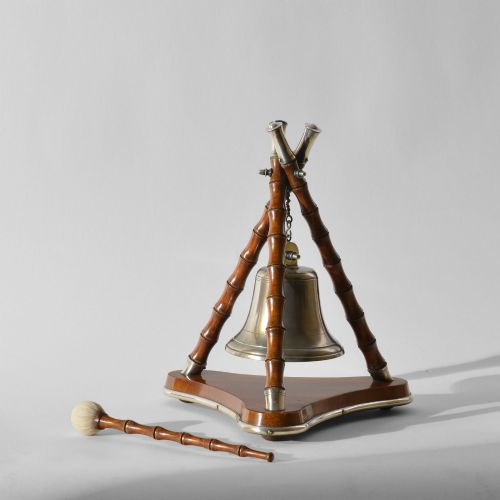
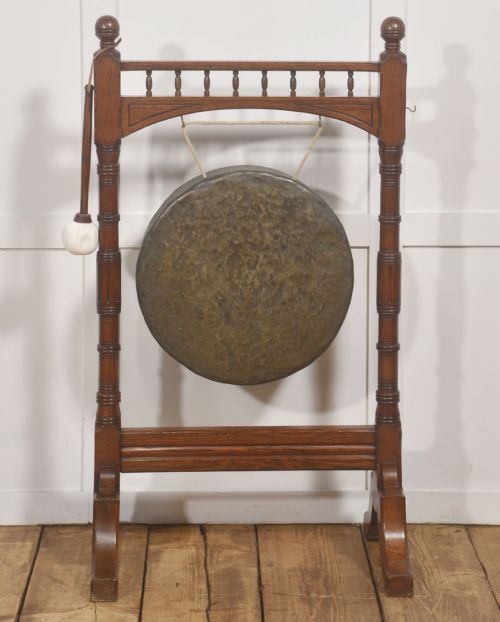
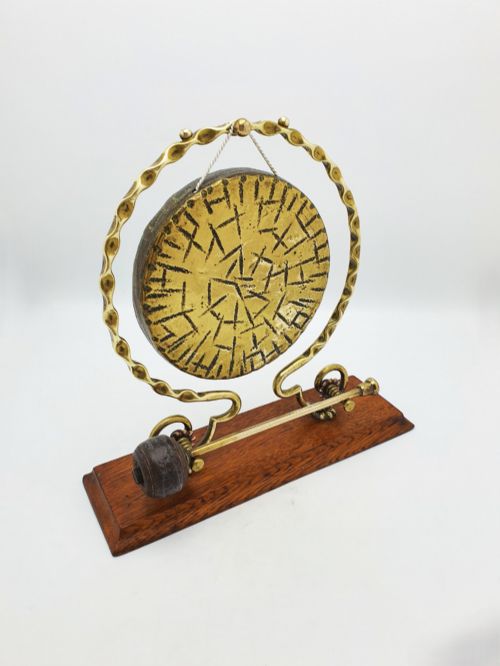


Brass Bell and Striker
A brass bell and striker brings a resonant, historic voice into a modern room, offering both practical summons and striking decorative presence.
Brass Bell and Striker
When you search for a brass bell and striker, you find pieces designed to call household members to meals or service, spanning forms like dinner gongs and table gongs.
The versions you are most likely to meet on this page include tabletop and wall-mounted formats, often paired with wooden bases and matching handheld strikers.
These items originate across multiple periods and regional styles, ranging from Victorian and Edwardian examples to Anglo-Indian and Chinese export pieces.
Materials and construction
Metalworking techniques shape the primary components, utilising brass and cast iron to create resonance and durability in the gongs and bells.
Joinery and turning shape the supporting mountings, employing oak, walnut, and general wood alongside cord, felt, and glass details.
Brass Bell and Striker Retail Price Guide 2026
Typical asking prices for brass bell and striker among the pieces listed under this phrase on Sellingantiques today, from the lower quarter to the upper quarter. They describe what is for sale here now, not the wider market.
Some dining rooms required a gong forceful enough to penetrate heavy drapery and summon teenagers from the third floor.
Assessing quality and finish
The refinement of surface decoration separates standard production items from finer examples, visible in detailed engraving or carved wooden frames.
The structural integration of the base and gong determines the overall acoustic resonance and physical stability of the piece.
The Brass Bell and Striker Glossary
- Dinner gong
- A large suspended metal disc or bowl struck with a mallet to announce meals. These pieces often feature elaborate wooden or metal stands.
- Striker
- The handheld mallet or hammer used to sound the bell or gong. Strikers typically match the mounting material, using wood or metal with cord accents.
- Table gong
- A smaller version designed to sit on furniture rather than mount to a wall. They provide a more restrained tone suited to interior rooms.
- Anglo-Indian
- A style reflecting nineteenth-century design exchange between Britain and India. Pieces often display intricate hand engraving on the metal surface.
Brass Bell and Striker: Frequently Asked Questions
How were dinner gongs used?
These pieces sat in halls or dining rooms to summon occupants for meals or gatherings.
Servants or hosts used the handheld striker to produce a clear, carrying tone throughout the house.
Where should I place a table gong?
Table gongs suit sideboards, entrance halls, or studies where their decorative stands can be appreciated.
Ensure the placement allows clearance for the suspended gong to vibrate freely when struck.
How do I date a brass gong?
Dating relies on stylistic clues, mounting types, and materials like oak or walnut bases.
Victorian and Edwardian examples often display specific decorative motifs and hardware consistent with their period of manufacture.
What materials make up these sets?
The assemblies primarily combine brass metalwork with wooden stands made from oak or walnut.
Additional elements such as felt, glass, and cord frequently support or cushion the suspended bell.