





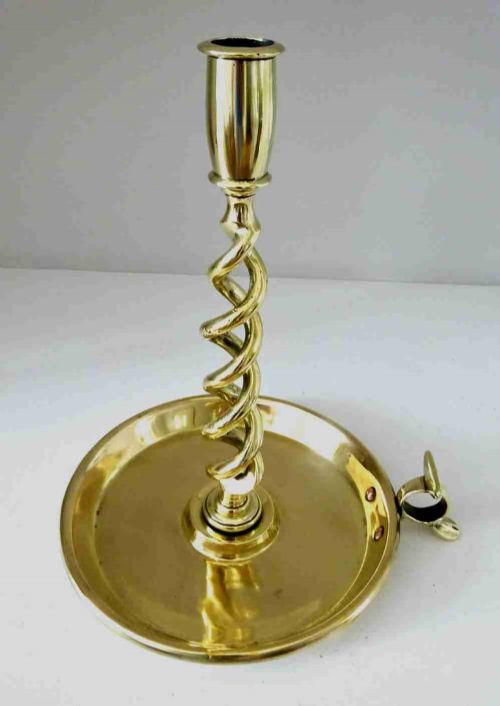
Brass Barley Twist Candle Holders
Brass barley twist candle holders bring unmistakable turning and bright metal to a room, catching the light in a way few other items can.
Brass Barley Twist Candle Holders
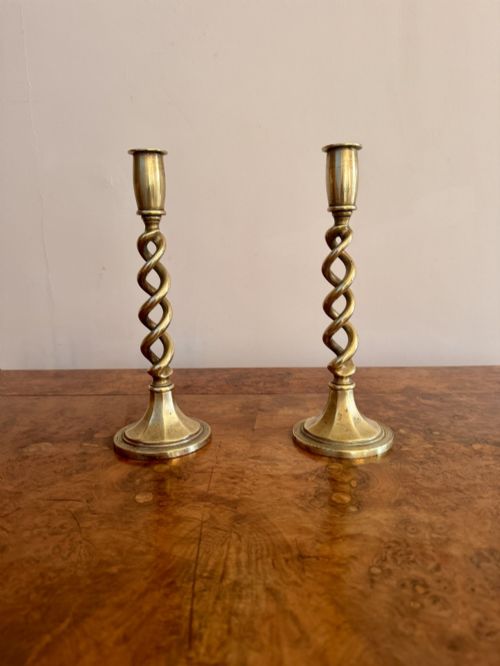
Brass barley twist candle holders are distinctive domestic and ecclesiastical objects, taking the form of twisted columns designed to support wax lights. These pieces range from compact household pairs to tall church candlesticks, spanning periods from the eighteenth century through the Victorian and Edwardian eras. Buyers searching for brass barley twist candle holders will find variations that pair cast or spun metal with turned timbers.
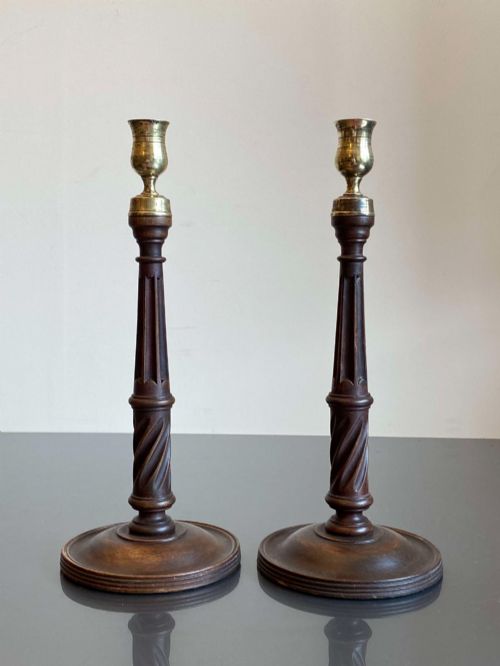
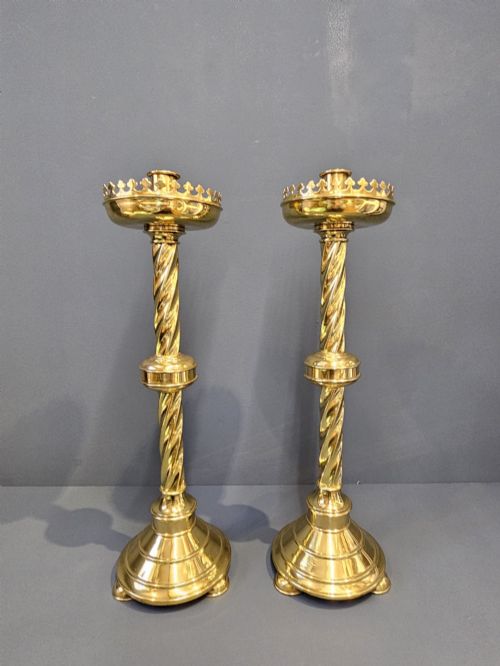
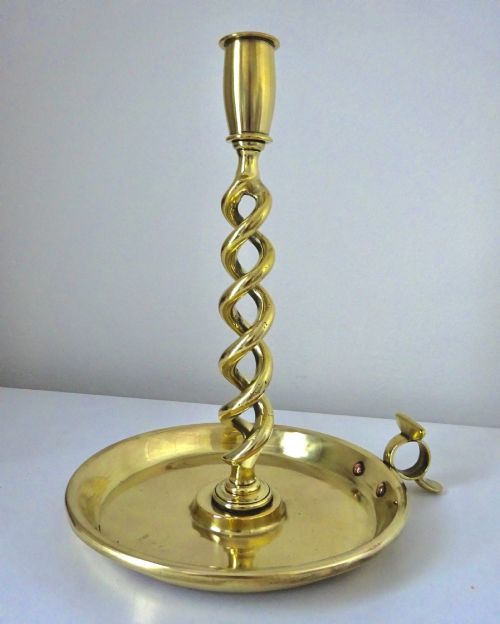
The domestic examples often feature fitted bases or trays with handles, whilst ecclesiastical versions stand larger and heavier for altar use. Oak and mahogany frequently appear alongside the metal work, creating dual material shafts or mounted tops and bases. Most examples on offer date from the nineteenth and early twentieth centuries, reflecting the popular revival styles of those decades.
How they were made
The construction of these pieces relies on the combination of cast or turned brass and shaped hardwoods such as oak and mahogany. Makers formed the twisted columns using wood-turning lathes for timber shafts and casting techniques for metal components. Fitted bases and trays were engineered to provide stability for the tall, upright shafts.
Details such as enamel work or secondary metals occasionally supplement the primary brass and wood construction. The twist itself is rendered either as a tight, closed helix or as an open, carved wooden spiral framed by metal sockets.
Brass Barley Twist Candle Holders Retail Price Guide 2026
Typical asking prices for brass barley twist candle holders among the pieces listed under this phrase on Sellingantiques today, from the lower quarter to the upper quarter. They describe what is for sale here now, not the wider market.
Listings feature brass and oak combinations alongside mahogany and enamel elements, spanning the Victorian and Edwardian periods.
What varies in quality
Quality in these items is determined by the crispness of the twist and the weight of the materials used in the casting or turning. Heavier gauge brass and dense, figured timbers indicate superior manufacture compared to lighter, hollowed equivalents.
The integration of fitted trays, the stability of the base, and the precision of the joints dictate the overall standard. Pieces intended for ecclesiastical settings often display more ambitious scale and heavier metalwork than standard domestic variants.
T Thomason & Co
The Brass Barley Twist Candle Holders Glossary
- Barley twist
- A decorative turning resembling a spiral rope or the stalk of barley. This form became popular in furniture and decorative objects during the seventeenth century and saw revivals in later periods.
- Ecclesiastical
- Pertaining to the church, describing objects made for use in religious services. These pieces are typically larger and more substantial than domestic items.
- Casting
- A manufacturing method where molten metal is poured into a mould to take a specific shape. This technique allows for the creation of intricate sockets and detailed bases.
- Fitted base
- A shaped or weighted platform designed to anchor the candlestick firmly and catch dripping wax. It prevents the tall shaft from tipping during use.
Brass Barley Twist Candle Holders: Frequently Asked Questions
How do I date my brass barley twist candle holders?
Dating relies on examining the construction methods, the composition of the base, and the style of the turning. Earlier examples often feature hand-worked details and heavier timbers.
Later Victorian and Edwardian pieces show machine-assisted turning and standardised socket fittings. Comparing the materials, such as the use of oak versus mahogany, helps narrow the decade of production.
Were these used in homes or churches?
These items served both domestic and ecclesiastical purposes depending on their scale and design. Smaller pairs functioned in parlours and dining rooms for daily illumination.
Taller, heavier versions originated in churches for altar lighting, often featuring reinforced bases to support larger candles.
How should I clean brass and wood candlesticks?
Maintenance requires treating the metal and the timber with separate, appropriate care. Dust the turned wood gently and avoid harsh polishes that strip the finish.
Clean the brass components sparingly with a soft cloth to preserve the natural patina accumulated over the decades.