



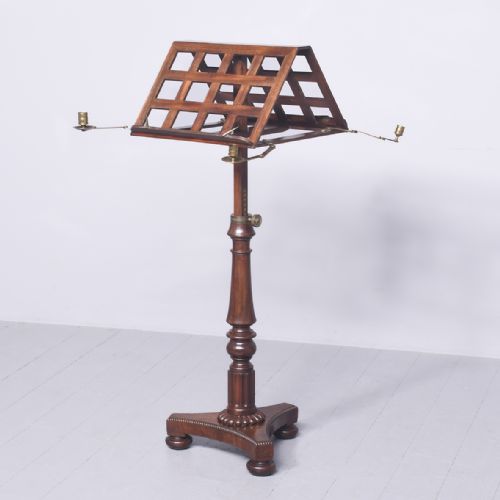


Brass and Wood Music Stand
A brass and wood music stand combines adjustable metal fittings with rich timber frames to hold scores steady in the parlour.
Brass and Wood Music Stand
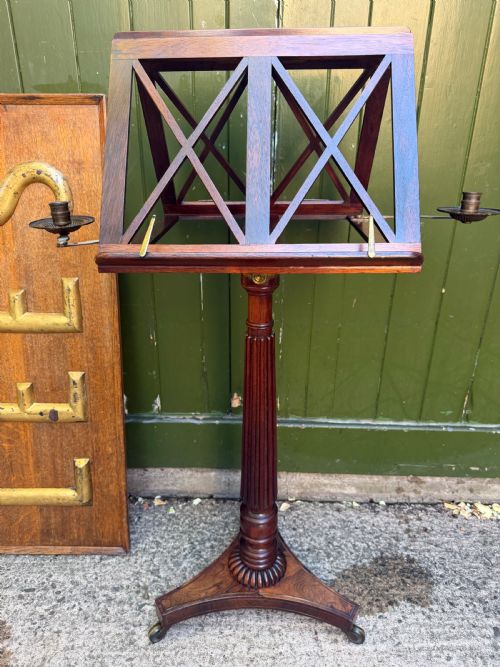
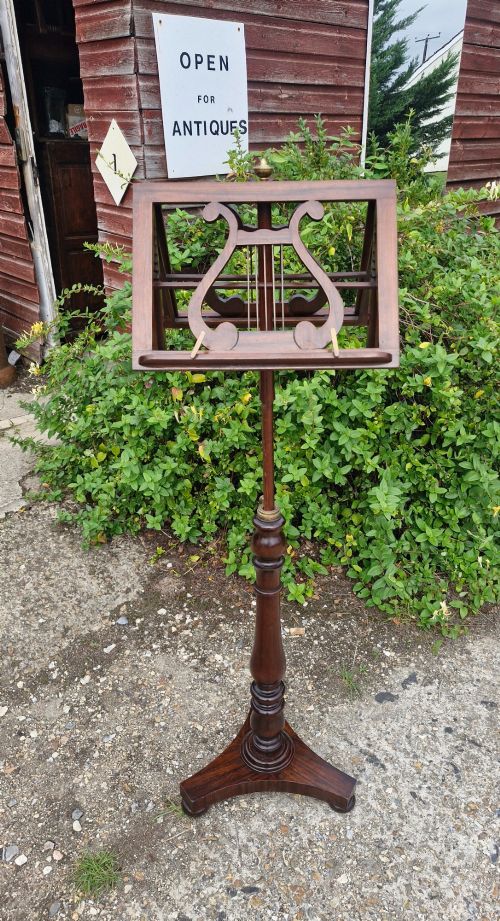
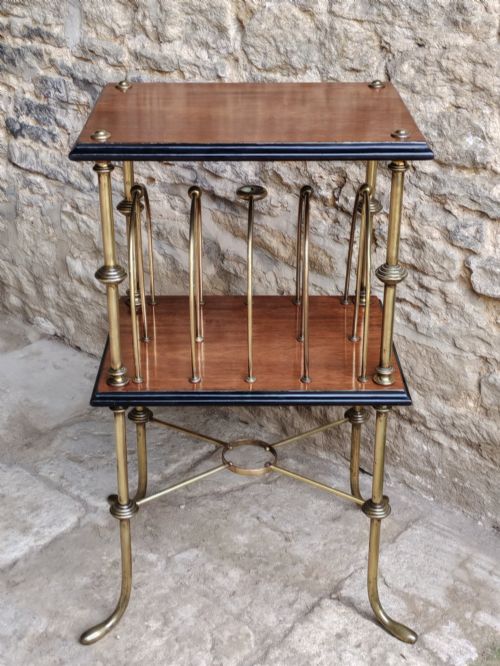
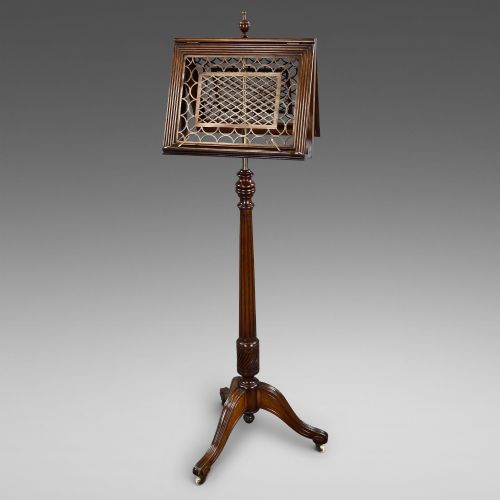
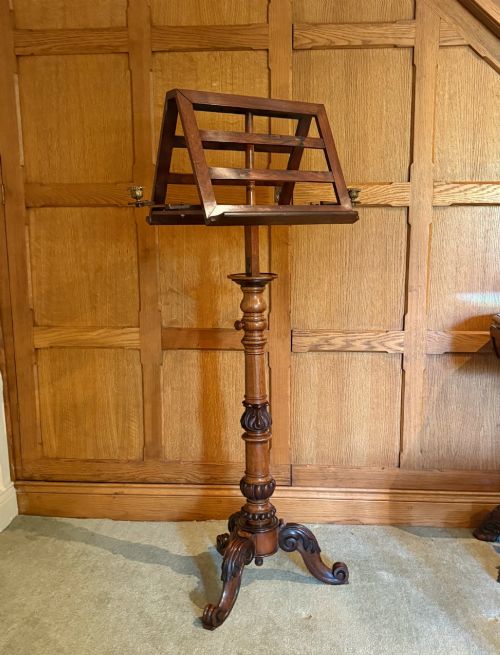
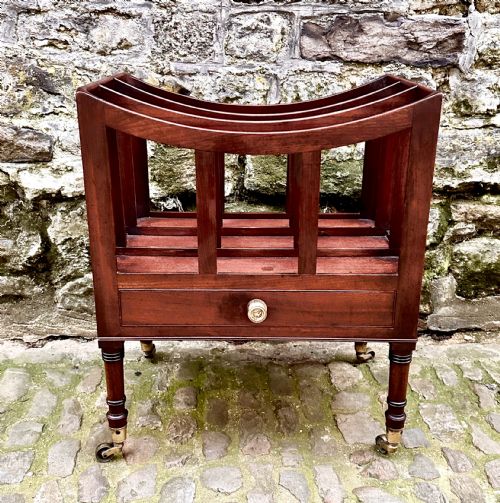
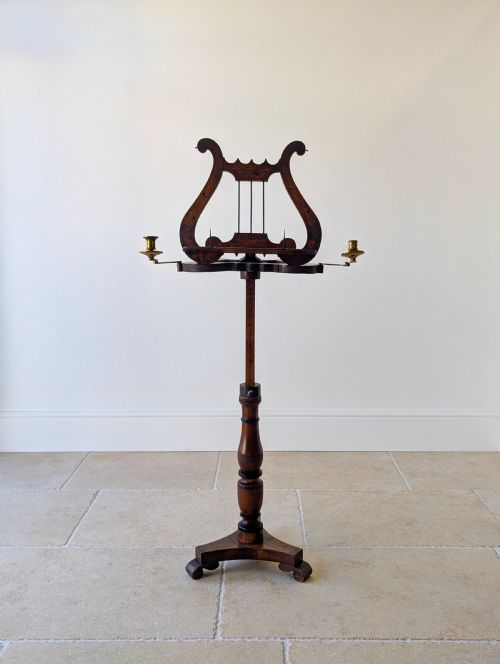
A brass and wood music stand brings together turned timber bodies and adjustable brass hardware, appearing across periods from George III through to the Edwardian era. These pieces range from upright duet stands and lyre-form lecterns to multi-division canneries and magazine tables.
The version most commonly met on this page is the Canterbury or music stand fashioned from mahogany, rosewood, or walnut, often featuring adjustable brass stems or candle arms. Makers utilised these materials to balance sturdy wooden bases with flexible metal reading surfaces.
Forms extend from George III mahogany canterburys to Victorian ebonised reading stands and Edwardian filing cabinets. Each type serves the dual purpose of domestic storage and functional performance.
What varies in quality
The distinction between standard and superior pieces rests on the weight of the timber and the complexity of the brass mechanisms. Finer examples display crisply cast brass adjustments, substantial rosewood or mahogany carcases, and sophisticated turning.
Proportion and execution define the hierarchy of these items, from simple four-division newspaper racks to grand country house folio stands with patent turning devices. The integration of articulated metal work with well-figured wood marks the higher tier of production.
Brass and Wood Music Stand Retail Price Guide 2026
Typical asking prices for brass and wood music stand among the pieces listed under this phrase on Sellingantiques today, from the lower quarter to the upper quarter. They describe what is for sale here now, not the wider market.
Adjustable reading stands appear alongside music cabinets and multi-division canterburys.
GILLOWS
The Brass and Wood Music Stand Glossary
- Canterbury
- A low wooden stand with slatted divisions, designed for holding sheet music, folios, or newspapers. Originating in the late eighteenth century, it frequently incorporates castors and drawer storage.
- Duet stand
- A music stand wide enough for two performers to read a shared score simultaneously. These pieces often feature double-sided reading ledges and adjustable brass stems.
- Lyre-form
- A decorative motif shaped like an ancient stringed instrument, commonly used in the central support of nineteenth-century music stands.
- Ebonised
- Timber treated with a dark finish to imitate expensive ebony. This technique was popular in Victorian workshops for creating stark contrast with brass fittings.
Brass and Wood Music Stand: Frequently Asked Questions
How do I adjust the height?
Adjustment is typically managed through a sliding brass stem secured by a side screw or thumbscrew. The internal mechanism allows the reading desk to rise and lock into position.
Care should be taken when loosening brass fixtures on older timber shafts to avoid straining the grain. Gentle support of the upper desk ensures smooth movement during height changes.
Where were they used?
These stands occupied the drawing rooms, music rooms, and parlours of period homes. They kept scores and folios close to pianofortes and reading chairs.
In larger country houses, oversized folio stands accommodated extensive collections of sheet music. Smaller reading stands served casual study near fireplaces.
How do I clean the brass?
Maintenance requires a soft cloth to remove dust from both the timber and the metal components. Avoid harsh chemical cleaners that might strip the patina from the brass.
Preserving the aged surface of the metal maintains the historical character of the piece. Regular dusting protects the finish on rosewood and mahogany frames.
Can they hold books?
The sturdy timber ledges and adjustable angles suit heavy volumes and folios as well as sheet music. Many examples were designed specifically for reading desks or occasional use.
Care should be observed with fragile bindings on narrow ledges. Standard music stands provide ample support for normal reading materials.