



Brass and Wood Bell
These brass and wood bell pieces are domestic and institutional sound instruments combining metal chime components with turned or carved timber mounts, offering traditional acoustic utility and period craftsmanship.
Brass and Wood Bell
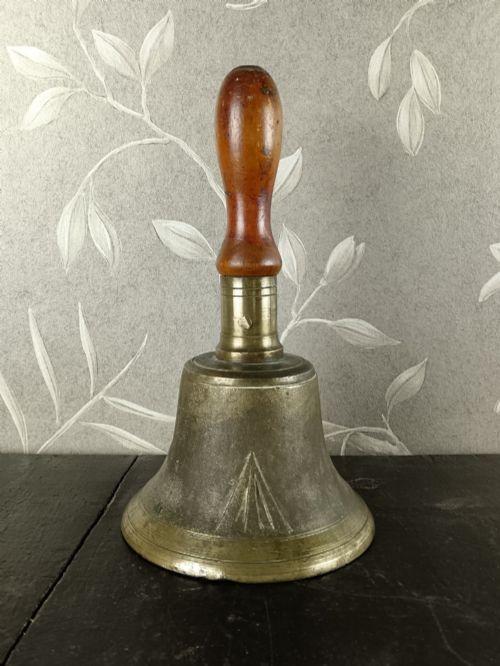
A brass and wood bell selection spans functional items like hand-held school bells with wooden handles and large dining gongs set into carved wooden frames. These objects originate from various periods including Victorian and Edwardian eras, reflecting both domestic routines and institutional signaling.
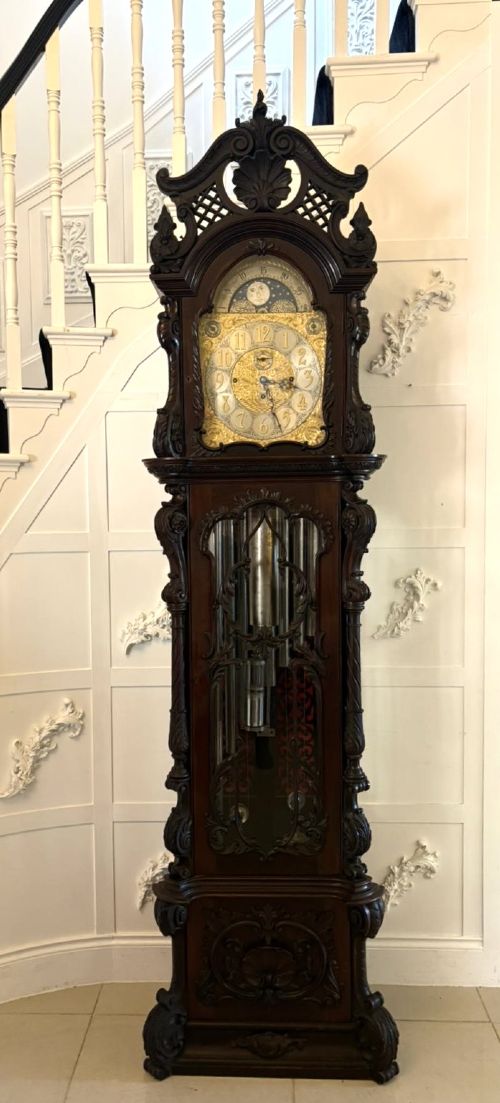
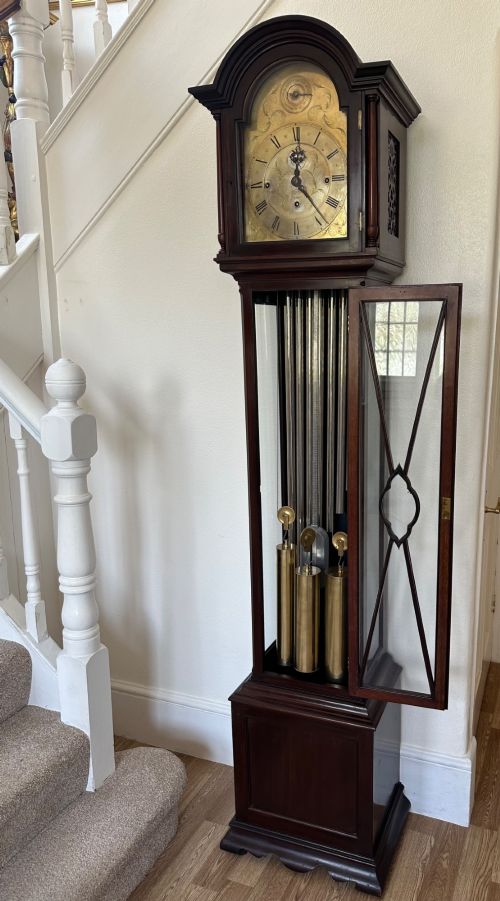
The objects also encompass complex timepieces such as longcase clocks, bracket clocks, and mantel clocks housed in wooden cases with internal bell-striking movements. Such items combine horology with acoustic warning or chiming functions, utilising brass for the bells and movements alongside mahogany, ebonised wood, or rosewood for the cabinetry.
How they were made
Makers utilised cast brass and bronze for the resonant bells, gongs, and clock movements, achieving specific tone and projection through metal composition. These metallic elements are paired with hardwoods such as mahogany, oak, and rosewood, which were turned, carved, or inlaid to form handles, stands, and clock cases.
Joinery and cabinet-making techniques define the wooden components, from simple turned handbell grips to intricate Chinoiserie and Chinese Export carved stands. Metal casting methods for the bells require precise cooling and finishing to ensure clean acoustic resonance when struck or triggered.
Brass and Wood Bell Retail Price Guide 2026
Typical asking prices for brass and wood bell among the pieces listed under this phrase on Sellingantiques today, from the lower quarter to the upper quarter. They describe what is for sale here now, not the wider market.
Horological items range from simple drop-dial wall clocks to complex nine-tube chiming longcase clocks.
What varies in quality
Quality resides in the crispness of the brass casting and the acoustic purity of the resulting chime or bell strike. Superior pieces display harmonious resonance without unwanted rattling, supported by solid, well-seasoned timber mountings.
The refinement of the woodwork, such as detailed hand-carving on dinner gong stands or precision in clock case marquetry and ebonisation, distinguishes standard utility objects from exhibition pieces. Movement complexity, such as twin fusee mechanisms or multi-tube chime systems, further elevates the standard.
Paul Garnier·Warners of London·John Taylor London·Henry Marc
The Brass and Wood Bell Glossary
- Fusee
- A conical pulley used in clock movements to maintain even tension on the chain or cord as the mainspring unwinds. This mechanism improves timekeeping accuracy across the power reserve.
- Ebonised
- Wood treated with a dark finish to imitate expensive ebony. This technique was common in Victorian and Edwardian clock cases.
- Ormolu
- Gilded bronze mounts applied to furniture and clock cases. The technique involves a mercury-gilding process yielding a rich metallic lustre.
- Bracket clock
- A portable household clock originally designed to sit on a wall bracket. Later examples function as table clocks housed in architectural wooden cases.
- Gong
- A flat or bowl-shaped metal percussion instrument struck with a mallet. In this context, they are typically suspended within carved wooden frames for dining announcements.
Brass and Wood Bell: Frequently Asked Questions
How do I clean the wooden frame?
Dust the timber regularly with a dry lint-free cloth to prevent dirt accumulation.
Apply a microcrystalline wax sparingly if the wood appears dry, avoiding any contact with the brass bell components.
Are these bells meant for daily use?
Most antique handbells and dinner gongs remain fully functional for acoustic signaling.
Clock movements and older striking mechanisms require gentle handling and professional setup to ensure proper mechanical operation.
How do I date a wooden clock case?
Examine the timber species, case style, and secondary woods used in the interior construction.
Stylistic markers like ebonising or brass ormolu mounts typically align with specific periods such as the mid to late nineteenth century.
Why do some bells use bronze instead of brass?
Bronze provides superior acoustic resonance and durability for larger gongs and temple bells.
Brass is more commonly utilised for smaller handbells and clock components where intricate shaping takes precedence over deep acoustic projection.