

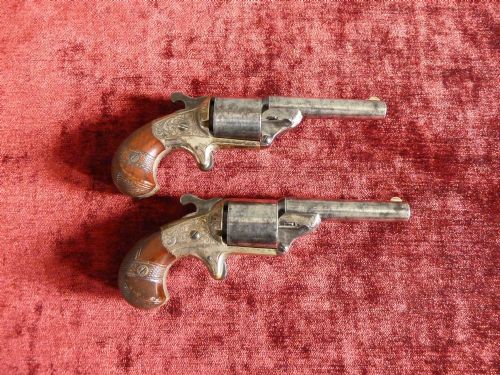


Brass and Steel Pistol
A brass and steel pistol brings together functional military metals and traditional woodworking, offering a tangible link to centuries of conflict and craftsmanship.
Brass and Steel Pistol
When you search for a brass and steel pistol, you encounter historic firearms spanning the seventeenth, eighteenth, and nineteenth centuries. These pieces encompass British military service arms, elegant pocket pieces, and ornate regional variations from the Ottoman Empire and the Balkans.
The inventory on this page leans heavily toward flintlock and percussion mechanisms, reflecting the evolution from early ignition systems to mid-nineteenth-century revolvers and muzzleloaders. You will find standard-issue dragoon and cavalry sidearms alongside civilian pocket pistols designed for personal protection.
How they were made
Makers constructed these arms using forged iron and steel for barrels and lock mechanisms, paired with cast brass for trigger guards, butt caps, and decorative side plates. Stocks were typically carved from dense hardwoods such as walnut, shaped to fit the hand and house the internal mechanisms.
Decoration relied heavily on mechanical engraving upon the metal mounts and occasional inlay work utilising mother-of-pearl or precious metals. Barrel construction involved forging iron or steel around a mandrel, followed by proof marking to ensure structural integrity under gunpowder pressure.
Brass and Steel Pistol Retail Price Guide 2026
Typical asking prices for brass and steel pistol among the pieces listed under this phrase on Sellingantiques today, from the lower quarter to the upper quarter. They describe what is for sale here now, not the wider market.
Materials recorded across these firearms include forged steel, iron, cast brass, walnut wood, and decorative mother-of-pearl inlays.
What varies in quality
Quality in a brass and steel pistol is determined by the crispness of the lock mechanism, the depth and clarity of maker signatures and proof marks, and the preservation of the original stock wood. Fine examples retain sharp metal engraving and minimal wear to the timber.
Standard military issue arms prioritize robust utility over embellishment, whereas civilian pocket and duelling pieces display superior finishing, finer checkering on the grips, and more complex mechanical design such as turn-off barrels.
Harrison of London·Henry Nock·La Motte·Thomas Henshaw·I Parr·J. Robinson·A.W Spires
The Brass and Steel Pistol Glossary
- Flintlock
- An ignition mechanism utilising a piece of flint held in a cock to strike a steel frizzen, creating sparks to ignite the priming powder. This system dominated European and colonial firearms for over two centuries.
- Percussion cap
- A small metal cup containing fulminate of mercury placed on a nipple, which explodes when struck by the hammer to ignite the powder charge. It replaced the flintlock system in the nineteenth century.
- Turn-off barrel
- A barrel that unscrews from the breech to allow loading from the front of the chamber rather than the muzzle. This design was popular on eighteenth-century pocket pistols for compact efficiency.
- Proof mark
- An official stamp applied to a firearm barrel after passing pressure tests to guarantee safety. These marks help identify the city and period of manufacture.
- Snaphaunce
- An early type of flintlock ignition featuring a manually operated pan cover and a steel struck separately from the frizzen. It represents a transitional step in firearm evolution.
Brass and Steel Pistol: Frequently Asked Questions
What is a brass and steel pistol?
A brass and steel pistol is a historical firearm combining a metal barrel and firing mechanism with brass furniture and a wooden stock. These pieces range from military service sidearms to civilian pocket and duelling weapons.
They represent centuries of gunsmithing evolution, utilising ignition systems from early snaphaunce and flintlock mechanisms to later percussion caps and pinfire systems.
How were these pistols used?
Military versions served cavalry troopers, dragoon regiments, and naval officers as secondary weapons in close-quarters combat. Civilian variations provided personal defence for travellers, merchants, and inspectors against highwaymen.
Many high-grade pieces were also owned as symbols of status or carried as duelling arms by officers and gentlemen during the Georgian and Victorian eras.
How do I identify the age?
Age is determined by the ignition mechanism, proof marks, and stylistic indicators such as stock shape and mount engraving. Flintlocks generally point to the seventeenth through early nineteenth centuries, while percussion systems denote the mid-nineteenth century.
Engraved signatures on the lock plate or barrel often name the specific maker and operating city, allowing comparison against historical trade directories.
How should I care for a brass and steel pistol?
These arms require a stable, dry environment free from rapid temperature fluctuations to prevent corrosion on the steel and cracking in the walnut wood. Light applications of museum-grade wax or oil help protect the metal surfaces.
Cleaning should be minimal and non-abrasive, preserving the patination and historical wear accumulated over centuries of existence.