

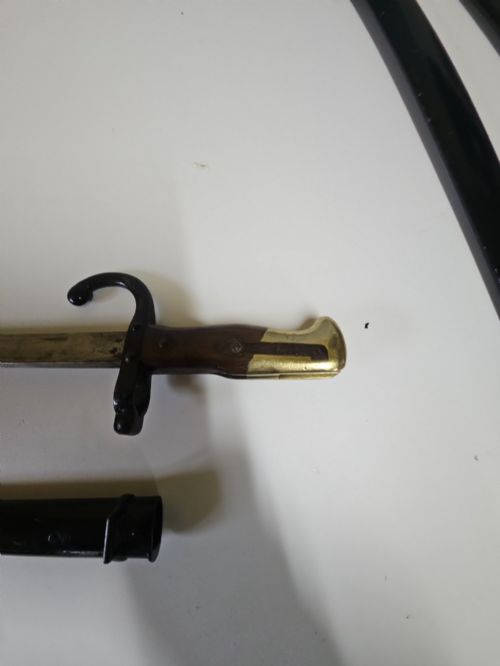
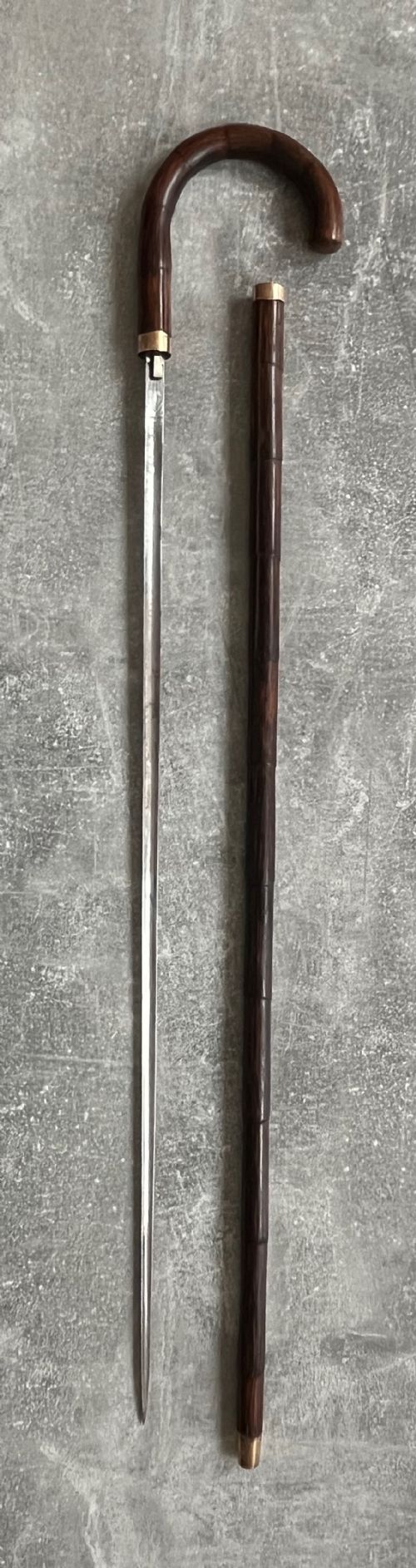


Brass and Steel Blade
These examples of a brass and steel blade span military service, civilian defence and edged weaponry from the Georgian era to the mid-twentieth century.
Brass and Steel Blade
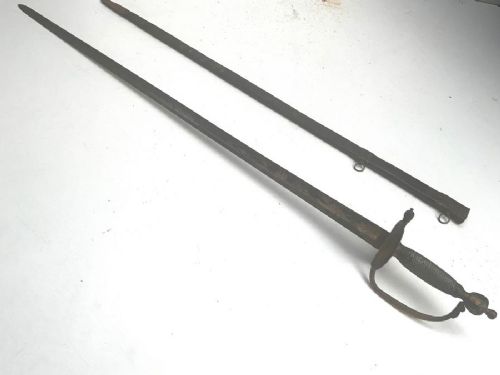
A brass and steel blade encompasses military swords, cavalry sabres, bayonets, daggers and concealed sword sticks originating from British, French, German, American and Afghan contexts. These edged weapons and edged tools combine metal components designed for utility, ceremony or combat across the nineteenth and twentieth centuries.
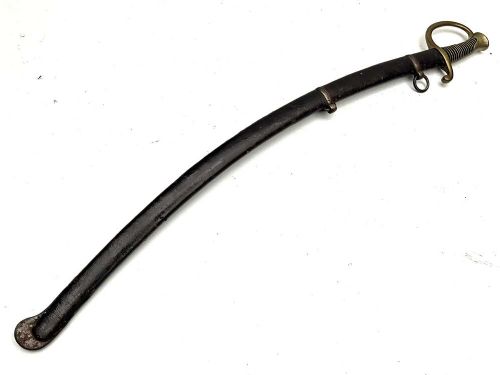
The most frequent form met on this page is the military sword or sabre, often paired with a scabbard and displaying specific pattern dates like the seventeen-ninety-six or eighteen-twenty-nine. Alongside formal military hardware, domestic or civilian pieces such as walking stick swords and knife sharpeners appear regularly.
How they were made
Blades are forged from hardened steel, frequently paired with cast or sheet brass for hilts, guards, pommels and scabbard mounts. Some examples incorporate blue and gilt surface decoration directly onto the steel.
Hfts and grips integrate secondary materials like leather, wood, horn and iron alongside the primary brass and steel elements. Wooden and faux bamboo shafts conceal internal blades in civilian walking sticks.
Brass and Steel Blade Retail Price Guide 2026
Typical asking prices for brass and steel blade among the pieces listed under this phrase on Sellingantiques today, from the lower quarter to the upper quarter. They describe what is for sale here now, not the wider market.
Listings span the Victorian era, the nineteenth century with specific years like 1800 and 1850, and extend to mid-twentieth-century military items.
What varies in quality
Quality rests in the crispness of the brass casting on the guard and the depth of any blue and gilt ornamentation applied to the steel. Finer pieces maintain tighter tolerances where the blade meets the hilt and where the metal meets the scabbard throat.
The sophistication of the design, from standard military regulation patterns to hybrid regional forms like the Pesh-Kabz, dictates the level of artisanal engagement in the finishing of both metals.
The Brass and Steel Blade Glossary
- Sabre
- A heavy cavalry sword with a curved steel blade designed primarily for slashing. These often incorporate elaborate brass guard assemblies.
- Bayonet
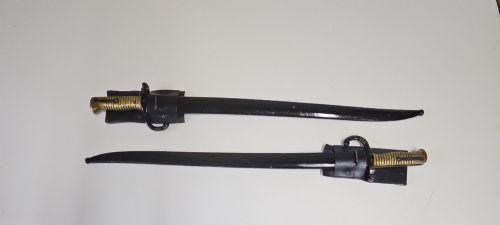
- A dagger-like blade designed to attach to the muzzle of a firearm. Victorian examples frequently utilise socket or bar-slot mountings.
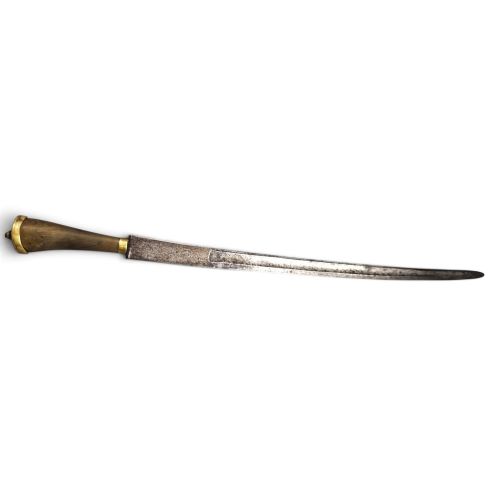
- Pesh-Kabz
- A single-edged dagger originating from the Afghan region, recognised by its T-section spine and reinforced point. These often display hybrid European influence.
- Scabbard
- A protective sheath for a sword, dagger or bayonet. They are constructed from leather or metal with brass mounts.
Brass and Steel Blade: Frequently Asked Questions
What is a brass and steel blade?
It is an edged weapon or tool constructed primarily from steel for the cutting edge and brass for the hilt, guard or mountings. The category covers military swords, bayonets, sabres and daggers.
These pieces range from standard-issue military regulation arms to civilian walking sticks concealing a blade inside a wooden or faux bamboo shaft.
How do I date a military sabre?
Dating relies on official pattern years stamped or associated with the weapon, such as the 1796 or 1829 cavalry patterns. Stylistic shifts in the brass guard and handle construction also indicate the period.
Makers' marks and regional characteristics help narrow the production era between the Georgian period and the twentieth century.
Were sword sticks used for defence?
Gentlemen carried sword sticks during the nineteenth century as a discreet form of personal protection during urban walks. The concealed steel blade remained hidden inside an ordinary-looking walking cane.
They balanced practical utility with the fashion of the Victorian era, often featuring carved wooden or faux bamboo exteriors.
What is blue and gilt on a blade?
Blue and gilt refers to a decorative surface treatment applied to steel blades. The steel is heat-treated to a blue finish and adorned with gold-leaf ornamentation.
This technique was typically reserved for officer's swords and presentation pieces to display status rather than for active combat utility.