

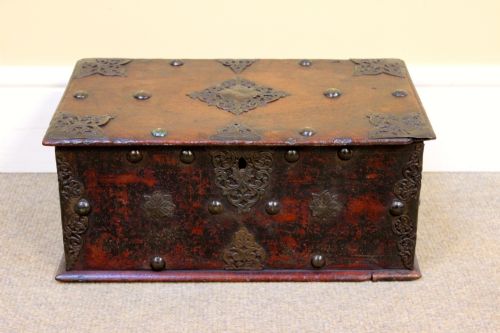
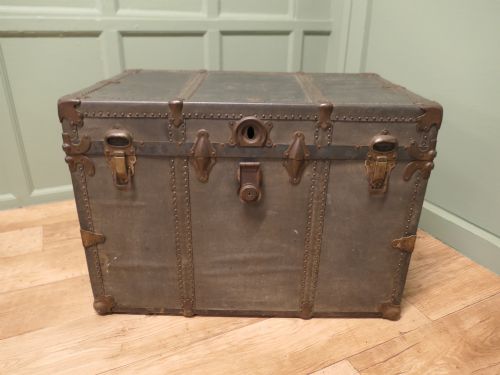
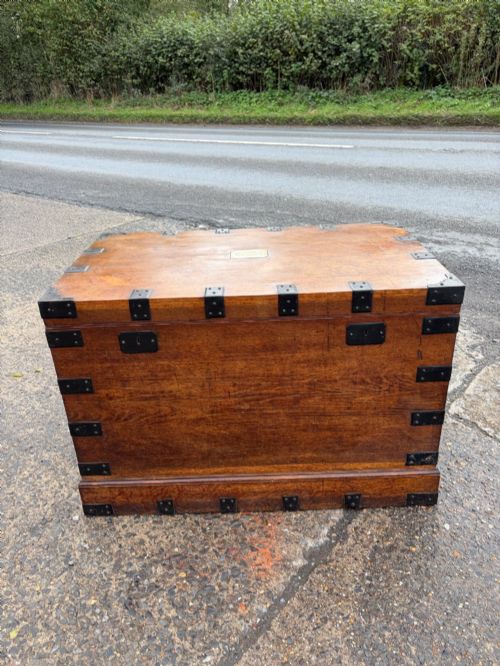
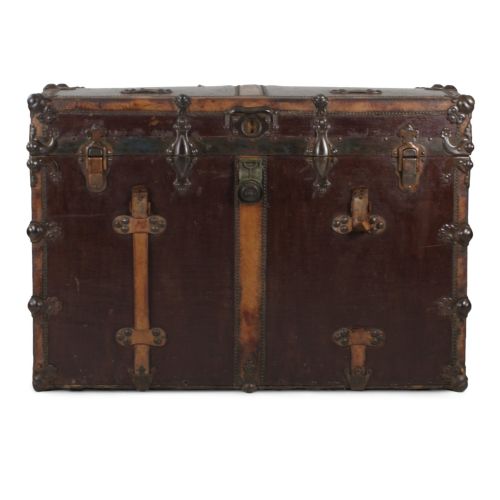



Brass and Metal Trunk
These brass and metal trunk pieces combine structural timber or hide with robust hardware, built to endure global travel and domestic storage.
Brass and Metal Trunk
A brass and metal trunk serves as a durable receptacle for travel or household storage, uniting timber or leather foundations with protective exterior banding. Pieces on this page span several centuries, running from seventeenth-century coffers through Georgian and Victorian examples up to early twentieth-century steamer trunks.
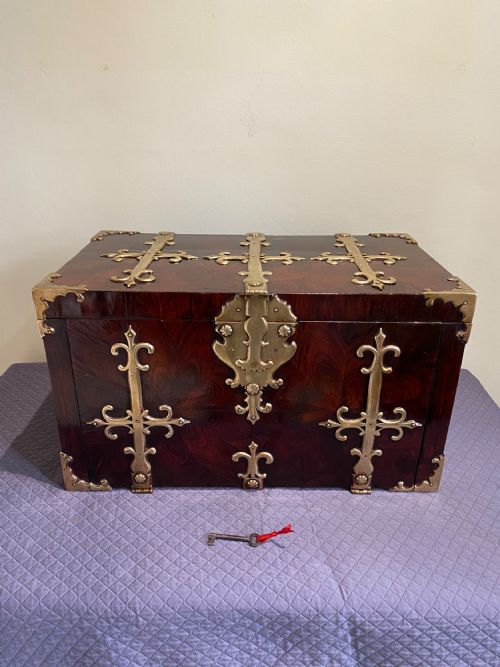
Forms range widely in size and purpose, taking in domestic dowry chests, military hat boxes, silver chests, and cabin wardrobes. Materials combine oak, teak, pine, or kingwood with iron, steel, and brass fittings, creating functional containers designed for movement.
How they were made
Construction relies upon combining sturdy woods like oak, teak, and pine with structural hides, leather, or vulcanised fibre. Metal reinforcement is applied via iron bands, brass corners, and studded mounts to protect vulnerable edges during transit.
Hardware is secured with rivets, bolts, and specialised locks, incorporating drop handles and straps designed for heavy lifting. Internal linings often feature fitted compartments, trays, or fabric coverings tailored to specific travelling requirements.
Brass and Metal Trunk Retail Price Guide 2026
Typical asking prices for brass and metal trunk among the pieces listed under this phrase on Sellingantiques today, from the lower quarter to the upper quarter. They describe what is for sale here now, not the wider market.
Geographic origins span domestic British country houses to Rajasthan, the Middle East, and East Africa.
What varies in quality
Quality rests upon the integrity of the primary materials and the original hardware, such as locks, handles, and binding bands. Superior examples retain intact interior fittings, maker stamps, and unblemished surface patination across the wood and metal.
The sophistication of the construction distinguishes standard storage boxes from high-status travel luggage, particularly where specialised compartments and reinforced corners indicate bespoke commission work.
Samuel Pratt·Seaward·Seabrook of St.Pauls·Hawkes & Co
The Brass and Metal Trunk Glossary
- Steamer trunk
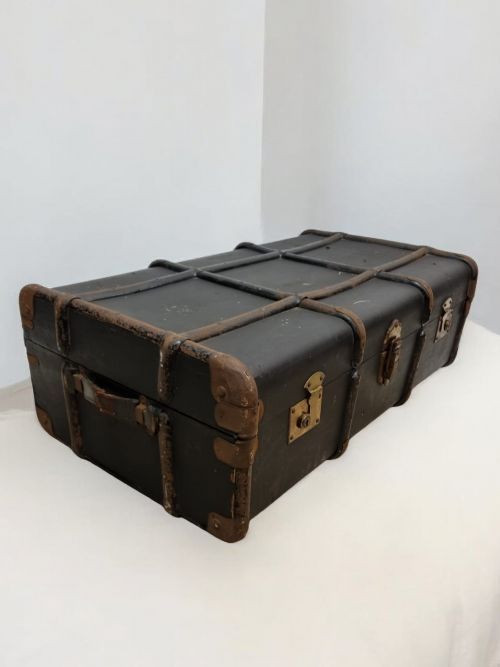
- A lower-profile travel trunk designed to fit beneath a steamship cabin berth. These pieces often feature internal compartments for organised clothing storage.
- Damchiya
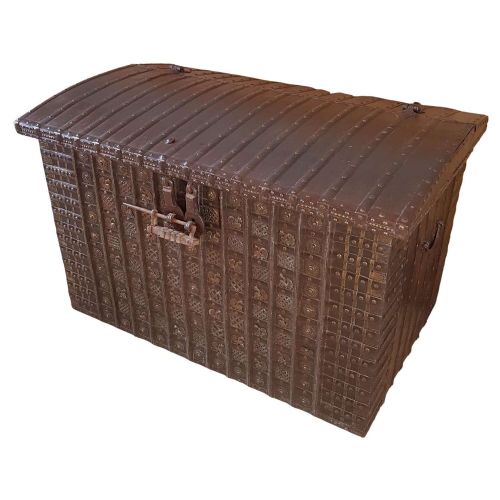
- An ornate dowry chest originating from Rajasthan, typically featuring intricate iron banding and specialised locking mechanisms. These forms reflect distinct regional craftsmanship.
- Toleware
- Japanned or enamelled metalware used for durable storage items such as military hat boxes. The finish provides protection against moisture and wear.
- Coffer
- A heavy wooden chest traditionally used for storing valuables, frequently reinforced with metal bands. Early examples display dense construction and dome top profiles.
Brass and Metal Trunk: Frequently Asked Questions
What were brass and metal trunks used for?
These containers served varied purposes ranging from maritime travel and military campaigns to domestic storage of silver and garments.
Travellers relied on robust construction to protect contents during long journeys across land and sea.
How do I date a metal-bound trunk?
Dating relies upon examining the underlying timber, locking mechanisms, construction techniques, and stylistic markers associated with specific periods.
Earlier examples often display hand-forged ironwork and pegged joinery, while later pieces incorporate standardised industrial hardware.
Where should I place a trunk at home?
Trunks function effectively as coffee tables, end-of-bed storage, or standalone accent pieces within hallway spaces.
Their flat tops allow for display while the interior provides concealed storage for blankets and household items.
Are interior fittings original?
Many surviving pieces retain their original wooden trays, divided compartments, or fabric linings designed for specific travel needs.
Assessing the wear and materials helps determine whether internal configurations remain unaltered from the period of manufacture.