

Brass and Leather Table
These pieces unite metal and hide, offering a brass and leather table that combines functional writing surfaces with the rich tones of polished timber.
Brass and Leather Table
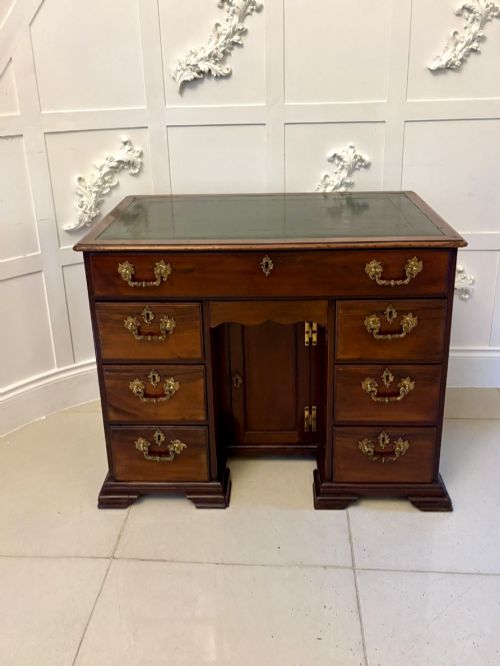
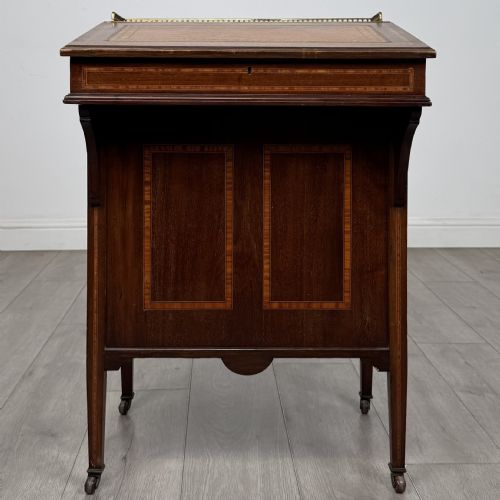
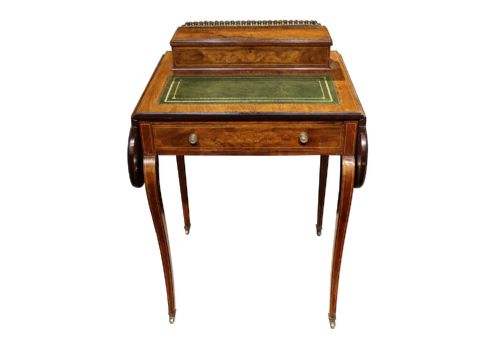
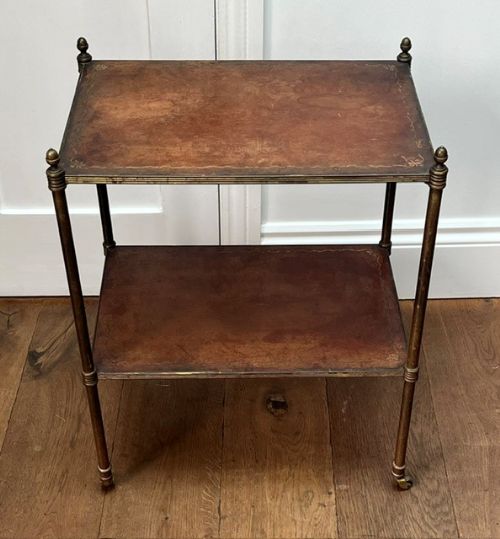
A brass and leather table typically manifests as a writing desk, pedestal desk, or occasional two-tier etagere spanning the nineteenth and early twentieth centuries. Pieces emerge in Victorian, Edwardian, and Regency styles alongside later Art Deco iterations.
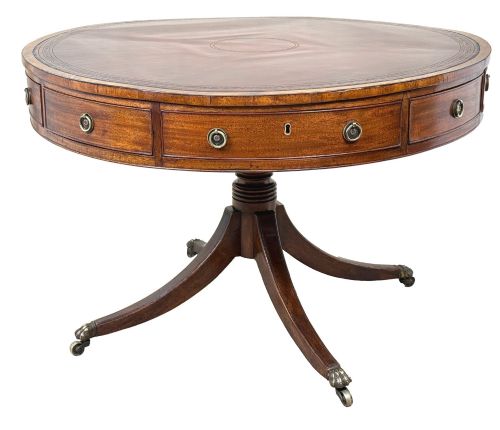
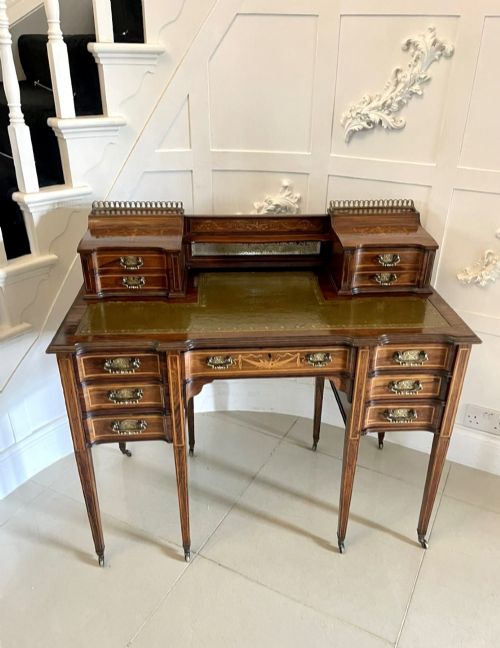
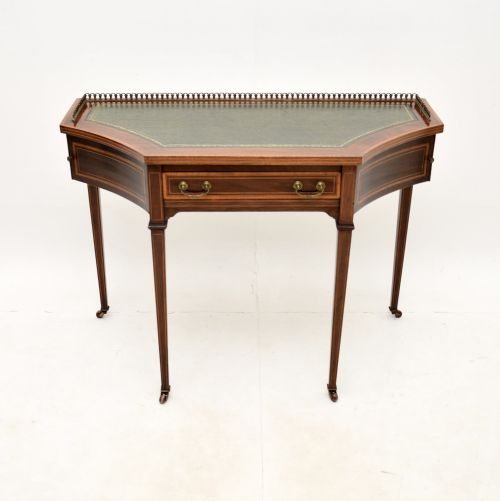
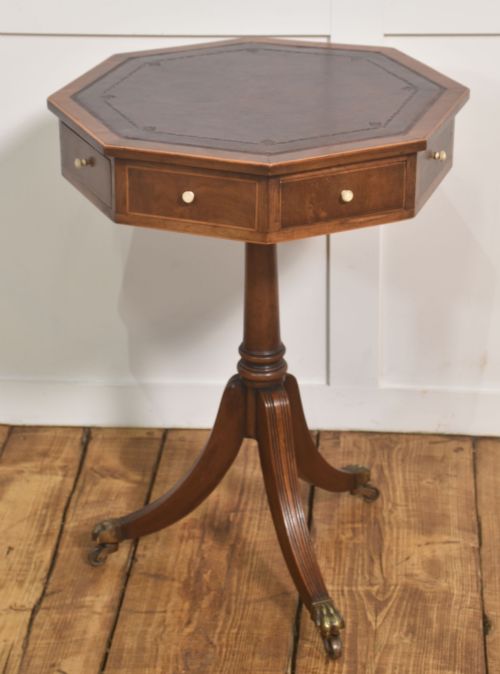
Makers often paired mahogany, rosewood, or oak frames with tooled leather writing inserts and brass mounts, banding, or tubular frames. Forms range from library drum tables and kidney shapes to compact side tables.
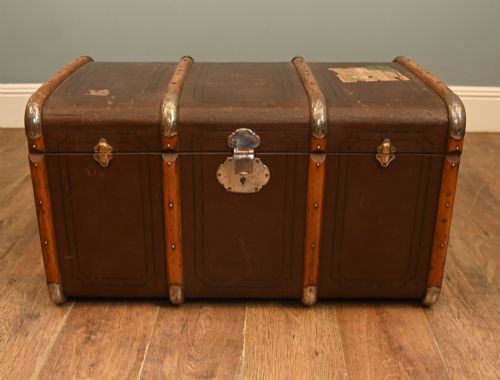
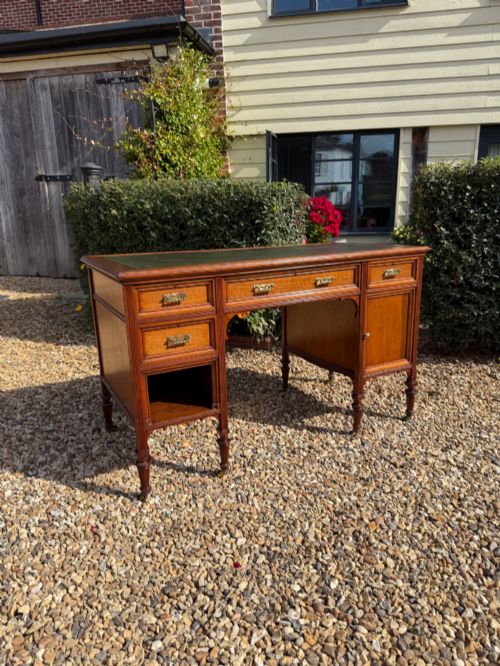
The selection includes freestanding library tables, Carlton House desks, and metal-bound trunks alongside occasional lamp tables and club fenders incorporating leather and brass elements.
Materials and Technique
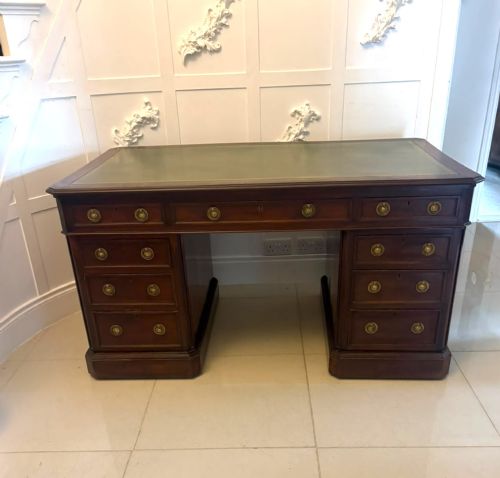
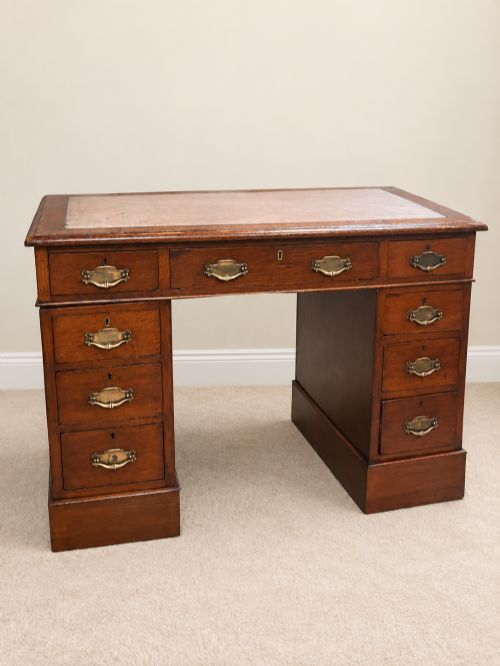
Craftsmen built structural frames from solid hardwoods like mahogany, oak, walnut, and satinwood, frequently applying decorative veneers or marquetry inlay. Substantial pedestal desks utilised heavy timber carcases designed to withstand daily administrative work.
Writing surfaces received inset panels of cattle hide, often adorned with gilt tooling around the perimeter. Brass elements appeared as structural framing, cast collars, drop handles, banding, and tiered etagere uprights.
Makers joined structural components using traditional cabinet-making joints, fitting drawers with dovetailed construction and mounting heavier pieces on castors for mobility.
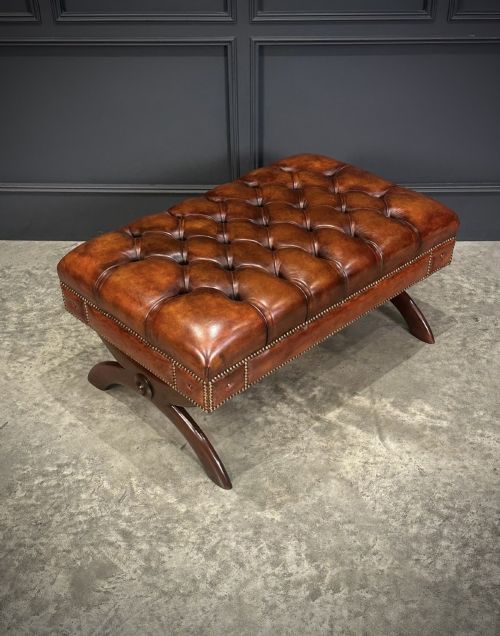
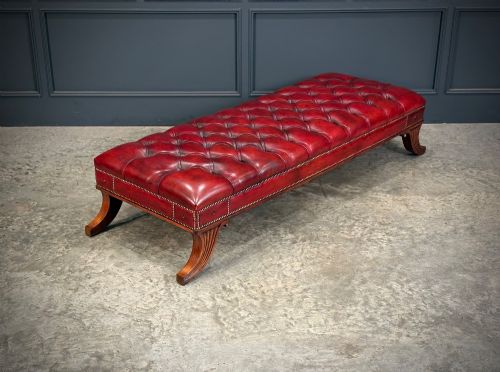
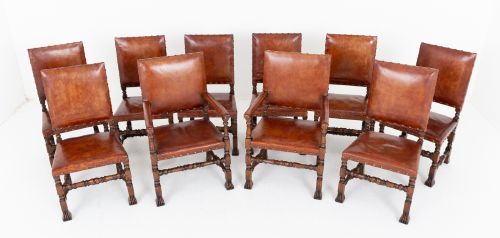
Several pieces include brass club fenders designed to keep toes warm near the hearth while sitting on comfortable leather upholstery.
Distinctions in Execution
The distinction between standard utility furniture and superior examples lies in the selection of timber figures, such as burr oak or figured mahogany, and the crispness of brass casting and gilt tooling. Finer pieces display meticulous hand-finishing on secondary woods and interior drawer linings.
Workshop attribution also separates output, with pieces bearing stamps from recognised makers like Maple & Co., Edwards & Roberts, or Trollope & Sons commanding particular attention for their refined joinery and proportion.
Maple and Co·Trollope and Sons·Edwards and Roberts·Polaire of Paris·Mallett of London
The Brass and Leather Table Glossary
- Drum table
- A circular library table with a deep frieze containing drawers, often supported by a central pillar and tripod base.
- Etagere
- A set of open shelves for displaying small objects, frequently constructed with lacquered brass uprights and leather-lined tiers.
- Carlton House desk
- A form of writing desk featuring a fitted superstructure of small drawers and compartments curving around the back and sides of the writing surface.
- Pedestal desk
- A heavy writing table comprising two freestanding pedestals of drawers supporting a wide top inset with leather.
- Ormolu
- Gilded bronze or brass mounts applied to furniture for decorative accent during various revival periods.
Brass and Leather Table: Frequently Asked Questions
What is a brass and leather table?
These items are nineteenth and twentieth-century furnishings that combine timber structures with metal mounts and hide writing surfaces. They serve primarily as desks, side tables, or tiered display surfaces.
Craftsmen utilised brass for structural frames, banding, and hardware while employing leather for durable, tactile tabletops and writing inserts.
How do I date a pedestal desk?
Dating relies upon timber selection, construction methods, and prevailing decorative styles seen across Victorian and Edwardian examples. Earlier nineteenth-century pieces often feature solid mahogany or oak with hand-dovetailed drawer linings.
Later Edwardian and twentieth-century interpretations frequently incorporate machine-sawn elements and lighter satinwood or inlaid veneers alongside brass details.
How were two tier tables used?
Two-tier occasional tables functioned as lamp stands, side pieces, or small display tables in sitting rooms and libraries. The lower shelf provided additional storage for books or decorative objects.
Their brass-framed construction made them lightweight enough to move easily around domestic interiors as needed.
How do I care for leather tabletops?
Leather inserts require gentle cleaning with a dry or slightly damp cloth, avoiding harsh chemical cleaners that strip the original finish. Periodic treatment with suitable leather balms helps prevent the hide from drying and cracking.
Keeping these surfaces away from direct sunlight preserves the original colour and any gilt tooling applied around the edges.