



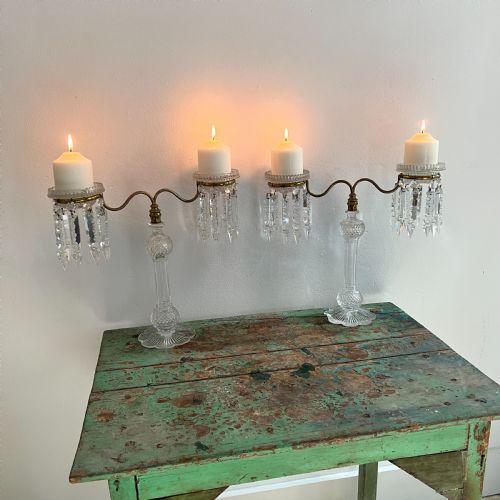


Brass and Glass Candelabra
Brass and glass candelabra combine metal frames with crystal drops to catch the light, bringing warmth and sparkle to a room.
Brass and Glass Candelabra
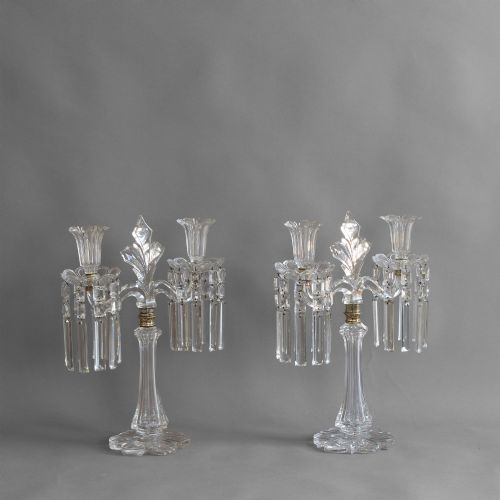
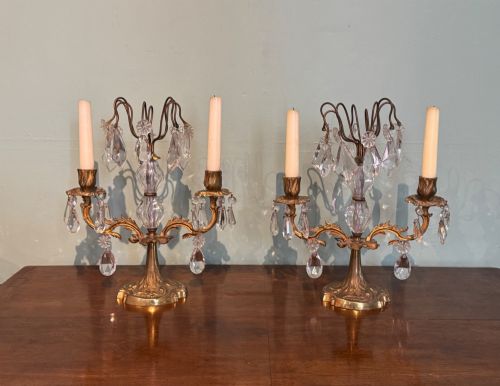
These pieces are lighting items and decorative table fixtures that bring together metalwork and glass components. When you search for brass and glass candelabra, you find items ranging from small mantel pairs to large table pieces.
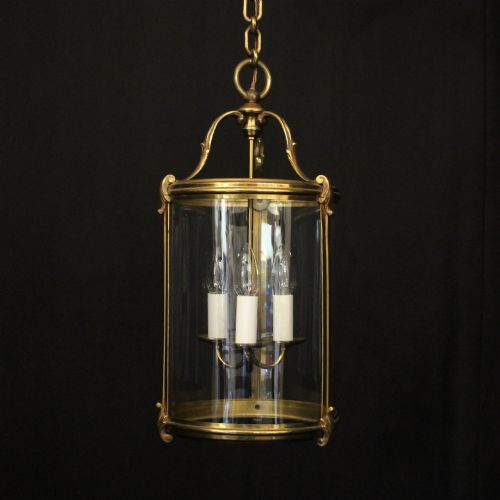
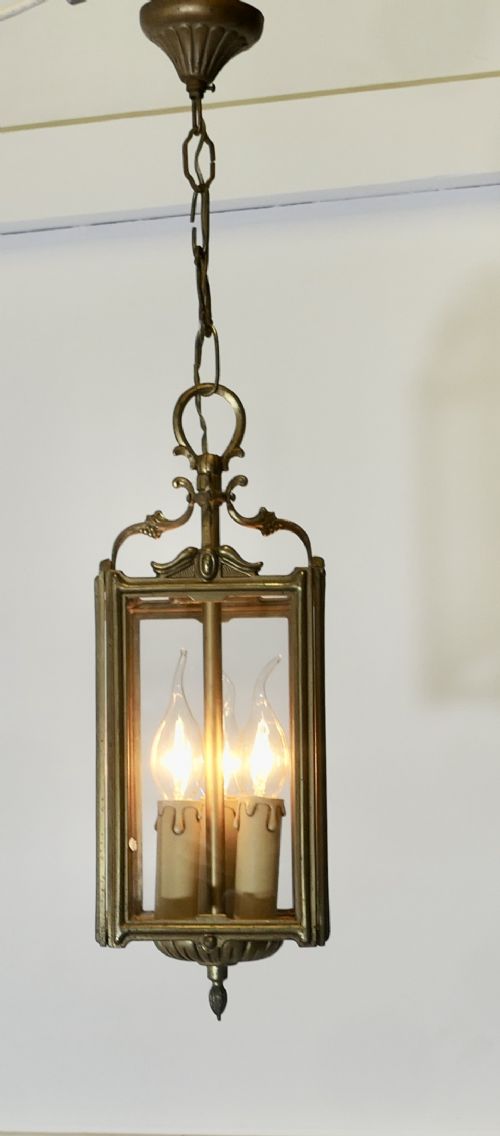
The selections on this page span several eras, with nineteenth century items and twentieth century examples appearing frequently. Forms include paired table lustres, multi branched candelabra, and hanging chandeliers.
French and English origins dominate the selection, showing styles from the Regency period through Victorian designs to Art Deco and Louis XVI revival pieces.
Materials and construction
The primary structural metal is brass, often found in gilded forms, ormolu, or gilt bronze. This metal forms the arms, baufs, and central stems that support the weight of the glass.
Glass elements include cut glass, crystal, and moulded drops hung from the metal frames. Some pieces incorporate green marble bases or etched glass panels to complement the metal and crystal.
Listings for brass and glass candelabra include pieces from the nineteenth century alongside Edwardian and 1930s examples.
Quality factors in design and finish
The refinement of the brass casting and chasing determines the sharpness of detail on the metal mounts. Finer examples display crisp foliate and scroll work rather than soft or blurry edges.
The clarity and depth of the cut glass drops create varying degrees of brilliance when light passes through them. Substantial crystal prisms with clean facets indicate higher standards than thin, pressed glass.
Clarkes
The Brass and Glass Candelabra Glossary
- Candelabra
- A branched candlestick designed to hold multiple candles at once. These fixtures often feature central shafts with several extending arms.
- Lustre
- A decorative tabletop candlestick or candelabra hung with cut glass prisms. The hanging drops reflect candlelight to increase illumination.
- Ormolu
- Gilded bronze applied to decorative metalwork and mounts. This technique gives the brass surface a rich gold appearance.
- Crystal
- High clarity glass containing lead oxide. It produces greater refraction and sparkle than standard glass.
Brass and Glass Candelabra: Frequently Asked Questions
How do I clean brass and glass candelabra?
Dust the metal and glass components regularly with a soft, dry cloth to prevent grime buildup. Avoid harsh chemical polishes on gilded brass surfaces to protect the finish.
Remove glass drops individually if they require a deeper wash in warm, soapy water. Dry them thoroughly before rehanging them on the metal frame.
Where should I place a pair of candelabra?
These pieces suit mantelshelves, sideboards, and large dining tables where they provide balanced symmetry. Placing them near windows or lamps allows the glass drops to catch and reflect natural light.
Ensure they sit on stable surfaces away from heavy traffic areas to protect the hanging crystal prisms.
How do I identify a Victorian piece?
Victorian examples often display heavy casting, ornate revival styles, and substantial cut glass drops. Look for construction techniques and material weights typical of the nineteenth century.
Maker marks or registration stamps on the brass base can sometimes provide a precise date of manufacture.